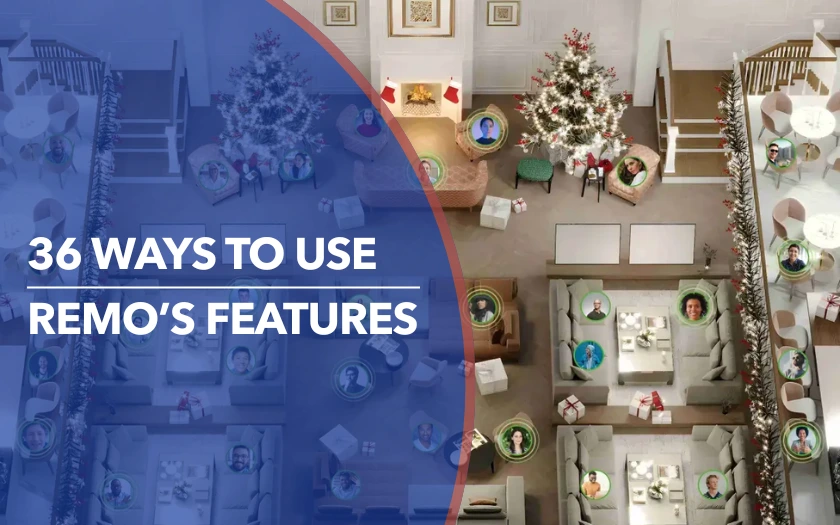
36 Ways to Use Remo's Features to Create More Engaging Virtual Events

Getting people to register for a virtual event is only half the battle. The real challenge is keeping them engaged once the event begins.
When engagement is low, the impact goes far beyond distracted attendees. Conversations never happen, sponsors struggle to generate meaningful leads, attendees leave without making valuable connections, and post-event surveys reflect an experience people are unlikely to recommend or return to. You may hit your registration target, but still fall short on the outcomes that actually matter.
That's the cost of a one-way presentation. Too many virtual events are built around broadcasting content rather than creating opportunities for interaction, making it difficult for attendees to connect, participate, or collaborate, no matter how strong the agenda is.
The most successful virtual events take a different approach. They create opportunities for people to connect, contribute, and collaborate throughout the event. The result is stronger attendee engagement, more valuable sponsor interactions, and communities that continue to grow long after the event ends.
That's exactly what Remo was built for. Remo has hosted more than 16,500 events with over 910,000 attendees and has earned a 4.5/5 rating on G2 from 323 reviews. Its networking, collaboration, and engagement features help organizers create interactive experiences at scale, not just in theory. In this guide, we'll share 30+ ways to use Remo's features to create virtual events that attendees genuinely want to be part of.
{{table-of-contents}}
Why Remo Works Differently
If you're already convinced you need a platform that does more than host presentations, jump straight to the 30+ ways to use Remo's features. Otherwise, it's worth taking a minute to understand what makes Remo different.
Most virtual event platforms are built around a presentation stage, with networking added through breakout rooms. That works for structured sessions, but it often makes networking feel scheduled rather than spontaneous.
Remo flips that model. Table-based conversations are at the heart of the experience, allowing attendees to move freely between discussions while presentations, workshops, and sponsor interactions happen within the same shared environment. The result is a more natural flow that encourages participation instead of passive attendance.
Now, let's dive into 30+ practical ways to use Remo's features to create more engaging virtual events.
Creating More Natural Networking Experiences
.webp)
People don't attend events just to watch presentations. They come to meet peers, exchange ideas, and start conversations that could turn into partnerships, jobs, or friendships. The problem is that many of the best virtual event platforms make networking feel awkward. You're either dropped into a random breakout room or left staring at a busy chat window, wondering how to join a conversation.
Remo takes a different approach. Instead of forcing interactions, it creates an environment where conversations happen naturally. Attendees choose where to go, who to talk to, and when to move between tables without waiting for a host. That freedom makes networking feel intuitive rather than scheduled, helping attendees build more meaningful connections throughout the event.
Designing Better Networking Experiences
1. Let Attendees Choose their Own Conversations
Remo gives attendees the freedom to move between networking tables whenever they want, making it easy to join discussions that match their interests. Rather than being assigned to a breakout room and waiting for it to end, attendees stay in control of their networking experience. The result is more relevant conversations, stronger connections, and a virtual event that feels far more dynamic.
"The ability for participants to freely choose tables and move around matched the Open Space format perfectly, resulting in a much more natural and engaging experience."
— Johan V., Product Owner / Team Leader, G2 Review
2. Create Topic-Based Networking Tables
Set up tables around specific interests, industries, or challenges so people immediately know where to go. A marketing professional can head to the "Demand Generation" table while a recruiter joins the "Talent Acquisition Trends" discussion. These self-selected conversations often produce stronger connections because attendees already have something in common.
"Its interactive floor-plan layout replicates the energy of an in-person venue, letting attendees 'walk' between tables and start conversations naturally."
— Zuzana V., Manager, G2 Review
3. Run Speed Networking Sessions
Use Remo's table layouts and Shuffle Guests feature to rotate attendees between tables every few minutes. It recreates the energy of meeting several new people during a coffee break and works particularly well for virtual career fairs, community events, and member networking sessions.
4. Create Networking Spaces for Different Attendee Goals
Not every attendee is looking for the same experience. Set up dedicated areas for job seekers, first-time attendees, customer networking, partner introductions, or informal coffee chats. Giving each space a clear purpose helps attendees find the conversations that matter most to them.
5. Host Meet-the-Speaker Sessions
After a keynote or breakout session, use Remo's virtual tables to create dedicated speaker tables where attendees can join with a click. Rather than waiting for scheduled networking sessions, attendees can continue the conversation, ask follow-up questions, and discuss specific topics in a more informal setting. The result is greater speaker accessibility and more meaningful interactions beyond the main presentation.
Turning Profiles Into Networking Tools
6. Encourage Attendees to Upload Profile Photos
Encourage attendees to upload a profile photo before the event so people can put a face to a name. Seeing faces instead of initials makes virtual networking feel more personal and approachable, helping conversations start more naturally. For a more playful touch, Remo even lets attendees use GIFs as their profile pictures, adding personality and helping break the ice before a conversation begins.
7. Use Attendee Profiles like Digital Business Cards
Remo Attendee Profiles can include details such as a job title, organization, and short introduction, giving attendees context before starting a conversation. Instead of asking, "So, what do you do?" people can jump straight into meaningful discussions.
8. Make Follow-Up Easy with LinkedIn and Calendly Links
Attendees can add LinkedIn profiles, websites, and Calendly links to their Remo profiles, making it simple to connect after the event or schedule a meeting. Rather than scrambling to exchange contact information in the chat, networking continues long after the event ends.
"Once a user has their profile set up we can connect directly to their profiles on social media, go to their websites and also book a 1 on 1 followup on their calendar links."
— Brion C., SVP of Wealth Development, G2 Review
9. Encourage Attendees to Showcase their Interests and Expertise
Since attendee profiles include customizable information, organizers can ask participants to share topics they're passionate about or areas where they can help others. Someone might mention they're an expert in community building or interested in AI adoption. These small details often become the spark for great conversations and valuable connections.
.webp)
Turning Attendees Into Active Participants
.webp)
We've all been there. A presenter is speaking, the slides keep changing, and the attendee list slowly starts shrinking. Passive experiences are the biggest enemy of virtual event engagement. The most successful events don't just deliver content, they create opportunities for attendees to become part of the experience.
That's exactly how Remo is designed. Its interactive features make participation feel like a natural part of every session.
Creating More Interactive Sessions
10. Turn Q&A into a Conversation, not a Chat Feed
Remo's dedicated Q&A tab keeps audience questions separate from the main chat, making them easy for speakers and moderators to review without important questions getting buried in a fast-moving conversation. Attendees can also ask questions anonymously and vote on the ones they want answered most.
11. Use Live Polls to Keep Attendees Involved
Every presenter has felt it. You're midway through a session and the energy starts to dip. With Remo's built-in polls, you can quickly ask a question like, "What's your biggest challenge right now?" and watch responses come in instantly. As attendees see how others voted, the session becomes more than a presentation. It becomes a shared conversation. Speakers can react to the results in real time, tailoring the discussion to what matters most to the audience and giving everyone a reason to stay engaged.
"The ability to create polls... adds a layer of professionalism and interactivity that's often missing in traditional platforms."
— Andjay A., Founder, G2 Review
12. Encourage Emoji Reactions During Sessions
Sometimes a simple thumbs-up or clap says more than a message in chat. Real-time reactions create energy and help speakers gauge how attendees are responding in real time. Instead of presenting to a silent screen, presenters receive immediate feedback that makes sessions feel more dynamic and conversational.
13. Host Ask-Me-Anything Sessions with Experts
Give attendees direct access to speakers and industry experts in a dedicated AMA session. Remo's Q&A tab keeps questions organized, allows attendees to vote on the topics they care about most, and supports anonymous questions to encourage wider participation. The result is a session shaped by audience curiosity rather than a predetermined agenda.
14. Bring Attendees onto the Stage
Some of the best event moments happen when attendees become part of the conversation. Organizers can invite attendees onto the stage to share their experiences, join panel discussions, or debate ideas alongside speakers. Instead of simply asking questions, attendees actively contribute to the session, creating a more collaborative and engaging experience.
Ready to create more engaging virtual events? Book a demo and see Remo in action.
Keeping Participation Going Throughout the Event
15. Run Event-Wide Challenges and Scavenger Hunts
Because attendees can move freely between tables and spaces, organizers can create activities that encourage exploration. Challenge attendees to visit sponsor tables, collect information from different networking areas, or participate in multiple discussions to earn prizes. This turns the event floor plan into an interactive experience rather than a series of sessions.
16. Use Discussion Prompts to Spark Table Conversations
Share conversation starters in Remo's table chat to give each networking table a clear focus from the moment attendees arrive. Prompts such as "What's the biggest challenge facing your industry?" or "What's one prediction for next year?" encourage everyone to contribute, making discussions more engaging and helping conversations get off the ground naturally.
17. Create Richer Conversations with Flexible Chat Options
Different conversations deserve different spaces. Remo supports public event chat, table chats for small-group discussions, and private messaging for one-on-one networking. Add @mentions to bring people into the conversation and GIFs to keep interactions fun and approachable. These features help attendees communicate in the way that feels most natural to them, making conversations more engaging than relying on a single event-wide chat.
Creating Collaborative Learning Experiences That People Remember
.webp)
Think about the last workshop or training session you attended. You probably don't remember every slide. You remember the discussion you had with a small group or the moment someone shared a solution to a problem you'd been struggling with. That's because people remember experiences they actively participate in.
Remo is designed to make collaboration part of the event, not an afterthought. Whether you're hosting workshops, brainstorming sessions, or peer learning groups, its collaborative features help attendees exchange ideas, solve problems together, and learn from one another in real time.
Designing Spaces for Peer Learning and Discussion
18. Create Discussion Spaces That Match the Type of Collaboration You Need
Not every conversation should happen in the same-sized room. Remo lets organizers create tables of different sizes across a single event, so you can tailor each space to its purpose. Use smaller tables for focused mentoring or interviews, medium-sized tables for brainstorming, and larger ones for group discussions or workshops. Instead of forcing every conversation into the same format, you can design collaboration around your attendees' needs.
"I liked that there were different size tables, 2 person tables for 1-on-1 networking, as well as 4 and 6 person tables for group discussions."
— Amanda C., G2 Review
19. Build Mentor Circles for Career Growth
Create dedicated mentor tables where industry experts can host small-group discussions around career development, leadership, or technical challenges. The intimate setting encourages attendees to ask questions, seek advice, and have meaningful conversations that wouldn't feel as comfortable in a large group.
20. Organize Peer-Learning Sessions Attendees Can Curate Themselves
Instead of offering one large workshop, create several discussion tables around different topics, challenges, or skill levels. Attendees can choose the conversations most relevant to them, exposing them to diverse perspectives and practical insights from peers with similar interests.
An independent language consultant shared how they use Remo to facilitate collaborative learning:
"I've even had my ESL students get together for a 'Convo Cafe' to practice their English in a virtual class setting."
— Dr. Charity C. C., Independent Language Consultant, G2 Review
21. Host Drop-In Help Desks and Expert Clinics
Open tables can also function as support centers where attendees receive personalized guidance. Whether it's product training, customer onboarding, or answering technical questions, attendees can visit experts when they need help instead of waiting until the end of a presentation.
Running Workshops That Feel Truly Collaborative
22. Compare Ideas and Demos Side by Side
Remo's multiple screen sharing feature allows participants to view several presentations, proposals, or product demos at the same time. Instead of constantly switching presenters, teams can compare options side by side and make decisions faster.
23. Run Real-Time Brainstorming Sessions
Brainstorming works best when everyone can contribute, not just the presenter. Pair Remo's collaborative whiteboard with table discussions so participants can sketch ideas, add notes, organize concepts, and build on each other's thinking in real time. Instead of watching one person present, attendees actively shape the conversation together, leading to more creative ideas and stronger collaboration.
"Participants get to use tools like built-in Miro whiteboard functionality to easily collaborate."
— Steven S., Director, G2 Review
Turning Sponsors Into Part of the Experience
.webp)
Nobody enjoys being interrupted by a pop-up ad or sitting through a sponsor slide that feels disconnected from the event. The best event sponsorship experiences don't feel like advertising at all, they feel useful and naturally woven into the attendee journey. That's where most platforms treat sponsors as an afterthought: a logo on a landing page and a few minutes on stage, with no real path to a conversation.
Remo turns sponsorship into an interactive experience. Sponsors become visible participants in the event, not passive advertisers, which is often the difference between a sponsor renewing and a sponsor walking away unconvinced of the ROI.
Building Immersive Branded Experiences
24. Customize your Virtual Floor Plan Around your Event and Sponsors
In Remo, your event space becomes an extension of your brand. Customize the virtual floor with your logo, brand colors, content banners, and sponsor branding to create a cohesive experience from the moment attendees arrive. You can also organize networking areas, sponsor zones, and discussion spaces to match your event agenda, creating a venue that feels thoughtfully designed instead of a generic event page.
"We have tables for sponsors, allowing for a virtual exhibit area... We have made the floor plan look like the hotel where we normally host our event."
— Becca D., G2 Review
25. Create Sponsor-Branded Networking Tables
Sponsor tables can include custom names, branding, and dedicated representatives, making them feel like digital booths rather than advertisements. Attendees can immediately see who is hosting a table and choose to join conversations that interest them, creating more intentional sponsor interactions.
26. Use Clickable Banners to Drive Engagement and Resource Downloads
Sponsors can share brochures, case studies, product pages, or special offers through clickable content banners placed throughout the venue. Instead of hoping attendees remember a website URL, organizers can create clear paths to sponsor resources while tracking banner clicks and engagement analytics to measure sponsor interest and demonstrate ROI.
"The ability to upload, display, and link key info for guests in banners that are available throughout the event without having to re-share in a chat."
— Hattie B., Assistant Director, Columbia Business School, G2 Review
27. Showcase Sponsors Throughout the Virtual Venue
Maximize virtual event sponsorship opportunities by giving sponsors visibility beyond dedicated booths. Place branded banners, logos, and promotional content throughout the virtual venue so attendees encounter sponsor branding while networking, attending sessions, or exploring the event floor. This continuous exposure increases brand awareness, delivers more value to sponsors, and keeps promotions visible without disrupting the attendee experience.
28. Use Branding to Make your Event Easier to Navigate
Branding isn't just about appearance. It also helps attendees navigate your event. Use consistent colors, naming conventions, and visual cues to distinguish networking areas, sponsor zones, workshop spaces, and keynote stages. A well-organized venue helps attendees find where they need to be while creating a smoother, more intuitive event experience.
Creating More Meaningful Sponsor Interactions
29. Build Sponsor Lounges for Relationship Building
While branded banners increase visibility, sponsor lounges create opportunities for genuine conversations. Give sponsors dedicated Remo tables where attendees can ask questions, request demos, and discuss their challenges one-on-one with company representatives. These interactions build stronger relationships and generate more qualified leads than passive brand exposure alone.
30. Host Sponsor Product Clinics
Instead of delivering another sales pitch, sponsors can use dedicated tables to answer questions, provide guidance, and help attendees solve specific problems. These educational sessions create more value for attendees while giving sponsors opportunities to demonstrate expertise.
Building Communities That Last Beyond Event Day
.webp)
The best events don't end when the closing slide appears. What made your favorite conference memorable wasn't just the presentations, it was the people you met and the conversations you continued afterward. Most virtual conference lose that momentum the moment the session ends.
Turning One Event Into an Ongoing Conversation
31. Extend the Value of Sessions With On-Demand Content
Session recordings allow attendees to revisit presentations and catch up on sessions they missed. Pairing recordings with follow-up discussions and resources helps learning continue long after the live event ends.
32. Turn Attendee Questions into Future Content
The questions people ask during an event often reveal their biggest challenges and interests. Review Q&A submissions and discussion topics to identify themes for future webinars, community sessions, newsletters, or content campaigns.
33. Create Recurring Networking Touchpoints
Host monthly meetups, quarterly roundtables, or community check-ins that bring attendees back together regularly. Consistent touchpoints help transform one-time event participants into long-term community members.
Building Communities That Keep People Coming Back
34. Build Always-On Community Hubs
Remo spaces can stay open long after your event ends, giving members a familiar place to reconnect, network, collaborate, and host informal meetups throughout the year. By keeping the same virtual space available, organizers can nurture ongoing conversations and build stronger communities instead of starting from scratch with every event.
35. Offer Exclusive Spaces for Special Interest Communities
With Remo, you can create private virtual spaces for alumni groups, customers, paid members, or advisory boards. These dedicated spaces give members a trusted place to connect, exchange ideas, and collaborate with peers, helping you build more engaged communities beyond individual events.
36. Turn Post-Session Conversations Into Better Future Events
The conversations that happen after a session often reveal what mattered most to attendees. Use Remo's event analytics alongside those discussions to review attendance, table activity, audience questions, and engagement trends. These insights help you refine future agendas, improve the attendee experience, and create even more engaging events over time.
Ready to Create More Engaging Virtual Events?
By now, you've seen that meaningful engagement doesn't happen by chance. It comes from giving attendees opportunities to connect, participate, and collaborate throughout the event.
Whether you're planning a conference, customer event, webinar, or internal meeting, Remo gives you the tools to create experiences that feel more interactive, more social, and more memorable.
Book a demo or start your free trial to see how Remo can help you create virtual events that attendees actively participate in instead of simply watching.
Frequently Asked Questions about Remo’s Features
1. How is Remo different from Zoom Events or RingCentral Events?
Zoom Events and RingCentral Events are built around a broadcast main stage with breakout rooms added for networking. Remo is built the other way around, table-based conversation is the default, and attendees move between tables freely without a host assigning them. That structural difference is why Remo is used for events where participation, not just delivery, is the goal.
2. Is Remo hard to set up or learn?
Getting started with Remo is straightforward. Hosts can create their first event with a short walkthrough, and attendees can join instantly through their browser without downloading any software. Most people are comfortable navigating the platform within minutes.
3. Does Remo work for large events?
Yes. Each Remo event space supports up to 1,000 attendees, and for larger events, organizers can connect multiple spaces together using Remo's Event Directory, allowing attendees to move seamlessly between venues. Remo has also hosted more than 16,500 events with over 910,000 attendees, supporting everything from conferences and town halls to company-wide meetings and training sessions.
4. What does Remo cost, and can I try it first?
Remo's Pricing Plans start from $299/month for recurring events or $699 per one-time event, with Enterprise pricing available. Every plan includes a 14-day free trial, so you can run a real event before deciding.
Zainab Asad
Zainab Asad is a Content Writer at Remo, contributing to the platform's mission of fostering authentic virtual connections. With a keen eye for detail and a passion for effective communication, she crafts engaging content that empowers event professionals to create memorable virtual experiences.