8 Best Virtual Exhibition Platforms in 2026

.webp)
The best virtual exhibition platforms in 2026 include Remo for attendee interaction, vFairs for customized exhibitions, Swapcard for AI matchmaking, Whova for hybrid events, and HexaFair for 3D experiences. Other strong options include RingCentral Events, EventX, and PheedLoop.
The platform you choose though can completely change how the exhibition feels to attend. A virtual exhibition can have impressive booths, polished branding, and plenty of content and still feel strangely empty. What often makes the difference is what attendees can actually do once they arrive. Can they easily discover exhibitors? Start conversations? Explore on their own? Find relevant people and products without getting confused?
That’s why we compared multiple virtual exhibition platforms and narrowed the list down to the top eight for 2026. We evaluated them based on attendee experience, exhibitor interaction, networking, lead generation, sponsor value, and scale to help you find the right fit for your exhibition.
{{table-of-contents}}
Quick Answer: Best Virtual Exhibition Platforms at a Glance
Before we compare all eight platforms, here are our top picks for different types of virtual exhibitions.
- Remo: Best for replicating natural in-person attendee interaction with visual floors, free movement, and small-group conversations.
- vFairs: Best for large-scale customized exhibitions with branded virtual halls and exhibitor booths.
- Swapcard: Best for B2B exhibitions built around AI-powered matchmaking and targeted buyer-exhibitor connections.
- Whova: Best for hybrid exhibitions that need to connect remote and onsite attendees.
Continue reading for full reviews of all eight platforms including RingCentral Events, EventX, HexaFair, and PheedLoop
What Is a Virtual Exhibition Platform?
.webp)
A virtual exhibition platform is software that provides an online environment for hosting exhibitions, trade shows, expos, showcases, and fairs. It gives attendees a way to discover exhibitors, view products or content, interact with representatives, and network with other participants without attending a physical venue.
What Can You Do With a Virtual Exhibition Platform?
The exact experience varies by platform. Some organize exhibitors in searchable directories, while others use virtual booths, visual floor plans, or 3D environments that attendees can explore.
Most virtual exhibition platforms give organizers and exhibitors seven core capabilities:
- Create digital exhibitor spaces: Give each exhibitor a dedicated booth, profile, or other space to introduce their business and offerings.
- Showcase products and content: Share product information, images, videos, presentations, downloadable resources, live demonstrations, and other media.
- Connect exhibitors with attendees: Let visitors ask questions, start conversations, book meetings, or chat directly with exhibitor representatives.
- Facilitate networking: Help attendees connect through one-to-one meetings, group conversations, networking spaces, matchmaking, or free movement between areas.
- Capture and qualify leads: Track visitor interest and interactions so exhibitors can identify and follow up with potential leads.
- Create sponsor opportunities: Give sponsors visibility through branded spaces, placements, content, or other promotional opportunities.
- Measure engagement: Track booth visits, meetings, content interactions, downloads, and other attendee activity.
Virtual Exhibition Platform vs. Webinar Platform vs. Video Conferencing Tool: What’s the Difference?

The biggest difference from webinar or video conferencing tools is that virtual exhibition platforms are built around multiple exhibitor booths or spaces that attendees can explore at the same time. Visitors can move between exhibitors, start separate conversations, and choose where to spend their time, much like they would at an in-person exhibition. Webinar and video conferencing tools are usually centered on one main presentation, session, or meeting at a time.
How We Evaluated the Best Virtual Exhibition Platforms
For this list of the best virtual exhibition platforms, we focused on how well each tool supports exhibitors, attendees, and organizers throughout an online exhibition. We then compared the platforms using the criteria below:
- Exhibitor experience: Digital booths, branding, product showcases, multimedia, and ways to interact directly with visitors.
- Attendee experience: How easily visitors can discover exhibitors, explore different areas, and interact during the event.
- Networking: Free movement, 1:1 and group conversations, scheduled meetings, matchmaking, and networking spaces.
- Lead generation: Virtual booth activity, meetings, content engagement, lead qualification, exports, and CRM integrations.
- Exhibitor and sponsor tools: Self-service management, sponsor visibility, calls to action, branding, and engagement tracking.
- Multimedia support: Live and recorded video, streams, presentations, images, files, screen sharing, and product demonstrations.
- Capacity: Attendee limits, exhibitor or booth limits, and the ability to scale larger exhibitions.
- Pricing and accessibility: Starting costs, pricing models, trials and demos, browser or app requirements, and setup complexity.
- Reviews: Recurring themes in verified user feedback, including platform reliability, support responsiveness, ease of use for first-time organizers, and performance during live events.
*Platform features, pricing, capacity, and trial or demo information were checked in September 2026 using official product pages and help documentation, with established software review platforms used for additional user feedback.
.webp)
Best Virtual Exhibition Platforms Compared
Before we get into each platform, use this table to quickly compare the 8 best virtual exhibition platforms by use case, capacity, pricing, and access options:
Note: Platform features, pricing, capacity, and availability information in this table are accurate as of September 2026. As these details may change, refer to each platform’s official website for the latest information.
8 Best Virtual Exhibition Platforms in 2026
Different virtual exhibition platforms suit different event formats. Some prioritize networking and interaction, while others are stronger for customization, matchmaking, hybrid delivery, or 3D experiences.
1. Remo: Best for Real-World-Style Attendee Interaction
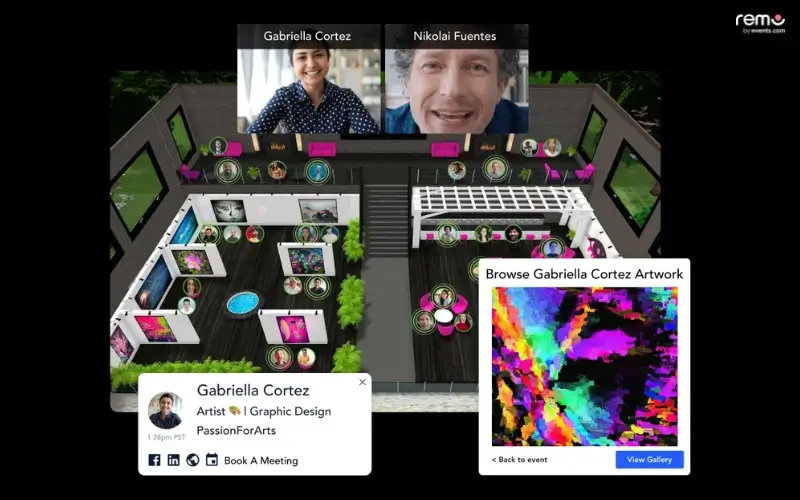
Remo is a virtual exhibition platform designed to recreate the freedom and visibility of moving through a physical exhibition hall. It uses a visual floor plan where exhibitors can have dedicated virtual booths or tables, each operating as its own conversation space.
At each booth, attendees can either browse product videos, demos, images, or offers on their own, or join a live audio-video conversation with the exhibitor when they want to ask questions or learn more.
Where Remo stands out is in how closely it translates the behavior of an in-person exhibition into an online experience. Attendees can see where people are gathering, choose which exhibitor spaces to visit, move between them freely, and start separate conversations without waiting for the organizer to direct them. This makes Remo particularly suited to small and mid-market virtual exhibitions that want a more natural, interactive exhibition experience without the complexity of larger enterprise event platforms.
Key Features
Remo gives organizers several ways to customize the exhibition environment and create opportunities for exhibitors to engage visitors.
- Customizable exhibition floor plans: Organizers can choose how many exhibitor booths to include, where to place them, and how different areas connect. For hybrid events, the layout can even mirror a familiar physical venue.
- Real-time booth visibility: Attendees can see at a glance which exhibitor spaces are quiet, active, or already in conversation, helping them decide where to go next without opening separate booth lists.
- Exhibitor content banners: Booths can use branded content banners with videos, images, offers, calls to action, and external links, giving attendees something to browse even when they are not speaking directly with an exhibitor.
- Live audio-video booth conversations: Attendees and exhibitors can start spontaneous face-to-face conversations directly at the booth, without needing to pre-schedule a meeting or move into a separate room.
- Free attendee movement: Attendees can move between exhibitor booths and conversations whenever they want, making the exhibition feel more natural and giving them more control over who they interact with.
Pricing
Remo pricing starts at $299 per month for recurring events or $699 for one-time exhibitions. Enterprise pricing is also available for larger or more complex exhibitions that require advanced customization or support. Organizers can also try the platform with a free trial before choosing a plan.
G2 rating: Remo has a rating of 4.5/5 based on 323 reviews. G2 Leader in Virtual Event Platforms and Event Networking, Summer 2026.
Pros
- Excellent, responsive human support, with reviewers frequently praising the help they receive before and during events
- Organizers still have plenty of control over the event structure, with options like locked tables and private-access spaces alongside free attendee movement
- Organizers can set up and configure their own events without relying on support for every change, while a dedicated account manager is still available to help improve the exhibition experience
Cons
- The visual floor-plan format may take a little getting used to for attendees who are more familiar with standard webinar platforms
- Exhibitions with more than 1,000 attendees require multiple Remo event spaces
Best for: Networking-led exhibitions, product showcases, community expos, and creative events where spontaneous attendee-exhibitor interaction is a priority.
2. vFairs: Best for Large-Scale Customized Virtual Exhibitions
.webp)
vFairs is built for large, structured expos and trade shows. Organizers can create dedicated 2D or 3D exhibit halls with customizable exhibitor and sponsor booths, giving the event a more visual feel. Attendees can browse booths, view product content, and connect with exhibitor representatives.
It is especially suited to larger exhibitions because organizers can run multiple exhibit halls, support a high number of booths, and let exhibitors manage their own booth content and branding.
Key Features
vFairs focuses on creating highly customized exhibition environments while giving exhibitors dedicated spaces to showcase content and interact with visitors.
- Custom virtual environments: Build 2D or 3D lobbies, exhibition halls, auditoriums, and other event areas around the structure of the exhibition.
- Interactive exhibitor booths: Exhibitors can showcase products, share downloadable resources, and connect with visitors through live chat and video calls.
- Self-serve exhibitor management: Exhibitors can manage booth content, upload assets, and complete setup tasks through their own portal.
- Scheduled exhibitor meetings: Attendees can book meetings with exhibitors, while booth reps can set their availability and manage scheduled conversations from the exhibitor portal.
- Networking and matchmaking: Matchmaking, group chat, roundtables, and networking lounges help attendees connect with relevant exhibitors and other participants.
Pricing
vFairs offers custom pricing tailored to your event needs, with both per-event and annual options available. Organizers can also request a product demo to see the platform in action. G2 reviewers often mention vFairs can get pricey, especially for smaller teams, and add-ons can push the total cost up further.
G2 rating: It has a rating of 4.7/5 based on 1,783 reviews.
Pros
- Organizers can customize exhibit halls, booth layouts, branding, and event areas to match the structure and look of the exhibition
- vFairs can support multiple exhibit halls and a high number of booths, making it suitable for larger, more complex exhibitions
- Gamification ideas like scavenger hunts, quizzes, and leaderboards can encourage attendees to visit more booths and engage with more content
Cons
- Event setup is more complex and less self-serve than on other platforms, so organizers usually need paid support to configure larger exhibitions
- Reporting and analytics can require extra work or support for more detailed insights
Best for: Large trade shows, career fairs, enterprise expos, and virtual exhibitions that need extensive branding and multiple customized exhibitor spaces.
3. Swapcard: Best for AI-Powered Matchmaking
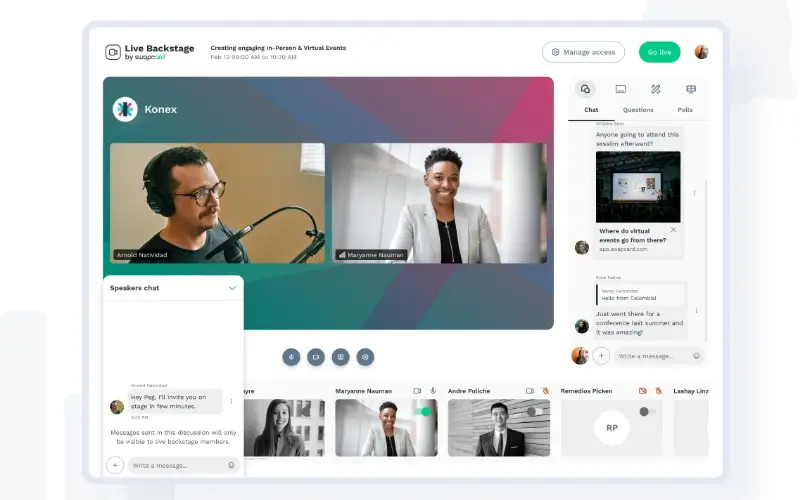
Swapcard is a virtual exhibition platform focused on helping attendees and exhibitors find relevant connections. Its AI algorithm uses interests, profile information, and engagement behavior to recommend exhibitors, products, and potential leads, making it particularly useful for B2B exhibitions built around targeted buyer-seller connections.
Key Features
Swapcard combines virtual exhibitor spaces with AI-driven discovery and meeting tools, helping attendees find relevant companies while giving exhibitors more ways to identify qualified buyers.
- AI-powered matchmaking: Recommends relevant exhibitors, attendees, products, and potential leads based on interests and engagement behavior.
- Virtual exhibitor profiles: Exhibitors get 2D profile pages in the event directory where they can share company information, images, videos, documents, products, and team details.
- Meeting scheduling: Attendees and exhibitors can view availability, request meetings, and schedule appointments with relevant connections during the event.
- Virtual lead generation: Online profile visits, meetings, and chats can feed into exhibitor lead lists, where teams can qualify and manage prospects.
- Exhibitor marketplace: Exhibitors can purchase add-ons such as lead capture tools, sponsorship upgrades, ads, and networking features through a self-service marketplace in the Exhibitor Center.
Pricing
Swapcard's event engagement platform starts at $610 per year for self-service, with final pricing varying based on attendee volume and selected upgrades. Organizers can also schedule a live demo before committing.
G2 rating: Swapcard has a rating of 4.6/5 based on 228 reviews.
Pros
- Exhibitors get pre-qualified lead recommendations, so they are less reliant on attendees finding them by chance
- Intuitive interface that is easy for organizers and attendees to navigate
- Meeting scheduling and lead qualification tools help exhibitors focus on the most relevant prospects
Cons
- Swapcard’s virtual experience is mainly directory-based, with attendees browsing exhibitor profiles rather than moving through a shared exhibition floor, so it offers less of the natural exploration you’d get at an in-person expo
- Their website currently puts much more emphasis on in-person and hybrid events, so virtual-only organizers may see less focus on developing its dedicated virtual exhibition experience over time
Best for: B2B virtual exhibitions and trade shows where targeted buyer-seller matchmaking and qualified lead generation are priorities.
4. Whova: Best for Hybrid Exhibitions
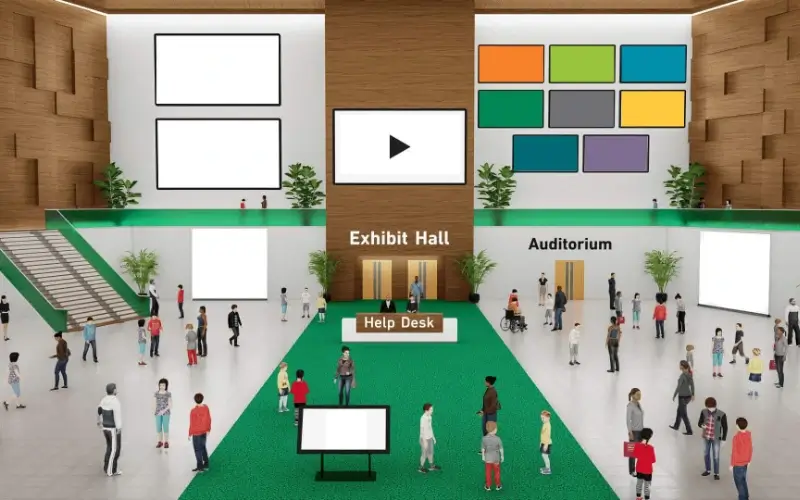
Whova is an event platform built to connect remote and in-person audiences within the same exhibition. Its digital booths, virtual networking, livestreams, and shared community features make it a strong fit for hybrid expos where exhibitors need to engage attendees both online and onsite.
Key Features
Whova combines virtual exhibitor experiences with tools that help organizers keep remote and in-person attendees connected.
- Digital exhibitor booths: Exhibitors can share company information, videos, brochures, livestreams, and promotional offers with remote attendees.
- Virtual booth interaction: Remote attendees can connect with exhibitors through booth chat and livestreams rather than simply browsing static profiles.
- Community and virtual meetups: Remote and onsite attendees can join the same discussions and virtual meetups, helping conversations continue across both sides of a hybrid event.
- Exhibitor tiering: Organizers can create different exhibitor tiers and give higher-tier exhibitors greater visibility and better placement in the virtual exhibitor hall.
- Virtual lead generation: Online booth visits and interactions can be captured as exhibitor leads, while onsite exhibitors can also collect leads by scanning attendee QR codes through the mobile app.
Pricing
Whova uses custom pricing based on the size and needs of your event. Organizers can contact Whova for a personalized quote and request a live demo.
G2 rating: Whova has a rating of 4.8/5 based on 1,926 reviews.
Pros
- Easy-to-use interface with strong overall attendee navigation
- Exhibitors can set up and manage their own booth profiles, saving organizers time during event setup
- Automatic lead tracking saves exhibitors from manually recording every visitor interaction
Cons
- Notifications can become overwhelming, with some users saying it is difficult to separate important updates from less relevant alerts
- Whova does not publish transparent pricing plans, so organizers need to request a quote to understand the cost
Best for: Hybrid exhibitions, trade shows, and conferences that need to connect remote attendees with exhibitors while also supporting an onsite audience.
5. EventX: Best for B2B Virtual Exhibitions and Lead Generation
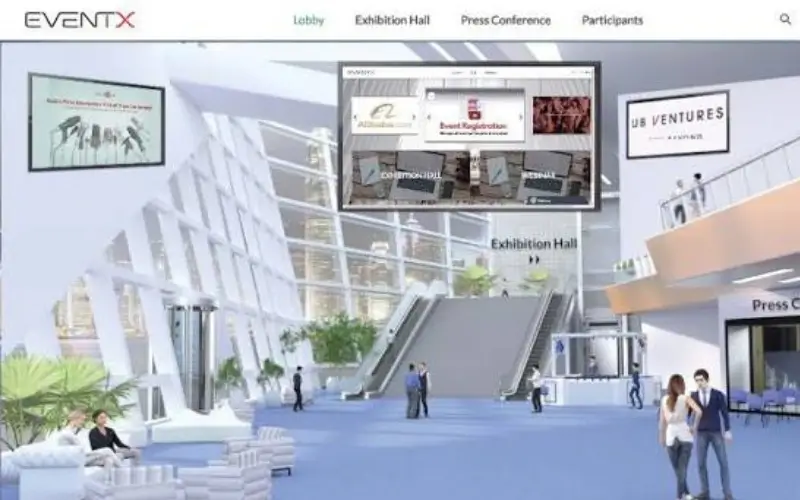
EventX is an event management platform for in-person, virtual, and hybrid events. Its virtual-event product supports branded virtual booths, a virtual lobby, live streaming, business matching, networking, and exhibitor analytics.
For exhibitions, attendees can discover and learn about exhibitors through dedicated booths or profile pages that showcase company information, products, videos, and other content. They can then connect with exhibitor representatives through live chat or pre-scheduled meetings.
Key Features
EventX combines virtual exhibitor pages with networking and lead-generation tools that help exhibitors connect with relevant attendees and measure their results.
- Virtual exhibitor booths: Exhibitors can create branded booth pages with product listings, videos, files, contact forms, and staff information.
- Business matching and networking: Attendees can find relevant connections through business matching, then connect through 1:1 meetings, live chat, and pre-scheduled networking sessions.
- Self-serve exhibitor management: Sponsor and exhibitor representatives can log in to manage their own booth information, materials, and leads using assigned permissions.
- Lead capture: EventX provides lead-capture functionality for exhibitors, while its Enterprise plan also supports CRM integrations for transferring event data into existing workflows.
- Exhibitor analytics: Sponsor dashboards can track booth visits, content downloads, video watch time, meeting requests, and qualified leads to help exhibitors measure event ROI.
Pricing
For a virtual exhibition, EventX’s Enterprise plan is the relevant option, since virtual booths, live streaming, and lead capture are only included at that tier. Enterprise uses custom pricing and supports unlimited attendees per event. EventX also has a free plan for up to 30 attendees and an Essentials plan from $99 per month for up to 300 attendees, but those tiers do not include the virtual exhibition features. A trial account is available.
G2 rating: EventX has a 4.9/5 rating based on 123 reviews.
Pros
- Business matching and meeting tools help exhibitors connect with relevant prospects instead of relying only on attendees finding their booth.
- Detailed booth engagement data gives exhibitors clearer insight into which visitors and content generated the most interest.
- Exhibitors can manage their own booth information and materials, reducing some of the setup work for organizers.
Cons
- Virtual booths and lead capture require the Enterprise plan, so organizers cannot access EventX’s main virtual-exhibition features on its published $99-per-month plan
- EventX now positions itself as an all-in-one platform for in-person, virtual, and hybrid events, with significant emphasis on its onsite event products, meaning less focus on developing its virtual capabilities further over time
Best for: B2B virtual exhibitions where business matching, exhibitor lead generation, and measurable sponsor engagement are priorities.
6. RingCentral Events: Best for Multi-Track Virtual Exhibitions
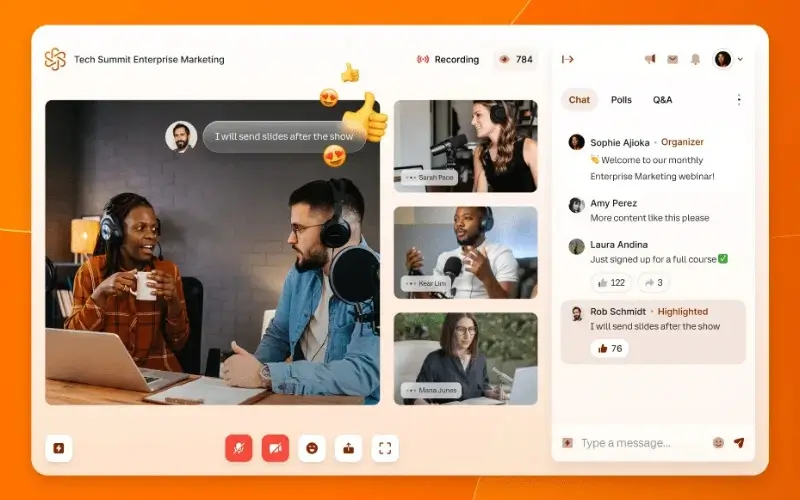
RingCentral Events provides virtual exhibition software for events that combine exhibitor areas with multiple stages, sessions, and networking spaces. It is particularly suited to exhibitions that need booths and exhibitor interactions alongside a broader program of talks and discussions.
Key Features
RingCentral Events gives organizers several distinct virtual areas, allowing the expo to form part of a broader event experience rather than operating separately.
- Virtual expo booths: Exhibitors can showcase prerecorded videos or slides, or turn their booth into a live Session where representatives interact directly with visitors.
- Multi-area virtual venue: Attendees can freely move between the Expo, Reception, Stages, Sessions, and Networking areas from within the same event.
- Exhibitor lead generation: Booths can include customizable CTAs for collecting attendee interest or directing visitors to external resources.
- Attendee networking: Speed Networking, recommended connections, direct messaging, and private video meetings give visitors several ways to connect beyond exhibitor booths.
- Third-party integrations: Expo booths and sessions can use integrations like Slido for polls and Q&A, Miro for collaborative whiteboards, and apps such as Kahoot! or vSpace for gamification.
Pricing
RingCentral Events starts at $119 per organizer per month with an annual contract. Events Pro+ starts at $239, while Events Enterprise starts at $359 per organizer per month. A 30-day free trial is also available.
G2 rating: RingCentral Events has a rating of 4.5/5 based on 972 reviews.
Pros
- Organizers can run keynotes, sessions, networking, and exhibitions in one platform instead of splitting the event across different tools or links
- Unlimited events and registrations make it easier to scale exhibitions without moving to a higher plan just because more attendees register
- Unlimited virtual expo hosting gives organizers room to accommodate exhibitions with many exhibitors
Cons
- Some G2 reviewers report technical issues such as lag, connectivity problems, and bandwidth challenges that can affect the attendee experience
- Users find the customization options limiting, particularly for branding and layouts compared with more customizable event platforms
Best for: Multi-track virtual exhibitions, conferences with expo areas, career fairs, and events that need exhibitor booths alongside sessions and structured networking.
7. PheedLoop: Best for Self-Serve Exhibitor Management
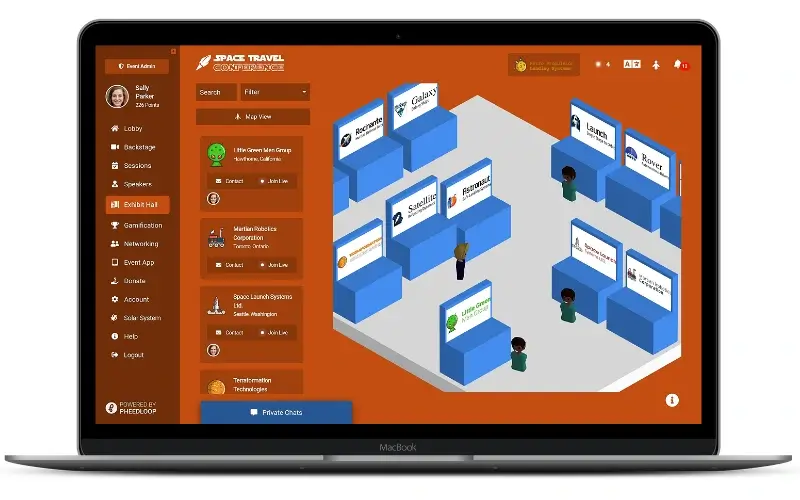
PheedLoop is virtual exhibition software with a strong focus on exhibitor self-service. It is particularly useful for exhibitions with many participating organizations, as exhibitors can manage much of their own setup and participation through dedicated portals rather than relying entirely on organizers.
Key Features
PheedLoop's features are built around the self-serve model, where every tool is designed to reduce the organiser's coordination workload by giving exhibitors direct control over their own exhibition.
- Virtual exhibitor booths: Exhibitors can create digital profiles, share files or other content, chat with attendees, and use PheedLoop Meet for live one-to-one video conversations.
- Self-serve exhibitor portal: Exhibitors can manage their profiles, complete tasks, select and pay for booth space, purchase add-ons, and access event resources without relying on the organizer for every step.
- Floor plan management: Organizers can build and manage interactive floor plans that connect booth locations with exhibitor information.
- Booth selection and management: Exhibitors can self-select available booths through interactive floor plans, while organizers can manage availability and prevent conflicting booth assignments.
- Virtual lead generation: Exhibitors can collect information from attendees interacting with them virtually. PheedLoop also offers QR-based lead retrieval for onsite participation, making this an additional hybrid capability.
Pricing
PheedLoop’s Core Event Dashboard starts at $950 and is required for every account. For a virtual exhibition, organizers would also need the Virtual Event Portal and Sponsor & Exhibitor Application System, which are priced separately based on attendee volume. Optional add-ons such as Advanced Networking and SmartSight Analytics start at $950 per event.
G2 rating: PheedLoop has a rating of 4.8/5 based on 321 reviews.
Pros
- Self-serve exhibitor tools reduce the organizer’s workload by letting exhibitors manage their own profiles, booth details, and setup tasks
- While still more expensive than other platforms, PheedLoop’s modular pricing lets organizers add only the capabilities they need instead of paying for a fixed all-in-one package
- Virtual access is relatively straightforward for attendees, with G2 users noting that participants can join sessions without repeatedly logging into separate tools or links
Cons
- Lead retrieval is a paid add-on at $199 per exhibitor per event. Because tracking and following up with interested attendees is a core requirement for most exhibitions, charging extra for this basic capability can make PheedLoop more expensive than platforms that include lead capture in the standard package
- One G2 reviewer specifically noted that integrating PheedLoop with WordPress can be tricky
Best for: Multi-exhibitor virtual and hybrid exhibitions where organizers want exhibitors to manage more of their own setup, content, payments, and participation.
8. HexaFair: Best for Immersive 3D Virtual Exhibitions
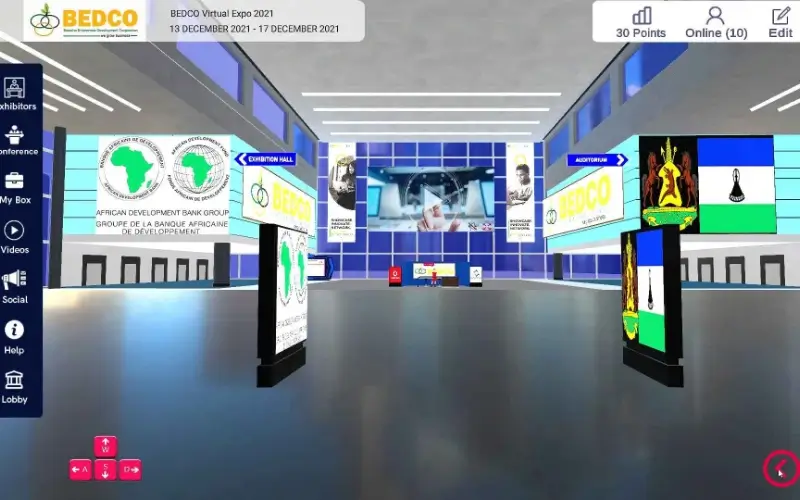
HexaFair is a virtual exhibition platform built around customizable 3D environments. Organizers can recreate exhibition layouts digitally, build multi-hall experiences, and showcase products through interactive 3D booths and product previews, making it particularly suited to exhibitions where visual presentation is a major part of the experience.
Key Features
HexaFair combines 3D exhibition environments with virtual networking and product-display tools designed for visually led expos.
- 3D virtual environments: Organizers can create branded exhibition halls or digital twins based on existing physical venues and floor plans.
- Interactive 3D booths: Exhibitors can display images, videos, documents, 3D models, and 360-degree product previews within virtual booths.
- Virtual exhibitor interaction: Attendees can contact exhibitors through live chat and video calls, schedule meetings, and exchange digital business cards.
- AI matchmaking: HexaFair recommends relevant buyers, sellers, and exhibitors based on attendee interests, helping participants find more relevant connections without relying only on manual browsing.
- Virtual lead generation: HexaFair tracks attendee activity within the online exhibition, provides exhibitor reports, and allows lead information to be transferred to CRM systems.
Pricing
HexaFair offers three custom-priced plans: Starter, Business, and Pro. The tiers vary by attendee capacity, exhibitor booth limits, event duration, and available features. HexaFair does not disclose tier pricing or starting prices, so organizers need to contact their team for an official quote. However, it’s important to note that one-to-one video calling minutes are sold separately, so exhibitions that rely heavily on attendee-exhibitor video conversations may need to budget for an additional cost.
G2 rating: HexaFair has a 4.7/5 rating based on 24 reviews, the smallest review sample among the platforms compared in this article.
Pros
- Immersive 3D environments create a distinctive virtual exhibition experience
- Customer and technical support receives strong praise from reviewers
- Scales from around 100 to 50,000 attendees and supports roughly 5 to 1,000 exhibitors, making it suitable for both smaller expos and much larger exhibitions
Cons
- 3D environments can demand stronger internet connections and computer performance
- Attendees do not navigate the environment as individualized avatars; HexaFair says avatars are used within booths instead.
Best for: Product launches, industrial expos, automotive shows, and other virtual exhibitions where immersive 3D environments and detailed visual product presentation are important.
Ready to Choose Your Virtual Exhibition Platform?
There’s no single platform that fits every virtual exhibition. The right choice comes down to what matters most for your event.
Start with the kind of exhibition you’re running. If attendee freedom and natural booth-to-booth interaction matter most, Remo is the strongest fit. For large, highly customized exhibitions with multiple halls, vFairs is better suited. Swapcard and EventX work well for B2B exhibitions focused on matchmaking, scheduled meetings, and lead generation, while Whova is a strong choice for hybrid events connecting onsite and remote attendees. For organizers who want exhibitors to handle more of their own setup, PheedLoop stands out for its self-serve exhibitor tools. RingCentral Events is better suited to exhibitions that sit within a broader multi-session conference, while HexaFair is the better option for immersive 3D exhibition environments.
Of the platforms compared, Remo is the best fit for organizers who want their virtual exhibition to feel less like browsing a directory and more like moving through a live event. Attendees can see where people are gathering, move between exhibitor spaces themselves, and join conversations naturally.
Ready to see how that could work for your next exhibition? Book a demo and experience Remo's interactive virtual environment firsthand.
Frequently Asked Questions About Virtual Exhibition Platforms
1. What features should a virtual exhibition platform have?
The most important features depend on what you want the exhibition to achieve. If attendee-exhibitor interaction is the priority, look for free movement, visual floor plans, and ways to see which booths are active. If lead generation matters most, focus on booth analytics, CRM integrations, meeting data, and lead qualification tools. For product-led or highly visual exhibitions, prioritize multimedia support, 3D booths, and customizable environments. Features like registration, branding, networking, and sponsor tools are fairly common. The real differentiators are the features that directly support your exhibition format and goals.
2. How much does a virtual exhibition platform cost?
Pricing varies based on attendee capacity, exhibitor count, event frequency, customization, and the features you need. Platforms with published pricing include Remo from $299 per month for recurring events and RingCentral Events from $119 per organizer per month. More enterprise-focused platforms such as vFairs and Whova use custom pricing, so you’ll need to contact sales for a quote.
3. Can exhibitors capture leads from virtual trade shows?
Yes. Many virtual exhibition platforms can capture leads through online activity such as booth visits, meetings, chats, content downloads, and calls to action. Depending on the platform, exhibitors may also be able to qualify, export, or sync those leads with CRM software.
4. What is the difference between a 2D and 3D virtual exhibition?
A 2D virtual exhibition typically uses visual floor plans, tables, directories, or web-based spaces to help attendees navigate. A 3D virtual exhibition uses rendered halls, booths, and other spatial elements to create a more simulated venue experience. Neither is inherently better; the right format depends on the event.
5. How long does it take to set up a virtual trade show?
Setup time depends on the platform, number of exhibitors, level of customization, and complexity of the event. A simple exhibition using existing layouts can be prepared relatively quickly, while a large event with custom environments, many exhibitors, and extensive branding may require several weeks of preparation.
Aniqa Iqbal
Aniqa is a content writer at Remo, where she merges her love for storytelling from movies and TV shows with her passion for creating compelling content. With a knack for blending pop culture references and relatable narratives, Aniqa crafts content that informs and resonates deeply with readers. She aims to strike a chord with her audience, fostering genuine connections through words that inspire, engage, and entertain. When she's not writing, Aniqa can be found binge-watching her favorite shows, always on the lookout for the next story to tell.