13 Creative Charity Event Sponsorship Ideas to Boost Fundraising

.webp)
A successful nonprofit event needs more than ticket sales and donations. The right corporate event sponsorship can help cover costs, expand reach, and turn a one-day event into a bigger community moment. However, many organizations struggle to create event sponsorship opportunities that feel valuable to businesses, often falling into the trap of offering generic logo placement that does not give sponsors a strong reason to say yes.
A truly effective charity event sponsorship goes beyond a simple donation. It creates a strategic bridge between the cause and the company. The best event sponsorship ideas provide sponsors with meaningful visibility, direct audience connection, community goodwill, or a unique brand moment that resonates long after the event ends. Whether the event happens in person, on a virtual event platform, or as a hybrid event.
In this article, we will break down the fundamentals of charity event sponsorship, and share 13 creative charity event sponsorship ideas.
{{table-of-contents}}
What Is Charity Event Sponsorship?
.webp)
Charity event sponsorship is a strategic partnership between a nonprofit and a business. It’s where a company provides support, through different types of event sponsorship such as a direct financial contribution or in-kind goods and services. In exchange, they receive specific, agreed-upon perks that help their business grow.
Now, you might be thinking, "Isn’t that just a donation?" Not exactly. While a donation is a selfless gift with no strings attached, nonprofit event sponsorship is a two-way street. It’s a marketing exchange where the sponsor expects a return on their investment. They aren't just being "nice"; they are looking for real-world value.
What does that value look like? It usually boils down to a few key wins for the brand:
- Massive brand visibility
- Direct access to attendees
- Community goodwill and CSR alignment
- Positive brand association
13 Charity Event Sponsorship Ideas Businesses Can Get Behind
The best charity event sponsorship ideas create a clear connection between the sponsor, the attendees, and the nonprofit’s mission. Here are 13 high-impact charity event sponsorship ideas that deliver genuine value and keep sponsors coming back year after year.
1. Presenting Sponsor
A presenting sponsor is closely tied to the event name (e.g., “The 5K Fun Run presented by [Sponsor]”). This offers massive visibility while keeping the nonprofit’s mission center stage. To maximize value, link the presentation to a specific outcome, such as helping expand access to community support services.
Why it works: The sponsor’s name appears wherever the event is promoted, including invitations, emails, social posts, press releases, event pages, signage, and opening remarks. This gives the business repeated exposure before, during, and after the event. Because the sponsorship is connected to a cause-led outcome, the sponsor is not just being seen; they are being seen as a company actively supporting the community.
2. Community Access Sponsor
A community access sponsor helps more people attend the event by funding a set number of sponsored tickets, subsidized entry, transport support, or participation costs. For example, a business might sponsor 25 seats for local families, students, volunteers, or service users who may not otherwise be able to attend. This shows the sponsor is actively removing barriers rather than just writing a check.
Why it works: This gives the sponsor a clear impact story they can share: “We helped 25 community members attend this event.” It also connects the business with inclusion, access, and local support, which can strengthen customer trust and show that the company is actively investing in the community.
3. Food and Refreshment Sponsor
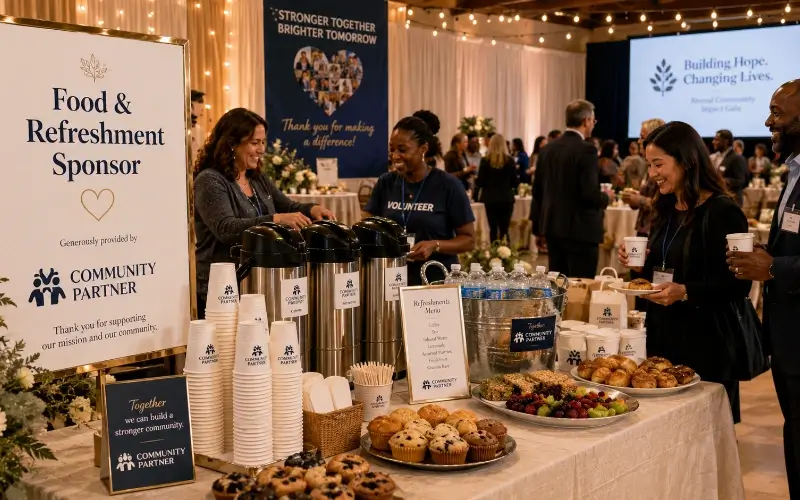
A food and refreshment sponsor handles the essentials for attendees, volunteers, or beneficiaries. For example, a café might provide coffee for attendees, a restaurant might sponsor lunch, or a grocery store might donate snacks and drinks. The sponsor’s role is to help cover a basic event need that guests will directly experience.
Why it works: The sponsor can be recognized through signs at the refreshment station, branded cups or food packaging, menu cards, table tents, event programme mentions, or a simple line such as “Coffee provided by [Sponsor].” Because guests directly use and enjoy what the sponsor provides, the brand becomes connected to a helpful part of the event experience.
4. Table Sponsorship
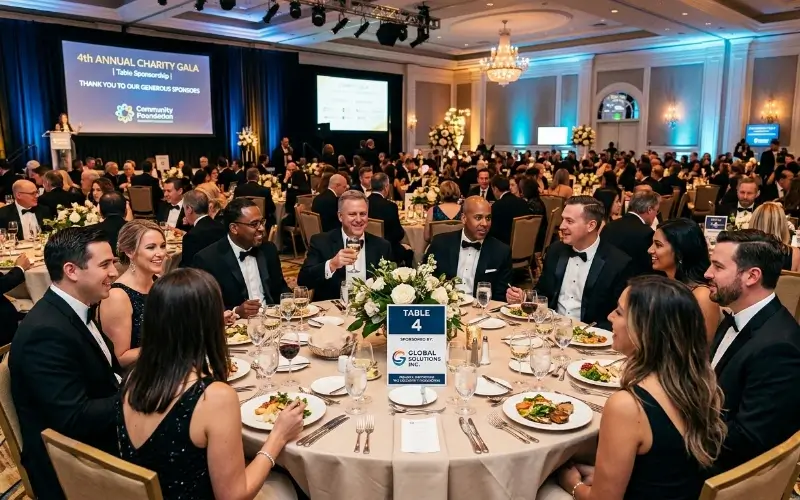
A table sponsor purchases one or more tables at a gala, dinner, luncheon, or sit-down fundraiser. The money paid for the table supports the nonprofit, while the sponsor receives reserved seats for their team, clients, partners, or invited guests.
This works especially well at charity galas and fundraising dinners where businesses want to be seen as supporters of the cause while also hosting important relationships. The sponsor may also receive recognition on the event programme, table signage, screens, or website.
Why it works: Table sponsorship gives the sponsor both visibility and a reason to attend. They can invite clients, employees, or community partners, use the event for relationship-building, and show public support for the nonprofit at the same time.
5. Event Experience or Atmosphere Sponsorship
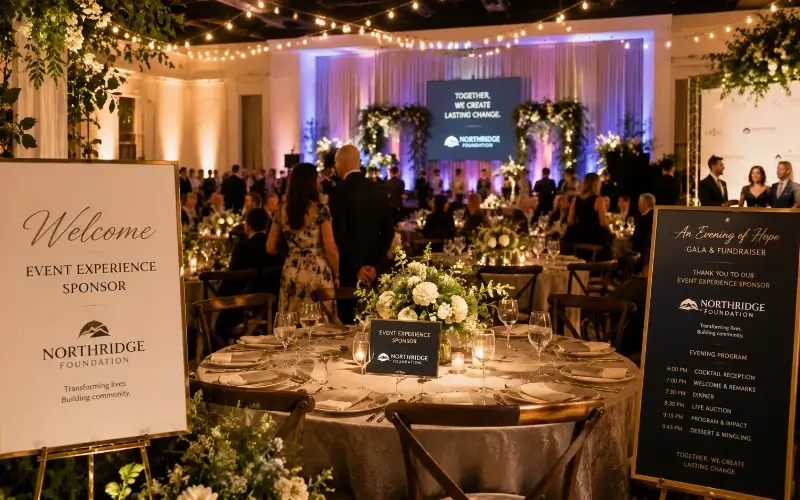
An event experience or atmosphere sponsor funds the visual setup and overall feel of the event. This could include décor, flowers, lighting, table styling, stage design, signage, photo backdrops, welcome displays, or themed installations.
Why it works: The sponsor becomes integral to the event’s vibe. When guests feel moved by the beauty or energy of the room, they experience the sponsor's contribution firsthand.
.webp)
6. Changemaker Reception Sponsorship
A changemaker reception sponsor funds a smaller reception before or after the main event. This reception may be for key people connected to the event, such as donors, board members, volunteers, speakers, or community leaders. The sponsor may cover the cost of the room setup, refreshments, invitations, signage, name cards, or reception materials.
Why it works: It offers unparalleled access to high-net-worth decision-makers.
7. Programme, Speaker, or Storytelling Sponsorship
This sponsor funds the main programme element of the event. That could include a keynote speaker, panel discussion, live performance, or a beneficiary story segment. It can also include video screening, impact presentation, or an awareness session. For example, the sponsor might pay for speaker fees, AV equipment, stage setup, video production, or programme materials.
Why it works: It shows the sponsor is helping the nonprofit educate, inspire, and move the audience to take action.
8. Fundraising Moment Sponsorship
A fundraising moment sponsor supports a high-stakes portion of your event, such as a live appeal, pledge drive, auction, raffle, or a donation match. For instance, the sponsor might match donations up to a set amount, donate raffle prizes, fund auction technology, or cover the cost of auction materials. Their role is to help make the fundraising moment stronger and easier to run.
Why it works: It provides a data-backed impact story. The sponsor isn't a bystander; they are the catalyst that encourages others to give.
9. Social Impact Story Sponsorship

A social impact story sponsor funds a feature that helps collect or share stories from the event. This could include a story booth, video station, photo area, campaign hashtag, social media wall, testimonial wall, or short-form content setup.
For example, the sponsor might pay for a videographer, photo booth, digital screen, branded story cards, or social media display. Their support helps the nonprofit capture and share stories from attendees, volunteers, beneficiaries, and supporters.
Why it works: Every time a guest shares a photo, video, or story using the event hashtag, branded filter, or campaign frame, the sponsor’s name becomes part of the awareness campaign. This helps the nonprofit spread the cause beyond the event while giving the sponsor visibility through authentic attendee-generated content.
10. Volunteer Support Sponsorship
.webp)
A volunteer support sponsor funds the essentials for the people who make your event possible, things like volunteer shirts, meals, training, badges, transport, or small appreciation gifts. Since volunteers are the backbone of any charity initiative, this is a highly practical and mission-aligned sponsorship idea.
This gives the sponsor a strong people-focused message. Instead of just funding a stage or a meal for guests, they are supporting the individuals who give their own time and energy to the cause.
Why it works: 50 volunteers walking around in shirts with the sponsor’s logo creates constant visual touchpoints.
11. In-Kind Support Sponsorship
In-kind sponsors contribute goods or services, like venues, catering, or photography, instead of cash. This slashes event costs, ensuring more raised funds go directly to your nonprofit’s mission.
Why it works: It allows businesses to showcase their actual expertise. A catering or media company sponsoring an event is essentially giving a live demonstration of their quality to a room full of potential future clients.
12. Digital Impact Sponsorship
This supports your online footprint, from livestreams and event apps to digital donation portals. It extends the event’s reach far beyond the physical room, helping the mission reach a global audience.
Why it works: Data! Digital sponsorships offer trackable metrics like clicks and impressions. For tech-savvy sponsors, seeing exactly how many people engaged with their link is a significant, measurable selling point.
13. Accessibility or Inclusion Sponsorship
.webp)
An accessibility or inclusion sponsor helps remove barriers so more people can participate. This might include captioning, sign language interpretation, accessible transport, childcare, sensory-friendly spaces, free community tickets, or mobility support. This is arguably one of the strongest mission-driven ideas you can offer.
Why it works: It sends a powerful message about corporate values. In today’s market, consumers (and employees) want to support companies that prioritize equity and inclusion. This sponsorship proves they walk the talk.
By offering these specific, value-driven ideas, you move away from "asking for money" and toward "offering a platform." Whether a business wants high-level prestige or a chance to hand out coffee and meet neighbors, there is a perfect spot for them in your event.
How to Find the Right Sponsors for a Charity Event
Getting the right sponsor for your event is about finding a perfect fit, not casting the widest net. The most successful partnerships are often local businesses that share your DNA, companies that care about your neighborhood or want to reach the same audience you do.
Look for these green flags:
- Local Footprint: Businesses operating physically in your community.
- Shared Audience: A pediatric clinic is a natural fit for a youth sports gala.
- CSR Alignment: Companies with "Corporate Social Responsibility" goals that match your mission.
- Relevant Services: A tech firm for digital packages or a bakery for refreshments.
Target local banks, healthcare providers, law firms, and real estate agencies, businesses that want to be seen as good neighbors.
Warm introductions usually work better than cold outreach. If you are wondering how to get sponsorship for an event effectively, start with your inner circle. Ask your board, volunteers, donors, and team members if they know business owners, marketing managers, or community partnership leads who may be interested in supporting the event. These connections can make the first conversation easier and more personal.
Once you understand what a potential sponsor cares about, you can match them with the most relevant sponsorship opportunity. A company focused on inclusion may suit an accessibility sponsorship, while a business that wants community visibility may prefer a table, reception, or mission partner sponsorship.
Building Lasting Charity Event Sponsorship Success
Charity event sponsorship works best as a two-way street. For nonprofits, it boosts revenue and impact; for businesses, it’s an opportunity to connect with an audience and build genuine community goodwill.
To succeed, focus on charity event sponsorship ideas tied to access, hospitality, storytelling, or measurable impact. When a partnership tells a story, sponsors are far more likely to see the value and commit.
If you’re hosting an online charity event, Remo can help you create a more engaging virtual experience. Book a demo and see how with branded spaces and interactive networking, it’s easier than ever to showcase sponsor value while keeping your nonprofit’s mission at the heart of the event.
Want to build stronger sponsorship packages before you pitch? Try Sponsor Genius Bar by Events.com to get expert guidance on creating sponsor opportunities that feel valuable, mission-driven, and easier to sell.
FAQs about Charity Event Sponsorship Ideas
1. How do I find sponsors for a charity event?
Start with businesses that already have a connection to your community, audience, or cause. Look at local companies, banks, healthcare providers, restaurants, real estate firms, media partners, and employers connected to your donors, board members, volunteers, or staff.
2. Can online charity events have sponsors?
Yes. Online charity events can include digital sponsorship opportunities such as branded virtual spaces, sponsored livestreams, donation page visibility, event emails, breakout rooms, virtual networking areas, and post-event reporting.
Aniqa Iqbal
Aniqa is a content writer at Remo, where she merges her love for storytelling from movies and TV shows with her passion for creating compelling content. With a knack for blending pop culture references and relatable narratives, Aniqa crafts content that informs and resonates deeply with readers. She aims to strike a chord with her audience, fostering genuine connections through words that inspire, engage, and entertain. When she's not writing, Aniqa can be found binge-watching her favorite shows, always on the lookout for the next story to tell.