10 Creative Club Meeting Ideas for Professional Associations & Corporate Groups

The best club meeting ideas for professional associations combine skill-building with structured networking: strategic roundtables, interactive workshops, speed networking, and hybrid fireside chats. These formats replace passive presentations with active participation, helping organizations increase engagement, strengthen professional connections, and improve long-term member retention.
Creating meetings that members genuinely look forward to isn't as simple as booking a speaker and sending a calendar invite. With knowledge more accessible than ever, professionals attend live events to exchange ideas, expand their networks, and solve real challenges with their peers. Research from Stanford's Virtual Human Interaction Lab also shows that prolonged passive video meetings contribute to virtual meeting fatigue, reinforcing the need for more interactive experiences.
The good news is that you don't need a bigger budget or celebrity speakers to make meetings memorable. You need the right format. In this guide, you'll discover 10 creative club meeting ideas that help professional associations and corporate groups boost participation, encourage networking, and deliver more value from every event.
{{table-of-contents}}
Why Creative Club Meeting Ideas Matter for Professionals
Creative club meeting ideas keep members engaged by encouraging participation, meaningful networking, and practical learning. Instead of filling an hour with presentations, they create opportunities for members to exchange ideas, build professional relationships, and leave with insights they can apply immediately.
Engagement Creates Lasting Value
Whether you're planning professional association events or corporate club activities, members want more than content they can consume on demand. Discussions, collaboration, and networking make meetings more engaging and encourage members to contribute instead of simply listening.
Meaningful Connections Drive Member Retention
High-density networking means structuring the time attendees spend together through timed rotations, small-group tables, or targeted discussion prompts so they make more meaningful professional connections than they would during an unstructured mixer. Treating networking as a designed part of the meeting, rather than an afterthought, strengthens member relationships and long-term engagement.
The impact goes beyond a single event. For example, Network My Club redesigned its networking experience around more interactive conversations and saw a 70% increase in membership, demonstrating how meaningful connections can translate into stronger member retention and community growth.
10 Creative Club Meeting Ideas for Professional Associations and Corporate Groups
Whether you're planning a monthly association meeting, an employee community event, or a corporate networking session, the right format can make all the difference. These club meeting ideas combine skill-building, networking, and collaboration to help members actively participate, build stronger connections, and leave with practical value.
1. Strategic Roundtables and Mastermind Sessions
.webp)
Definition: Strategic roundtables divide attendees into small groups of four to six to discuss a shared industry challenge. For recurring meetings, these groups can evolve into mastermind sessions, where members meet regularly to exchange advice, track progress, and hold one another accountable.
Why it works: Small groups give everyone an opportunity to contribute. Instead of relying on a single speaker, members learn from peers facing similar challenges, making discussions more practical and collaborative.
How to run it: Divide attendees into groups of four to six and assign each to a virtual table with a discussion topic, such as AI adoption, member recruitment, or leadership development. After 20 to 30 minutes, ask each group to share one key takeaway with the full audience.
2. Interactive Workshops and Skill Masterclasses
Definition: Interactive workshops replace lecture-style presentations with hands-on learning. Members actively participate through live framework building, strategy teardowns, case study discussions, or collaborative problem-solving exercises.
Why it works: Learning by doing improves engagement and knowledge retention. Members leave with practical skills and frameworks they can apply immediately instead of simply collecting notes.
How to run it: Begin with a 20-minute overview to introduce the topic, then dedicate the remaining 40 minutes to breakout activities where members work together, ask questions, and receive feedback from facilitators and peers.
3. Moderated Panel Discussions with Live Q&A
Definition: A moderated panel brings together three or four industry experts to discuss emerging trends, followed by a live audience question-and-answer session.
Why it works: Panel discussions combine expert insights with audience participation. Instead of following a fixed agenda, attendees help shape the conversation by raising the questions and challenges most relevant to them.
How to run it: Collect audience questions before and during the session, then use live polling or question upvoting so panelists focus on the topics members care about most.
4. Speed Networking
Definition: Speed networking gives members a series of timed one-on-one or small-group conversations before rotating them to meet someone new. In virtual meetings, participants can rotate between breakout groups or virtual tables to recreate the experience.
Why it works: Structured networking removes the awkwardness of open introductions and helps attendees build meaningful connections with professionals from different industries, departments, or regions in a short amount of time.
How to run it: Set a timer for five to seven minutes for each conversation before rotating participants. Use a discussion prompt, such as, "What's one challenge your organization is trying to solve this quarter?" to keep conversations focused and engaging.
5. Virtual Sponsor Expos and Mini Trade Shows
.webp)
Definition: A virtual sponsor expo gives each sponsor a dedicated virtual networking table where members can join for live product demonstrations, one-on-one conversations, or scheduled office hours throughout the event.
Why it works: Sponsors gain meaningful interactions instead of passive logo impressions, creating more value for sponsorship packages. Members benefit too by discovering products, services, and industry solutions through conversations rather than sales pitches.
How to run it: Schedule dedicated networking breaks so attendees have time to visit sponsor tables. Encourage sponsors to host structured micro-activities, such as 10-minute product demos, themed Q&A sessions, office hours, or exclusive resource walkthroughs that give members a reason to join the conversation.
6. Hybrid Fireside Chats with Small-Group Debriefs
Definition: A hybrid fireside chat combines a live interview with an industry leader and simultaneous small-group discussions for both in-person and remote attendees.
Why it works: Too many hybrid events leave remote participants watching instead of participating. Breaking into discussion groups immediately after the interview gives everyone an equal opportunity to ask questions, exchange ideas, and learn from one another.
How to run it: Limit the fireside chat to 20 minutes, then divide attendees into moderated groups of four to six people, with virtual and in-person participants joining separate discussion groups for smoother facilitation. Have each group capture questions and key ideas on a shared digital whiteboard so insights from both audiences are visible in one place. End by asking each group to share one practical takeaway with the full audience.
.webp)
7. Industry Problem-Solving Hackathons
Definition: An industry problem-solving hackathon is a timed collaboration where teams develop solutions to a real-world business challenge or case study within a set timeframe.
Why it works: Industry hackathons combine skill-building with collaboration. Members apply their expertise to real-world business challenges, learn from different perspectives, and develop practical solutions together. The shared problem-solving experience also creates stronger professional relationships than traditional networking alone, with conversations often continuing well after the event ends.
How to run it: Form cross-functional teams with members from different organizations, departments, or regions. Give each team 45 to 60 minutes to develop a solution before presenting their recommendations to the wider group. Wrap up with peer voting or a judging panel to recognize the most practical or innovative idea.
8. Professional Ice Breakers That Start Real Conversations
.webp)
Definition: Thoughtful ice breaker questions replace generic introductions with prompts that encourage members to exchange expertise, discuss industry trends, and discover shared interests. To save time, use Remo's AI Icebreaker Question Generator to create questions tailored to your audience and event in seconds.
Why it works: The first few minutes of a meeting often determine how willing people are to participate. Relevant, work-focused questions help members feel comfortable contributing while creating opportunities for meaningful networking from the very beginning.
How to run it: Start the meeting with one or two conversation starters that relate to your audience or event goals, such as:
- The Give & Get: "What is one key resource/knowledge area you need this month, and one skill you can offer to others?"
- The Resume Lie: "Share two genuine career milestones and one fabricated one—let your table guess."
- Industry Hot Take: "What is an unpopular opinion or prediction you hold about our sector's future?"
9. Real-Time Crowdsourcing and Dynamic Agenda Polling
Definition: Dynamic agenda polling lets attendees shape the direction of an entire meeting, not just a single Q&A segment, by voting early on which topics, questions, or case studies to prioritize before the discussion goes deep on any one of them.
Why it works: When members help shape the agenda, they're more invested in the discussion. It also helps speakers spend more time on the issues the audience considers most valuable instead of strictly following prepared slides.
How to run it: Around five minutes into the meeting, launch a quick poll asking attendees which subtopics deserve deeper discussion. Share the results immediately and adjust the conversation based on member feedback.
10. Table Challenge Cards
Definition: Table Challenge Cards give each group a timed business challenge, industry scenario, or case study to solve together. Teams collaborate to develop the best solution before presenting their ideas to the wider group.
Why it works: Unlike a full hackathon, Table Challenge Cards are designed as quick, low-pressure activities that get everyone talking immediately. The short time limit encourages fast thinking, balanced participation, and lively discussion without taking over the entire meeting.
How to run it: Give each table a different challenge and 10 to 15 minutes to develop a solution. Ask each team to present its recommendation, then invite attendees to vote on the most practical or innovative idea. For virtual club meetings, display the challenge directly on each virtual table so teams can get started immediately.
How to Run Engaging Virtual Club Meetings on Remo
Many of the club meeting ideas in this guide work best when members can move seamlessly between presentations, networking, and small-group discussions. A simple agenda that balances learning with interaction helps keep members engaged from start to finish.
The sample agenda below shows how to structure a one-hour virtual club meeting on Remo, from networking and presentations to breakout discussions and closing announcements.
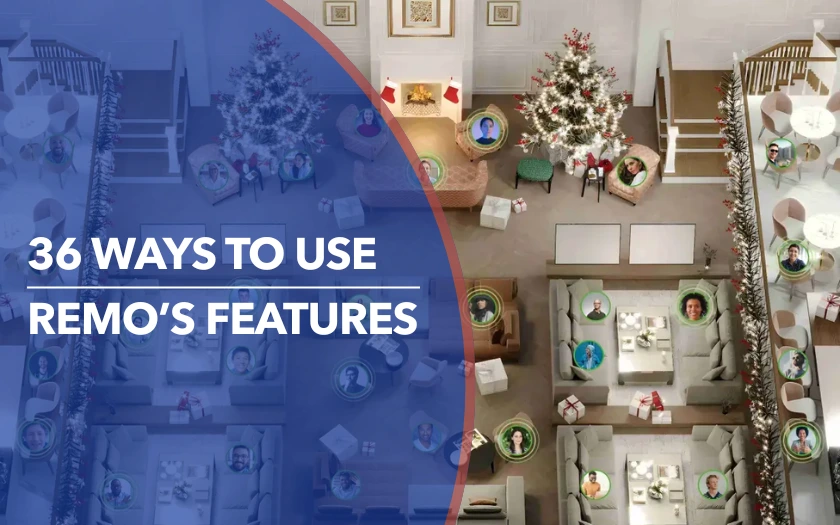
Unlike traditional virtual event platforms that require attendees to jump between multiple meeting links, Remo keeps everyone in one interactive event space. Members can move from presentations to networking tables naturally, creating a smoother experience and more opportunities to connect.
Ready to bring these club meeting ideas to life? Book a Remo demo to see how interactive floor plans, table-based networking, and collaborative meeting spaces help professional communities build stronger engagement.
Frequently Asked Questions about Club Meeting Ideas
1. What are good icebreakers for a professional club meeting?
Strong icebreakers ask for something specific rather than a generic self-introduction. Prompts like sharing one resource you need and one skill you can offer, mixing two true career milestones with one fabricated one for others to guess, or naming an unpopular opinion about your industry's future all work better than "tell us about yourself" because they give people something concrete to respond to.
2. How do you keep remote attendees engaged in a hybrid meeting?
Give remote attendees the same small-group discussion time in-person attendees get, rather than leaving them to just watch a livestream. Splitting into moderated breakout groups of four to six people immediately after a keynote or interview, for both in-person and remote participants, is what turns a hybrid session into something everyone participates in, not just observes.
3. How long should a club meeting be?
There's no fixed rule, but a one-hour format works well for most professional groups: a short icebreaker, a keynote or panel, a small-group breakout, and a brief wrap-up. Formats built around a single activity, like a hackathon segment, need more total time, so the right length depends on which format you're running.
Zainab Asad
Zainab Asad is a Content Writer at Remo, contributing to the platform's mission of fostering authentic virtual connections. With a keen eye for detail and a passion for effective communication, she crafts engaging content that empowers event professionals to create memorable virtual experiences.


.webp)