Product Demos Meaning Explained for Modern Buyers

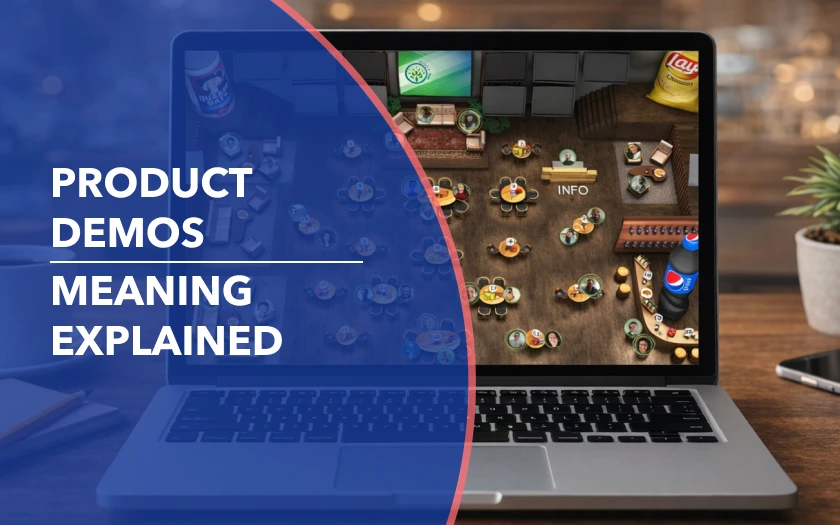
A product demo is a bit like a movie trailer. You don’t just hear what the story is about, you see it unfold. Instead of reading feature lists or marketing claims, people get to watch a product in action and decide for themselves if it’s worth their time.
That’s why product demos show up everywhere, from software tools and apps to physical products and services. Today, many of these demos happen online through webinars, live sessions, or a virtual event platform. These allow teams to show real features, everyday use cases, and key workflows. This helps buyers connect the dots between what a product does and how it fits into their own world, replacing guesswork with clarity.
In this guide, we’ll break down the meaning of product demos in simple terms, explore common types of demos, and look at how they’re planned and used in real buying situations.
{{table-of-contents}}
What Is a Product Demonstration?
A product demonstration is a live walkthrough where someone shows how a product works in real time. Instead of using slides or marketing videos, a demo involves actively using the product, either by sharing a screen online or showing it in person, so others can see how it functions step by step.
This is where the product demo meaning becomes clear. A demo shows real usage, helping people understand what a product does and how they would use it themselves.
A product demo typically focuses on:
- Real workflows or everyday use cases
- How someone interacts with the product from start to finish
- The problems the product is designed to solve
This approach works across different product types. Physical products are shown through hands-on use, while software and SaaS products rely on guided screen walkthroughs. For example, a demo of Remo might show how a team sets up a virtual event, creates sessions, invites attendees, and tracks engagement in real time.
What separates a product demo from a product description or an advertisement is intent. Descriptions explain, ads persuade, but demos help people decide by showing how something actually works.
Why Businesses Use Product Demos

Product demos help bridge the gap between interest and understanding. When buyers are evaluating options, seeing a product in action often answers questions that written content can’t.
Common reasons businesses rely on product demos include:
- Helping buyers evaluate products: Demos let potential customers see how a product works before committing, making it easier to judge whether it’s the right fit.
- Explaining complex features or workflows: Instead of overwhelming buyers with documentation, demos break functionality down into clear, easy-to-follow steps.
- Supporting sales conversations: Product demos give sales teams concrete examples to explain value, rather than relying on abstract claims.
- Reducing uncertainty before purchase: Watching a product used live builds confidence and removes guesswork around how it actually performs.
- Aligning expectations with reality: Demos help ensure what buyers expect matches what the product delivers, reducing surprises later on.
Types of Product Demos
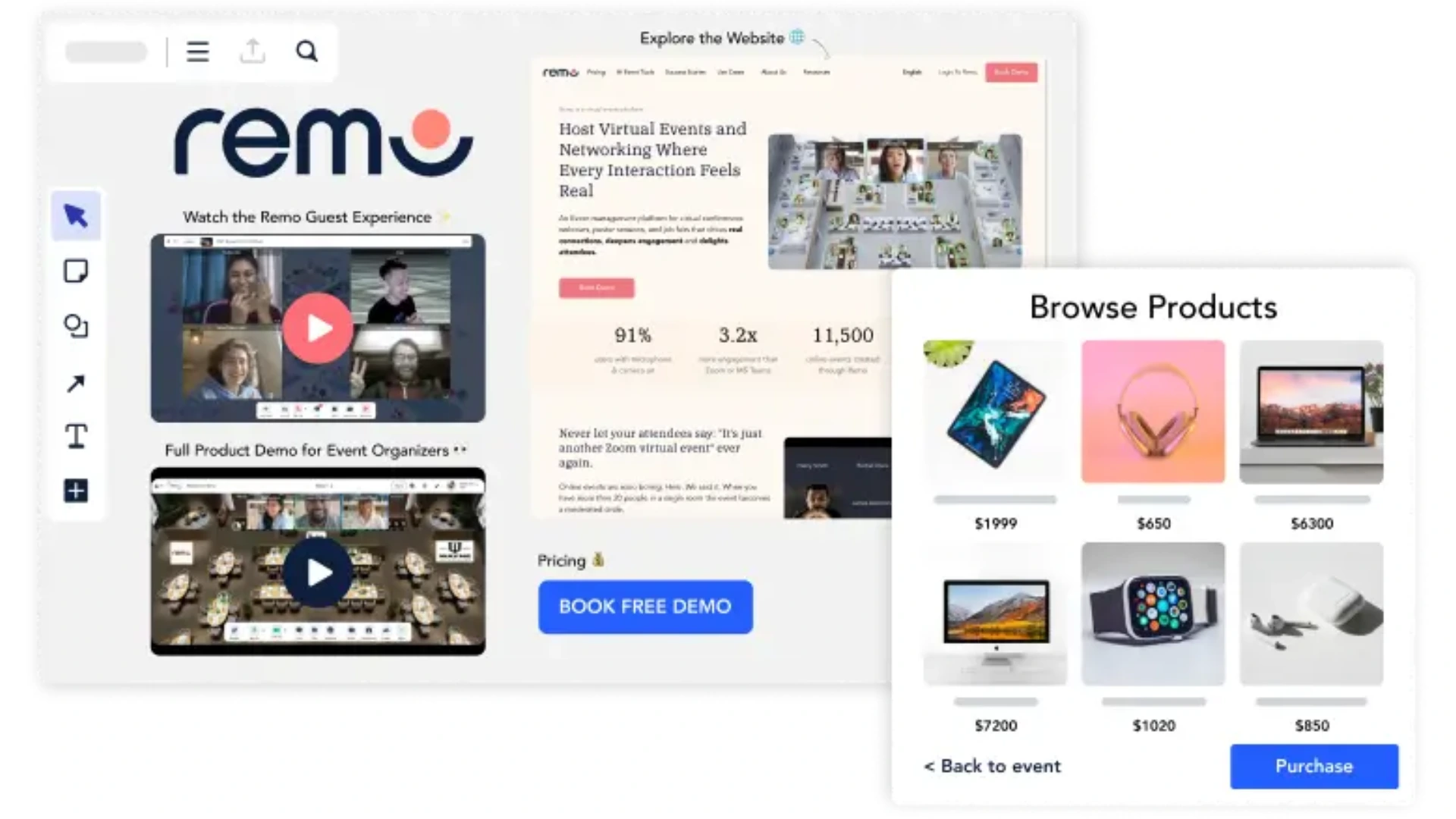
Product demos come in different formats depending on the product, the audience, and how close someone is to making a decision. Today, most demos are delivered online, using webinar platforms that support interaction and real-time guidance. Platforms like Remo make it easier to run demos that feel structured and engaging, even when teams and audiences are remote.
Below are the most common types of online product demos businesses use today:
- Live product demos are real-time sessions led by a presenter. They’re common in sales calls, virtual events, and webinars, where audiences can ask questions and see the product in action. In interactive environments like Remo, these demos feel closer to in-person conversations.
- On-demand or recorded demos are pre-recorded and available to watch anytime. They’re often shared on websites, included in follow-up emails, or reused from live sessions as ongoing product content.
- Interactive product demos allow users to explore the product themselves. This format is especially common for software and SaaS products and is often delivered through guided online sessions, workshops, or virtual training environments.
- Personalized product demos are tailored to a specific customer’s needs and usually delivered through video calls or virtual meeting spaces.
How effective a product demo is depends not just on its format, but on where it fits in the buying process.
.webp)
How Product Demos Work in the Buying Process
Product demos serve different purposes as buyers move closer to a decision.
- Awareness stage: Short, high-level walkthroughs introduce what the product does and why it exists.
- Evaluation stage: More detailed sessions focusing on features help buyers compare options, explore capabilities, and understand real workflows.
- Decision stage: Personalized or Q&A-heavy product demos come into focus, helping buyers review practical details like usability, setup, and limitations for their specific use case to confirm fit.
Across all stages, product demos reduce uncertainty by answering practical questions and showing real functionality, helping buyers, whichever stage they’re at, move forward with confidence.
How to Deliver a Virtual Product Demo
Virtual product demos are now one of the most common ways to show products to remote audiences because they’re cost-effective, easy to scale, and make it possible to reach people regardless of location. Instead of in-person meetings, teams use webinars, virtual events, and online meeting spaces to walk through features and real use cases.
When choosing online software to deliver a virtual product demo, it helps to look for tools that support:
- Live screen sharing so presenters can walk through the product in real time
- Built-in Q&A to allow questions and discussion during the demo
- Support for both large and small sessions, from webinars to focused demo meetings
- Interactive elements, such as guided walkthroughs or open discussion, to keep demos practical rather than passive
Best Practices for Effective Product Demos
An effective product demo doesn’t try to show everything. It focuses on what matters most to the audience.
- Focus on real use cases rather than feature lists
- Keep demos concise and relevant
- Encourage interaction and questions
- Align demo content with the audience
- Follow up with recordings or next steps
When these best practices come together, product demos feel less like presentations and more like useful conversations. If you’re looking for more tips on running effective product demos, especially through live sessions, our guide to webinar lead generation is a helpful next read.
Why Product Demos Matter
Product demos help people understand what a product actually does by showing it in action. Instead of relying on descriptions or claims, demos showcase real features, workflows, and use cases, making it easier for buyers to see how a product fits their needs.
As more product demos move online, delivery matters as much as content. Platforms like Remo support interactive virtual demos through live sessions, webinars, and focused meetings. If you want to host your product demo online in a more engaging way, book a personalized product demo with Remo to see how it works in practice.
Frequently Asked Questions about Product Demos
1. What is a product demo, and how is it different from a generic presentation or pitch?
A product demo shows how a product actually works, while a presentation or pitch usually talks about the product. Instead of slides, slogans, or promises, a demo focuses on real features, workflows, and use cases. In short, demos are about clarity and experience, not persuasion alone.
2. What is the main purpose of a product demo in sales or marketing?
The main purpose of a product demo is to help people evaluate whether a product is right for them. In sales and marketing, demos are used to answer practical questions, reduce uncertainty, and move conversations forward by showing real functionality rather than describing it.
3. How does a product demo help prospects understand value and solve their specific problems?
A product demo connects features to real situations. By walking through use cases that match a prospect’s needs, demos show how a product fits into their workflow and solves specific problems. This makes value easier to understand because prospects can see outcomes, not just hear claims.
Zainab Asad
Zainab Asad is a Content Writer at Remo, contributing to the platform's mission of fostering authentic virtual connections. With a keen eye for detail and a passion for effective communication, she crafts engaging content that empowers event professionals to create memorable virtual experiences.