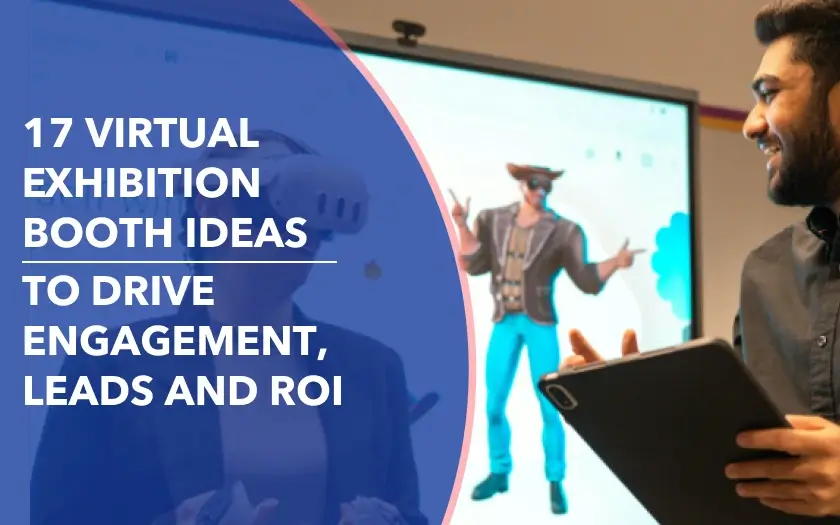
17 Virtual Exhibition Booth Ideas to Drive Engagement, Leads, and ROI

If you’ve ever walked into a virtual exhibition and felt… strangely underwhelmed, you’re not alone. So many “booths” feel like someone copy-pasted a brochure onto a screen and hoped for the best. No energy, no flow, no reason to click anything except the exit button. But when a virtual exhibition booth is done well? It feels different. It feels like a space you want to explore. You’re clicking because you’re curious, not because you’re lost. You can see what’s on offer, you know where to go next, and it actually feels worth your time.
That’s where the right virtual exhibition booth ideas come in, especially when they’re paired with a flexible virtual event platform that can bring them to life. The magic isn’t just in the graphics or the tech; it’s in how each booth is designed to match a real goal: to demo a product, showcase a portfolio, spotlight a sponsor, book meetings, recruit talent, or teach something genuinely useful.
In this article, we’ll zoom in on what makes a booth truly effective, then walk through 17 different booth types and the role each one plays inside your virtual hall. By the end, you’ll have a clearer picture of not just how to build booths that look good, but how to build booths that truly engage attendees.
{{table-of-contents}}
How to Design an Effective Virtual Exhibition Booth
A good virtual booth does more than display information. It helps visitors understand what you have to offer. Think of these as the “science” behind the “show.” Studies (such as Balancing Technology and Human Interaction in Virtual Exhibition Design) demonstrate that five things matter the most.
- Visualization: Clear images, clean layouts, and well-presented product details make your booth feel trustworthy. When people can see what you’re offering without digging, they stay longer.
- Interactivity: Live chat, quick video demos, and clickable elements keep visitors engaged. Simple touchpoints, like a “talk to us now” button, turn passive browsers into real leads.
- Navigation: Visitors shouldn’t have to hunt for information. A booth with obvious sections and predictable flow makes the experience smoother and reduces drop-offs.
- Vividness: High-quality visuals, short videos, and 3D models help your message land. You don’t need anything flashy, just enough richness to make the booth feel alive.
- Ubiquity: A booth that works on any device and stays available around the clock gives attendees freedom. They can explore at their own pace, even after the live event ends.
When these pieces come together, the booth does its job. But how you package those elements, and what the booth is built to achieve, matters just as much. Some want leads. Some want visibility. Others want to hire, teach, or demo a product. Virtual booths can adapt to each of these goals in a way physical booths can’t, and choosing the right type is often the difference between activity and real outcomes.
17 Virtual Booth Ideas Every Organizer Should Know
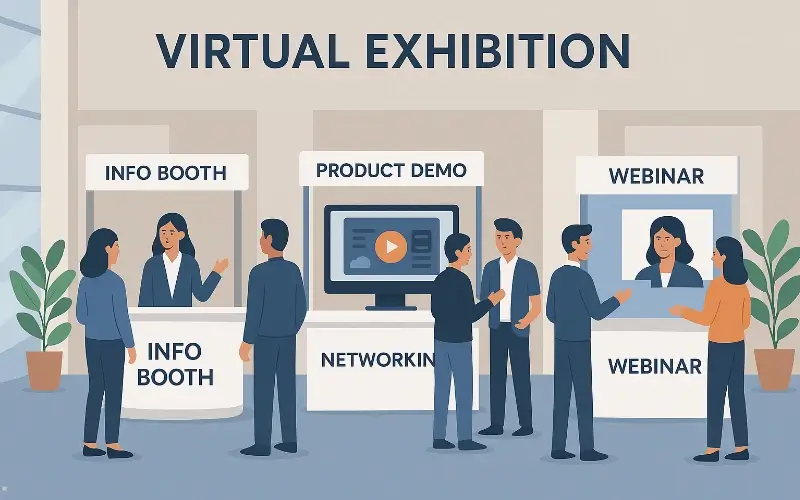
Virtual booths aren’t just “tables online”, they come in creative formats. If you thought virtual booths were boring, these 17 types are about to change your mind.
1. Product Demo Booth
There are booths where you read… and then there are booths where you experience. This one is the second kind. A product demo booth is built for exhibitors who need people to see the product in action. It works best for SaaS platforms, tech tools, and hardware where the workflow or the functionality is the main selling point. Live demos, short walk-through videos, and quick screen-share sessions make the booth feel active, hands-on and almost kinetic. On Remo, you can run side-by-side walkthroughs using multiple screen shares, making it easy to compare workflows without switching tools.
- Exhibitors get higher-intent visitors and more qualified leads because people who watch a demo tend to be serious buyers.
- Organizers should keep the booth layout simple so nobody drops off before the good stuff starts. Attention is expensive in a virtual hall.
2. Distributor / Vendor Matchmaking Booth
This is the booth that helps buyers find “their person.” Distributors list partner profiles, add territory filters, and allow quick meeting slots. By using AI matchmaking on Remo, buyers can be guided toward the most relevant distributors based on region, interests, and stated needs, turning discovery into personalized connections instead of manual searching. It performs well in manufacturing, retail, and FMCG expos where buyers need clarity on who covers their territory. Creative additions, like short partner highlight videos or a “top recommended distributors” section, help buyers make quick decisions.
- Exhibitors get qualified conversations because buyers enter the booth with a clear need.
- Organizers should keep partner info clean, consistent, and easy to compare.
3. Portfolio / Case Study Booth
This is the creative brag corner, in the most elegant way. Agencies, studios, and creative firms often use this booth style to show what they’ve delivered for past clients. A simple gallery of past projects, before-and-after sliders, and short client testimonials help visitors understand the exhibitor’s style and results quickly.
- Exhibitors gain trust early because people can see proof instead of promises.
- Organizers should remind exhibitors to keep their portfolio curated; A few brilliant examples beat a giant wall of “basic”
4. New Product Launch Booth
If a booth could have confetti cannons, this would be the one. A launch booth is built to create a moment. It’s the place for timed releases, countdowns, teaser clips, and “first look” videos that make visitors feel like they’re seeing something before the rest of the market. This booth works well for tech products, new hardware, or upgraded service tiers. Using on-demand content popups on virtual event platforms like Remo, exhibitors can reveal teaser videos, unlock early-access signups, or surface limited-time offers at the exact moment attention is highest. Instead of cluttering the booth with information upfront, popups allow key content and calls-to-action to appear precisely when visitors are ready to act.
- Exhibitors get energy, excitement and visibility.
- Organizers can highlight this booth in agendas to help drive traffic.
5. Employer Recruitment Booth
An employer recruitment booth gives companies a clear way to meet talent without the pressure of a physical fair. It’s ideal for organizations hiring across multiple roles or locations. Companies showcase job listings, culture videos, resume drop-boxes, and quick chats with recruiters. Showing “Day in the Life” videos during a virtual career fair help candidates understand the company culture instantly.
- Exhibitors, who are the company employers, get informed applicants.
- Organizers benefit from stronger engagement. And, they must keep navigation student-friendly so candidates move confidently through the booth without missing key details.
6. Service Explainer Booth
Here the star isn’t a product but it’s the process behind it. Consultants, service providers, and agencies use this booth to show how they work rather than what they sell. They often struggle in virtual exhibitions because their “offering” can’t be photographed. This booth solves that. With short explainer videos, workflow diagrams, simple package breakdowns, and maybe even a live Q&A, visitors finally understand how the service works.
- Exhibitors convert better when visitors understand the process, as the clarity lowers friction.
- Organizers must encourage exhibitors to keep the copy light. Too much text turns this booth into a wall of homework.
7. Title Sponsor Booth
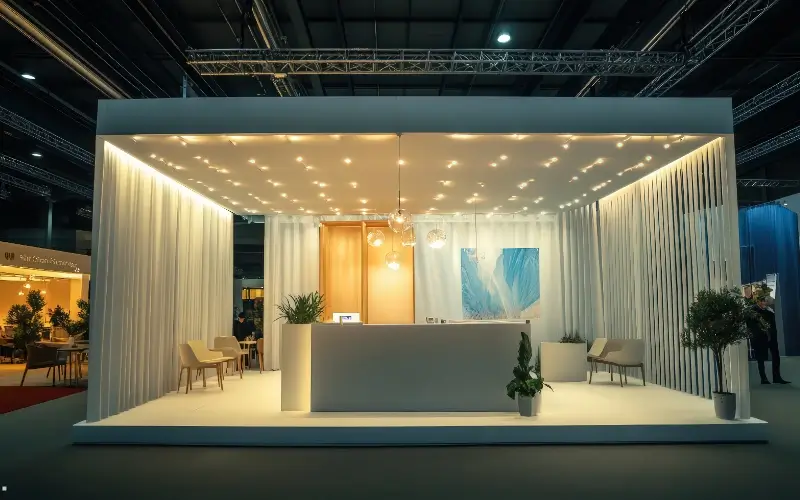
This is the red-carpet booth, the headliner of the exhibition hall. It’s big, it’s bold, and it carries premium energy. A title sponsor booth gives the largest footprint and the strongest visibility in the exhibition hall. It works well when a brand wants to anchor the event with premium content like keynote snippets, exclusive research, or high-value offers that make the booth feel worth visiting. Creative touches, such as a prize wheel, mini demo, or a short behind-the-scenes video add extra pull. Using content banners on virtual event platforms like Remo, title sponsors can prominently display premium assets such as featured videos, exclusive research, or sponsor messages directly inside the booth, ensuring sustained attention throughout the event.
- Exhibitors get maximum exposure and as title sponsors.
- Organizers should drive traffic intentionally. Shout this booth out throughout the day so the sponsor feels their investment paying off.
8. Tiered Sponsor Booth (Gold/Silver/Bronze)
Not all sponsors want the same spotlight, and this booth structure solves that. A tiered sponsor booth system lets exhibitors choose the level of exposure they want. It works especially well for events with many sponsors who need clear, predictable pricing and benefits, often structured through clearly defined event sponsorship packages. Gold booths get premium tools: video, live chat, featured placement. Silver gets solid interaction. Bronze gets a clean, essential presence. And because the difference is clear, sponsors feel confident picking the level that fits their goals and budget.
- Exhibitors know exactly what they're paying for.
- Organizers should be crystal clear about what each tier includes. Ambiguity kills sponsor confidence.
9. Product Showcase Booth
Some products don’t need explanation, they need to be seen. This booth is the visual playground: perfect for machinery, equipment, physical goods, venues, or anything where the “wow” isn’t in the words but in the details. A product showcase booth puts the spotlight on a physical or visual product and lets visitors inspect it closely. Picture 3D models you can rotate, AR walk-arounds, clean galleries, and those satisfying hotspots that let people tap “open the door,” “view inside,” or “spin around.” It gives the booth a tactile feel without overwhelming the visitor. Virtual event platform features like immersive floor plans help create a realistic, spatial experience, helping visitors hop between showcase areas as naturally as they would in a physical exhibition.
- Exhibitors get longer viewing times, more curiosity and stronger early interest.
- Organizers should prioritize sharp visuals and fast loading. In a virtual space, a laggy booth is the equivalent of a squeaky pop-up banner.
10. Play & Engage Sponsor Booth
This is where the fun happens. This booth is built for virtual event engagement. It’s a great fit for brands that want people to interact with their content instead of just browsing it. Quizzes, games, scavenger hunts, timed challenges, anything that makes the visitor engage instead of scroll past. You can tie the activity to the sponsor’s brand or keep it universally fun.
- Exhibitors benefit from high dwell time and larger lead lists because visitors need to participate to complete the activity.
- Organizers should keep instructions short and make the booth easy to rejoin if someone drops off.
.webp)
11. Industry Solutions Booth
Some exhibitors serve multiple industries, and this booth helps them speak directly to each one. Tabs or sections labeled “Healthcare,” “Education,” “Finance,” or “Retail” guide visitors to the information that fits their world. The booth works well for SaaS companies, enterprise vendors, and large service providers. Adding short industry-specific demo videos or tailored case studies can make each section feel intentional.
- Exhibitors get relevance and better engagement because visitors don’t have to filter through irrelevant information.
- Organizers should help exhibitors avoid tab overload. Four thoughtful sections beat twelve confusing ones.
12. Sponsored Lounge Booth
This is a relaxed online networking space with a sponsor’s branding layered in. It positions the sponsor as the host of conversations instead of a company pushing a product. It’s soft-sell, low pressure, and helps create goodwill. Visitors drop in for small conversations, casual Q&A moments with the sponsor’s team, or to meet other attendees. Simple touches, like branded backgrounds or a short welcome message using the announcement feature on Remo, keep the booth aligned without feeling intrusive.
- Exhibitors gain warm awareness and positive association because they’re seen as the ones creating a comfortable space for people to connect.
- Organizers must keep it staffed so it feels alive. An empty lounge is a sad lounge.
13. Consultation / Meeting Booking Booth
A consultation booth gives exhibitors a straightforward way to meet serious buyers, have real conversations to move deals forward. It works well for medical, legal, and enterprise-level services where decisions depend on talks rather than browsing. Visitors book a meeting through scheduling tools, enter video rooms, or fill quick intake forms. Add a “Who you’ll meet” intro video and it becomes even more personal.
- Exhibitors get higher-quality leads because visitors who book time usually have a clear interest.
- Organizers must ensure the scheduling tool works on mobile as tons of attendees browse on phones.
14. Resume Submission / Talent Pool Booth
Sometimes job seekers just want to drop their resume and go. This booth makes that fast and painless. It works well at student events, early-career expos, or large virtual job fairs where attendees get a quick way to join a company’s talent pool. Candidates can upload resumes, portfolios, or LinkedIn profiles, and AI scoring or job-matching tools offer quick feedback. Creative additions, like a “top roles you might fit” list or a short overview of hiring timelines, help set attendees’ expectations.
- Exhibitors get a clean talent pool they can review after the event.
- Organizers must keep the booth uncluttered as it encourages more submissions, especially from students who may feel rushed.
15. Sponsored Content Booth
If the exhibitor doesn’t want to sell, but does want to teach, this is their booth. A sponsored content booth is ideal when a sponsor has strong whitepapers, research, videos, or training material to share. With a virtual exhibition, visitors can open and explore ebooks, short courses, or reports at their own pace, while sponsors can easily track content views and interactions to support lead generation efforts.
- Exhibitors get high-quality leads without the pushiness, as people who consume content are already engaged.
- Organizers should encourage simple layouts so the booth feels like a clean resource hub instead of a cluttered library.
16. Research & Innovation Booth
This is where ideas take the stage. A research and innovation booth gives academic teams and R&D groups a place to share what they’re working on without the pressure of a long presentation. By using simulive content on Remo, exhibitors can run short lightning talks, prototype explainers, or recorded concept walkthroughs that play on a schedule or loop throughout the day. This allows visitors to drop in, absorb ideas at their own pace, and move on when ready, keeping the experience approachable and digestible. It works well for universities, labs, and companies with early-stage concepts or upcoming technologies.
- Exhibitors benefit by attracting curious minds and potential long-term partners.
- Organizers must keep the booth layout clean, minimize distractions so the ideas remain the star.
17. Training / Certification Booth
This booth says: “Learn something. Earn something.” It works well for software platforms, B2B tools, and associations that rely on structured education. Instead of delivering full courses, exhibitors offer bite-sized previews of their training programs, such as short learning modules, sample quizzes, micro-lessons, or demo certifications, so visitors can quickly understand the value of the full offering without committing upfront.
- Exhibitors benefit because learners often move naturally into a trial or product inquiry after completing a module.
- Organizers should keep the booth lightweight so it loads quickly, education stalls when the interface does.
How to Choose the Right Virtual Exhibition Booth Idea
.webp)
Choosing the right mix of virtual exhibition booths starts with understanding what your exhibitors are trying to achieve. Most fall into a few common buckets, and matching their goals to the right booth type keeps the experience smooth for everyone.
If an exhibitor is focused on lead generation, steer them toward booths built for real conversations, such as demo booths, consultation booths, or recruitment booths. These formats make it easy for visitors to ask questions, book meetings, and move toward a decision.
If the goal is brand awareness, tiered sponsor booths or sponsored content booths work well. They give the exhibitor visibility without forcing heavy interaction. This is a good fit for companies that want presence, not pressure.
If the exhibitor is there to educate, point them toward research and innovation booths or training booths. These booths let them share ideas, walk through concepts, and teach something useful without overwhelming the visitor.
For organizers looking to boost engagement, an activity booth brings the most energy. People stay longer when there’s something to participate in, and sponsors get the benefit of higher foot traffic.
Moreover, audience type matters too:
- B2B attendees want clear information and easy access to decision-makers.
- Students respond better to simple flows and quick actions like resume drops.
- Consumer audiences prefer visual booths that feel approachable.
- Industry-specific groups, like healthcare or manufacturing, tend to look for solutions that speak directly to their niche.
A good mix keeps the exhibition balanced: some booths teach, some sell, some entertain. When the booth types match the people walking through the hall, the whole event feels more intentional.
How to Improve Any Virtual Booth for Higher Engagement
Any booth can feel stronger with a few small upgrades that make the experience easier for visitors. A few practical enhancements include:
- Live video chat or quick messaging support that helps people get answers right away, which cuts down on confusion and drop-offs.
- Gamified elements, such as a short quiz or a small reward, keep visitors engaged longer without overwhelming them.
- Personalized content tabs make the booth feel more relevant. When people can choose the path that fits their role or industry, they’re more likely to stay.
- Interactive hotspots work the same way by letting visitors explore information at their own pace.
- AI recommendations can guide people to the right resources, especially in larger booths.
- Connecting the booth to a CRM helps exhibitors follow up quickly while the interest is still warm.
These small touches make any booth easier to use and more effective for the exhibitor.
Common Virtual Exhibition Booth Mistakes

Even strong exhibitors can miss the mark in a virtual environment. Most issues come down to small choices that make the booth harder to use or less inviting. Keeping an eye on these common mistakes helps exhibitors create booths that visitors actually enjoy spending time in.
- Overloading the booth with too much text can make visitors tune out quickly.
- Leaving out a clear CTA, so people don’t know what to do next.
- Ignoring analytics and losing valuable insights about what visitors interacted with.
- Hiding key information behind confusing navigation.
- Not staffing the booth live, which limits real conversations and slows down lead flow.
- Using large files or slow-loading videos that break the experience and cause drop-offs.
These are easy fixes, and addressing them makes a noticeable difference in how well a booth performs.
Building Better Virtual Exhibition Booths
At the end of the day, a virtual booth isn’t just pixels on a screen, it’s a chance to spark curiosity, start conversations, and make people feel something. When you choose the right booth style and shape it with intention, you’re not just filling a space… you’re creating an experience. One that invites people to explore, learn, connect, and walk away thinking, “Wow, that was actually fun.” And that’s the whole point. A great booth doesn’t shout. It guides. It welcomes. It makes the digital feel just a little more human.
If that’s the kind of exhibition you want to build, Remo is designed for exactly this. It gives you the freedom to create booths that feel immersive, spaces where visitors click around because they want to, not because they have to. Book a demo today and let your virtual hall become a place people remember.
Frequently Asked Questions about Virtual Exhibition Booth Ideas
1. What features should the virtual booth include?
A strong virtual booth needs clear messaging, helpful content, and real interaction. Include a simple overview, downloadable resources, live chat, meeting-booking tools, and one obvious CTA. Add light interactivity and lead capture so visitors know what to do next and exhibitors can follow up quickly.
2. How do I ensure navigation is clear and visitors don’t drop off?
Give visitors one obvious starting point and use simple, predictable sections they can scan at a glance. Keep layouts clean, avoid long text blocks, and repeat your main CTA throughout the booth. Every path should lead to a next step so nobody hits a dead end or gets overwhelmed.
3. What happens after the event (follow-up)?
After the event, exhibitors review analytics, export leads, and follow up based on what visitors clicked, watched, or downloaded. Most booths stay open for on-demand browsing, so missed conversations can continue.
Aniqa Iqbal
Aniqa is a content writer at Remo, where she merges her love for storytelling from movies and TV shows with her passion for creating compelling content. With a knack for blending pop culture references and relatable narratives, Aniqa crafts content that informs and resonates deeply with readers. She aims to strike a chord with her audience, fostering genuine connections through words that inspire, engage, and entertain. When she's not writing, Aniqa can be found binge-watching her favorite shows, always on the lookout for the next story to tell.