6 Best Virtual Career Fair Platforms for Universities in 2026: A Comparative Guide


Virtual career fairs aren’t just online booths anymore. They’ve evolved into structured digital experiences where students and employers meet, talk, and make real hiring decisions. As they’ve become a standard part of university career programs, expectations have risen on both sides.
Yet not all virtual career fairs deliver the same experience. The difference often comes down to the virtual career fair platform behind the event. Some platforms prioritize scale and efficiency. Others use AI tools for smart matching and streamlined scheduling, while a few focus on open movement and real-time conversation to better mirror in-person career fairs.
This guide explores six of the best virtual career fair platforms for universities in 2026. It highlights options that go beyond turnout, helping career teams create interactions that feel purposeful and worth showing up for, while making it easier to compare and select the right fit for your institution.
{{table-of-contents}}
Why Your Virtual Career Fair Platform May Need an Upgrade
Universities are rethinking virtual career fair software because student expectations have changed. Gen Z students are comfortable online, but they are selective about how they engage. Long lists of employers and static job postings are no longer enough to keep their attention. Instead, they expect career fairs to feel interactive and purposeful, with clear value in every interaction.
This shift toward relevance and quality affects everyone involved. Employers increasingly value focused, meaningful conversations over resume volume. Career teams, in turn, need virtual career fair platforms that prioritize interaction, support intentional follow-up, and make it easier to measure engagement rather than just attendance.
In 2026, virtual career fairs work best when they complement in-person and hybrid events, extending reach while maintaining strong interaction.
The 3 Types of Virtual Career Fair Platforms Universities Can Choose From
Not all virtual career fair platforms are built with the same purpose. Before comparing individual tools, it helps to understand the three main approaches universities are choosing from today. Most platforms fall into one of these categories, each designed to support a different kind of hiring outcome.
- Transactional platforms are built for speed and volume. They focus on resume collection, chat queues, and rapid screening, making them suitable for high-volume hiring or roles that require quick filtering. Conversations tend to be short and task-oriented, which helps recruiters move efficiently but often limits deeper engagement for students.
- Meeting-first platforms emphasize structure and scheduling. These virtual job fair platforms typically revolve around predefined sessions, employer presentations, and booked meetings with fixed time slots. The experience feels organized and predictable, which makes it easier to manage at scale. At the same time, the format can feel rigid for students who prefer to explore opportunities more freely.
- Relationship-first platforms prioritize open exploration and conversation. Instead of relying on queues or tightly scheduled meetings, students can move between employers, join discussions, and engage at their own pace. Spatial layouts and open formats make these virtual job fair platforms feel closer to in-person career fairs, especially for universities focused on early career discovery and student confidence.
These platforms were selected based on real university use cases, with a focus on student engagement, employer outcomes, and scalability. With that context, the next section breaks down the 6 best virtual career fair platforms for universities in 2026.
6 Best Virtual Career Fair Platforms for Universities in 2026
Choosing a virtual career fair platform isn’t about finding the tool with the longest feature list. It’s about matching the right type of platform to how your students explore opportunities and how employers prefer to engage. Some universities need scale and structure. Others prioritize interaction and discovery. Most fall somewhere in between.
The platforms below reflect these different approaches. We’ve compared each virtual career fair platform to give you a brief overview of where it works best and what kind of university it’s most suited for.
1. Remo - Best for Relationship-Driven Career Fairs
Platform Type: Relationship-First
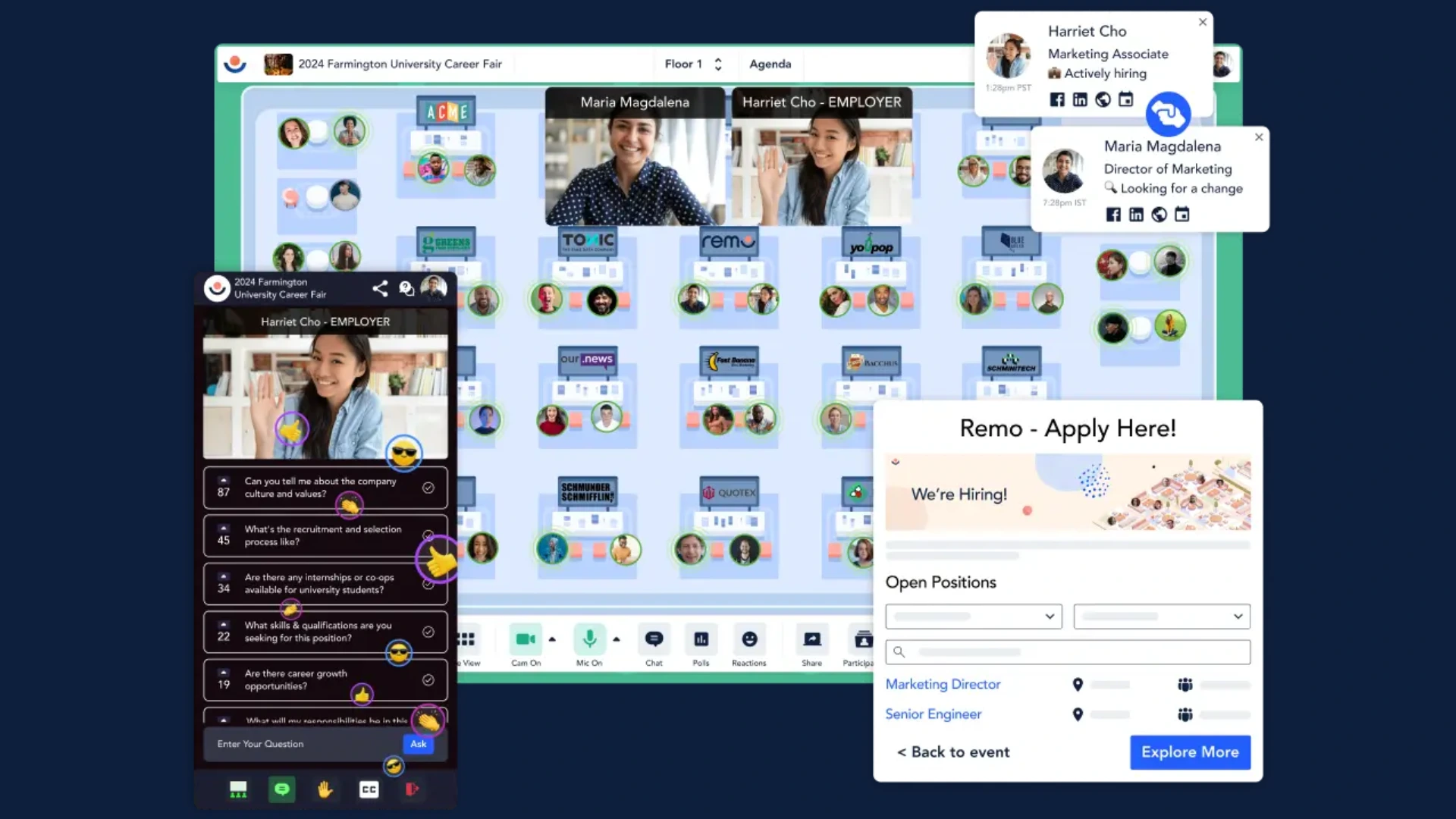
Remo is built for universities that want their virtual career fairs to feel closer to being on campus. Instead of static booths or chat queues, it uses immersive floor plans where students can move freely and engage with employers through open conversation.
Why Universities Use It
Universities choose Remo because it supports the kinds of interactions that are difficult to replicate online. Features like virtual tables, free guest movement, and open floor layouts allow students to approach employers naturally. They can listen in on ongoing discussions and join when something sparks their interest. That sense of free exploration is what makes career fairs valuable in the first place. It helps students discover opportunities they may not have initially considered, which is something both students and career teams care deeply about.
As a solution for higher education institutions, Remo also includes built-in moderation tools and flexible event controls, making it easier for career teams to manage large, multi-employer events without relying on rigid schedules or overly structured workflows.
Remo Features for Career Fairs at a Glance
Remo brings together the features universities need to run effective virtual career fairs, while removing many of the constraints found in more rigid platforms:
- Interactive virtual booths powered by tables, allowing employers to host ongoing conversations rather than manage static listings
- Free guest movement across dynamic floorplans, so students can walk up to employers, observe conversations, and join naturally
- Flexible floorplan design, supporting multiple employers, interview areas, lounges, and information zones within one event
- Private tables and rooms for interviews, focused discussions, or employer-only conversations
- In-conversation file sharing, including resumes, role details, and follow-up resources
- Custom registration forms that collect qualification criteria, helping employers identify and engage ideal candidates during the event
- Engagement analytics that show where students spent time and how employers interacted
This combination allows universities to support exploration, discovery, and structured follow-up within the same event, closely mirroring how students and employers engage at in-person career fairs, something only few other virtual career fair platforms manage as effectively as Remo.
Where it Works Best
- Universities prioritizing networking and engagement over resume volume alone
- Career fairs focused on exploration and early career discovery
- Global, hybrid, or multi-day events
- Institutions aiming to mirror their in-person career fair experience online
.webp)
Pricing
Remo Pricing starts at around $299 per month for recurring events, with one-time event plans beginning at $699. Enterprise options are available for larger-scale or ongoing needs. Unlike many platforms, Remo does not lock core features behind higher tiers. Pricing scales based on event size and usage rather than feature access.
2. vFairs — Designed for Large, Structured University Career Expos
Platform Type: Meeting-First
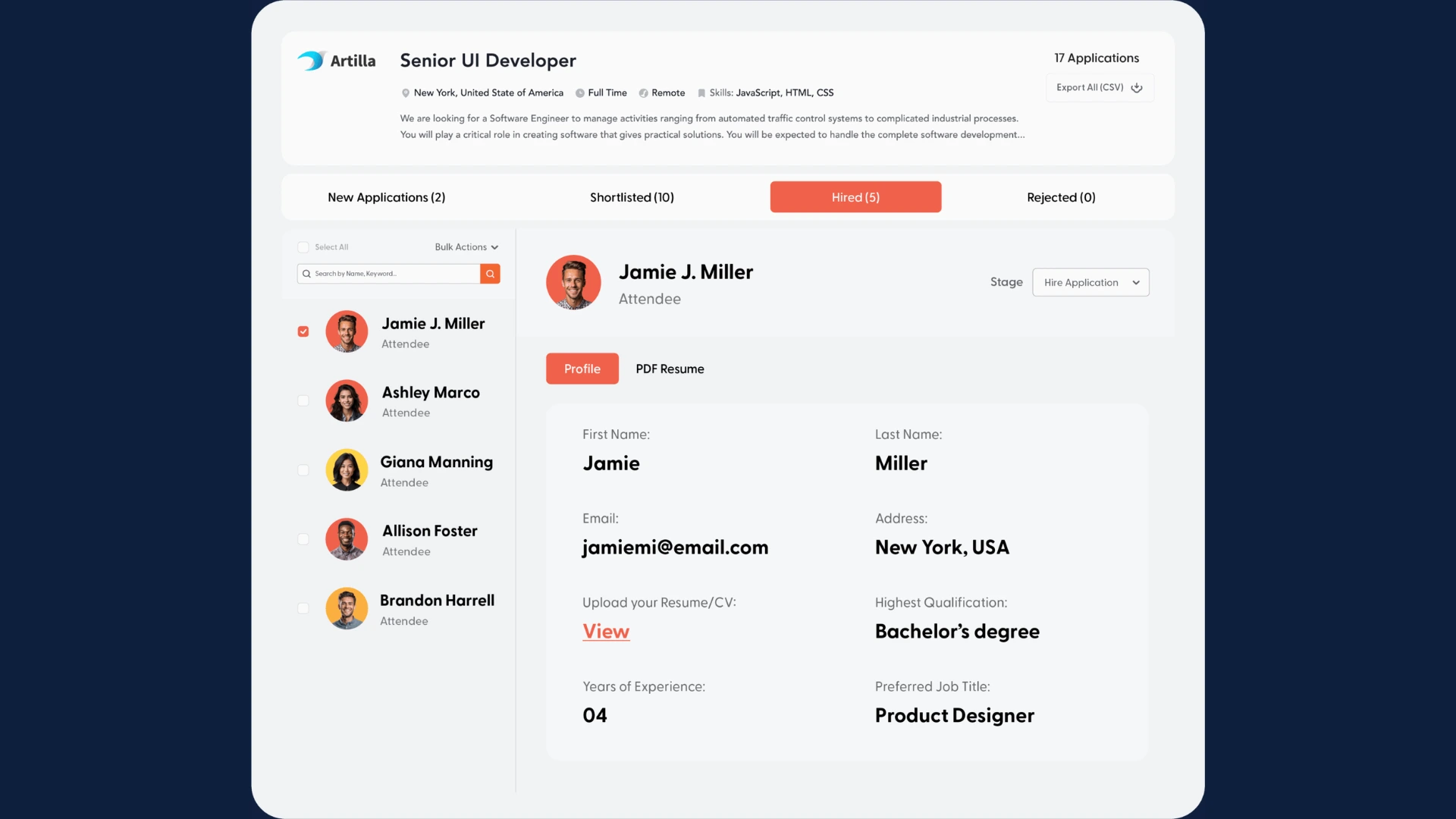
vFairs is designed for universities hosting high-attendance virtual career fairs with a formal, exhibition-style layout. The platform centers on virtual halls and employer booths, guiding students through a predefined environment rather than open exploration. This structured format works well for employer-heavy events, though some users note it can feel rigid. Feedback has also pointed to challenges with chat timing controls, limited job search filtering options, and occasional technical constraints during peak activity.
Why Universities Use It
Universities choose vFairs when operational control and scale are top priorities. The platform makes it easier to coordinate dozens or even hundreds of employers within a centralized, branded environment. Scheduled interactions, booth customization, and controlled navigation help career teams manage logistics efficiently, especially for institutions that run formal, sponsor-supported career fairs where consistency and visibility matter.
vFairs Features for Career Fairs at a Glance
vFairs includes core features commonly used in structured virtual career fairs, including:
- 3D virtual halls and customizable employer booths
- Centralized event lobbies with guided navigation
- Resume drop functionality within virtual booths
- Scheduled chat and video meetings
- Registration tools and event analytics dashboards
Where It Works Best
- Large universities hosting high-attendance virtual career expos
- Employer-heavy fairs with many booths
- Events that rely on schedules and predefined interactions
- Institutions seeking a consistent, branded virtual environment
Pricing
vFairs pricing is typically offered through custom quotes based on event size, duration, and required features. This pricing model is common for universities running large or infrequent career fairs that need tailored setup and support.
3. Handshake — Good for Universities Already in the Ecosystem
Platform Type: Transactional/Meeting-First
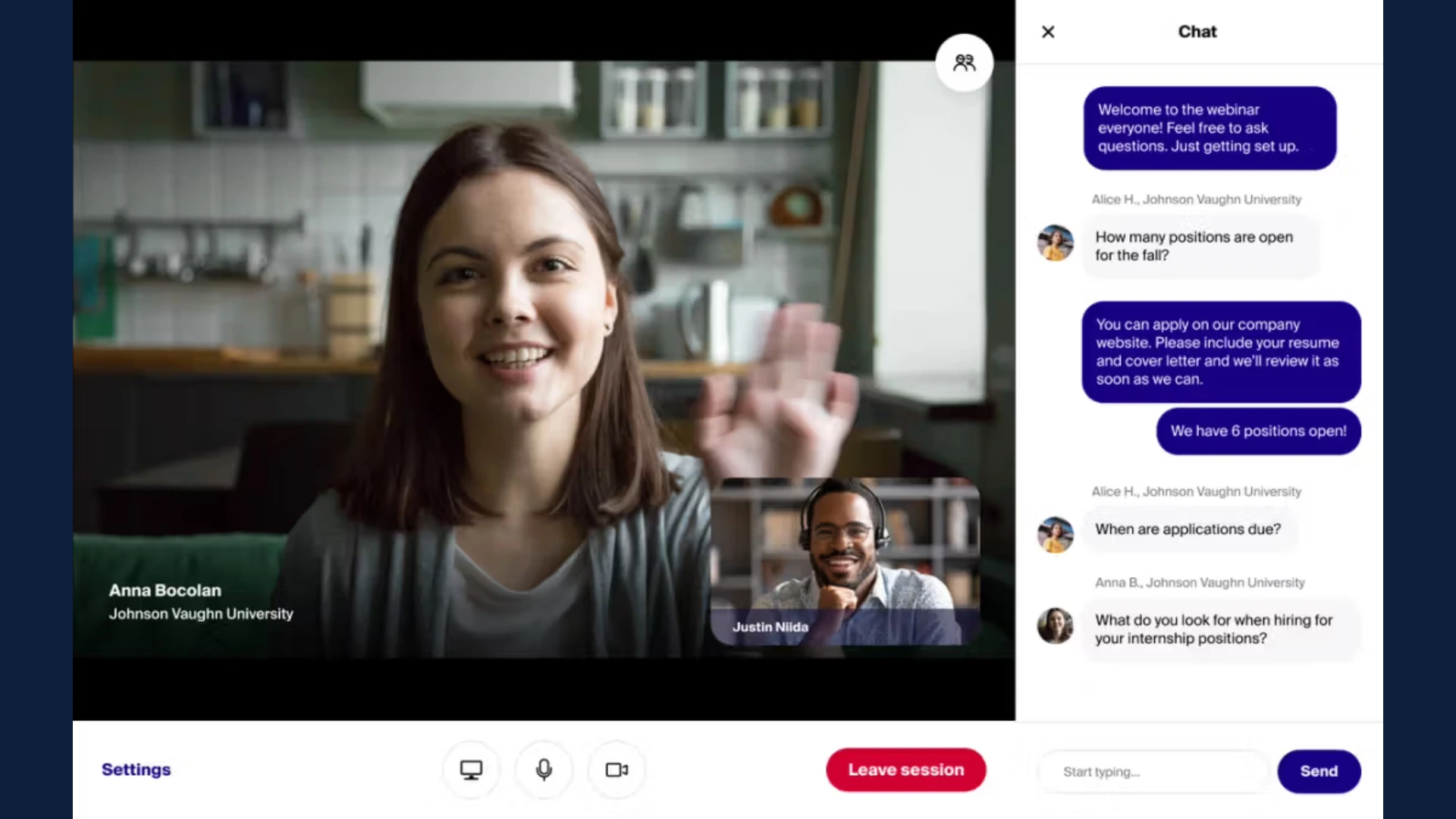
Handshake is widely used by universities as a centralized career services platform connecting students, employers, and job opportunities in one place. Its virtual career fair functionality extends existing job postings and employer relationships into a digital fair format. While this makes it convenient for institutions already embedded in Handshake, the experience tends to rely heavily on pre-scheduled sessions. For some universities, this can shift career fairs away from open exploration and toward a more rigid sequence of appointments, limiting spontaneous discovery.
Why Universities Use It
Universities use Handshake because it consolidates multiple career services functions into a single system. Job postings, employer relationships, student registrations, and virtual fair participation all live within the same virtual job fair platform, reducing the need for additional tools. For employers, Handshake emphasizes efficiency through features like candidate messaging, automated matches, and school-based recommendations, which can help accelerate early talent hiring at scale.
Handshake Features for Career Fairs at a Glance
Handshake supports core virtual career fair and recruiting capabilities, including:
- Integrated job postings and employer profiles
- Scheduled one-on-one and group sessions
- Resume sharing and candidate messaging
- Employer-driven outreach and recommendations
- Student-booked one-on-one meetings with recruiters
Where It Works Best
- Universities already using Handshake as their primary career platform
- Career fairs focused on scheduled interviews rather than open exploration
- Senior or final-year students targeting specific employers
- Institutions prioritizing structured, appointment-based formats
Pricing
Handshake pricing for universities is structured through institutional agreements, with virtual career fairs included as part of broader platform access. Employer participation depends on their Handshake account level, and advanced recruiting tools are tied to paid employer plans. While pricing details are not publicly disclosed, Handshake is widely positioned as a premium solution, and some users have publicly noted concerns about the high cost.
4. 12twenty — Designed for Data- and Outcomes-Focused Institutions
Platform Type: Transactional (with infrastructure focus)
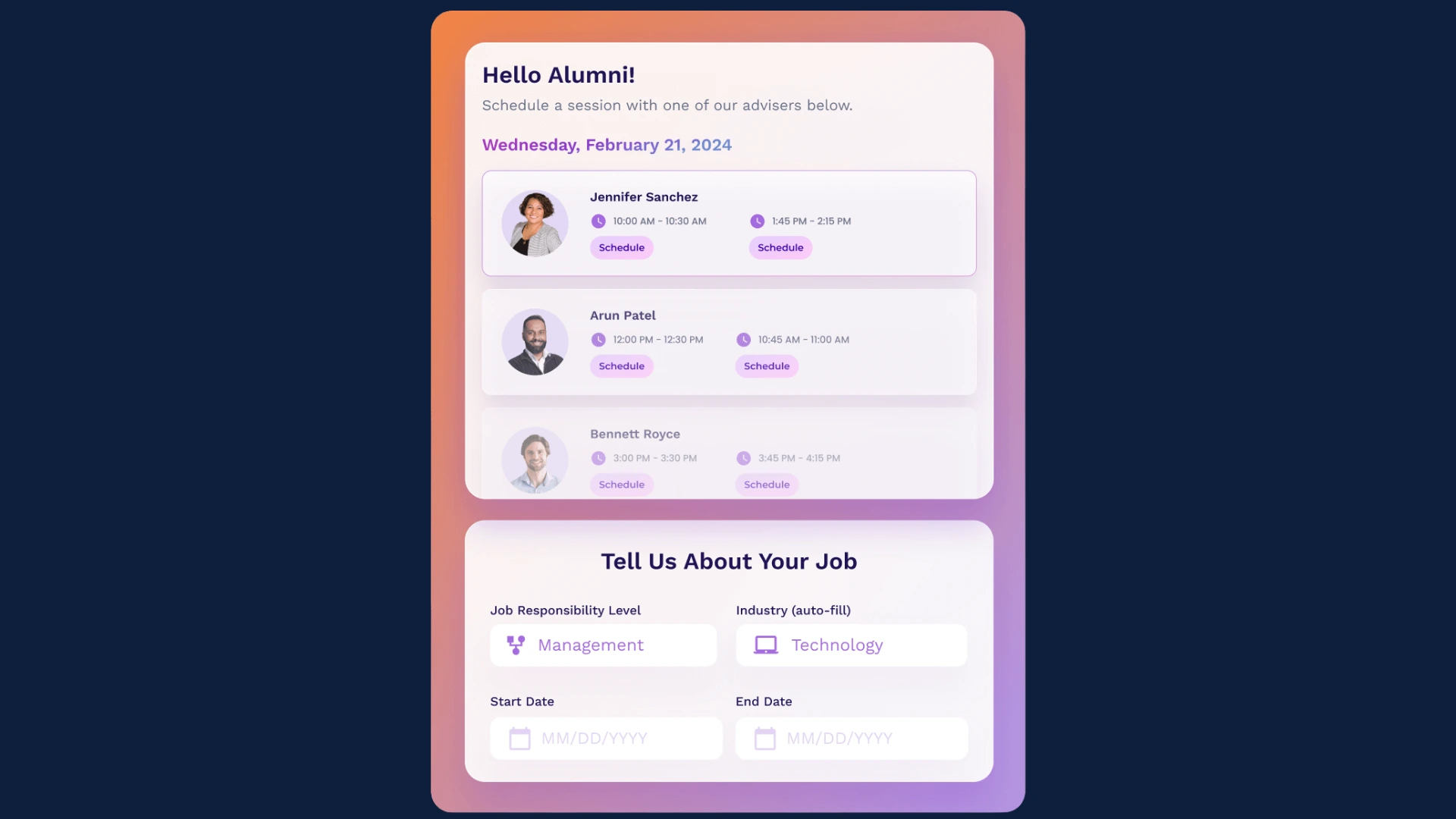
12twenty is a career services and outcomes platform used by universities that prioritize long-term tracking and centralized reporting across career programs. While it includes virtual career fair functionality, the platform is not purpose-built specifically for hosting immersive or interaction-driven career fairs. Instead, career fairs operate as one component within a larger career services system.
Why Universities Use It
Universities use 12twenty when career services extend beyond events into reporting, compliance, and long-term student success tracking. The platform allows teams to manage employer relationships, student engagement, and outcome data within a centralized system, while also supporting continued alumni engagement. For institutions that need to report on employment outcomes, experiential learning, or accreditation metrics, this depth is a clear advantage.
12twenty Features for Career Fairs at a Glance
Within its broader career services ecosystem, 12twenty supports virtual and structured recruiting through:
- Career fair and event registration
- Interview scheduling and employer requisitions
- Resume and document management
- Outcomes and participation reporting
- Multi-school and multi-program employer events
Where It Works Best
- Universities with strong reporting and compliance requirements
- Career centers tracking student outcomes over time
- Institutions managing both student and alumni engagement
- Structured, interview-focused recruiting events
Pricing
12twenty pricing is typically provided through institutional contracts and varies based on which clouds are used, program size, and reporting needs. Career fair and recruiting functionality is generally bundled within broader career services and outcomes packages rather than sold separately.
5. CareerEco — Well Suited for Discipline-Specific Career Fairs
Platform Type: Meeting-First
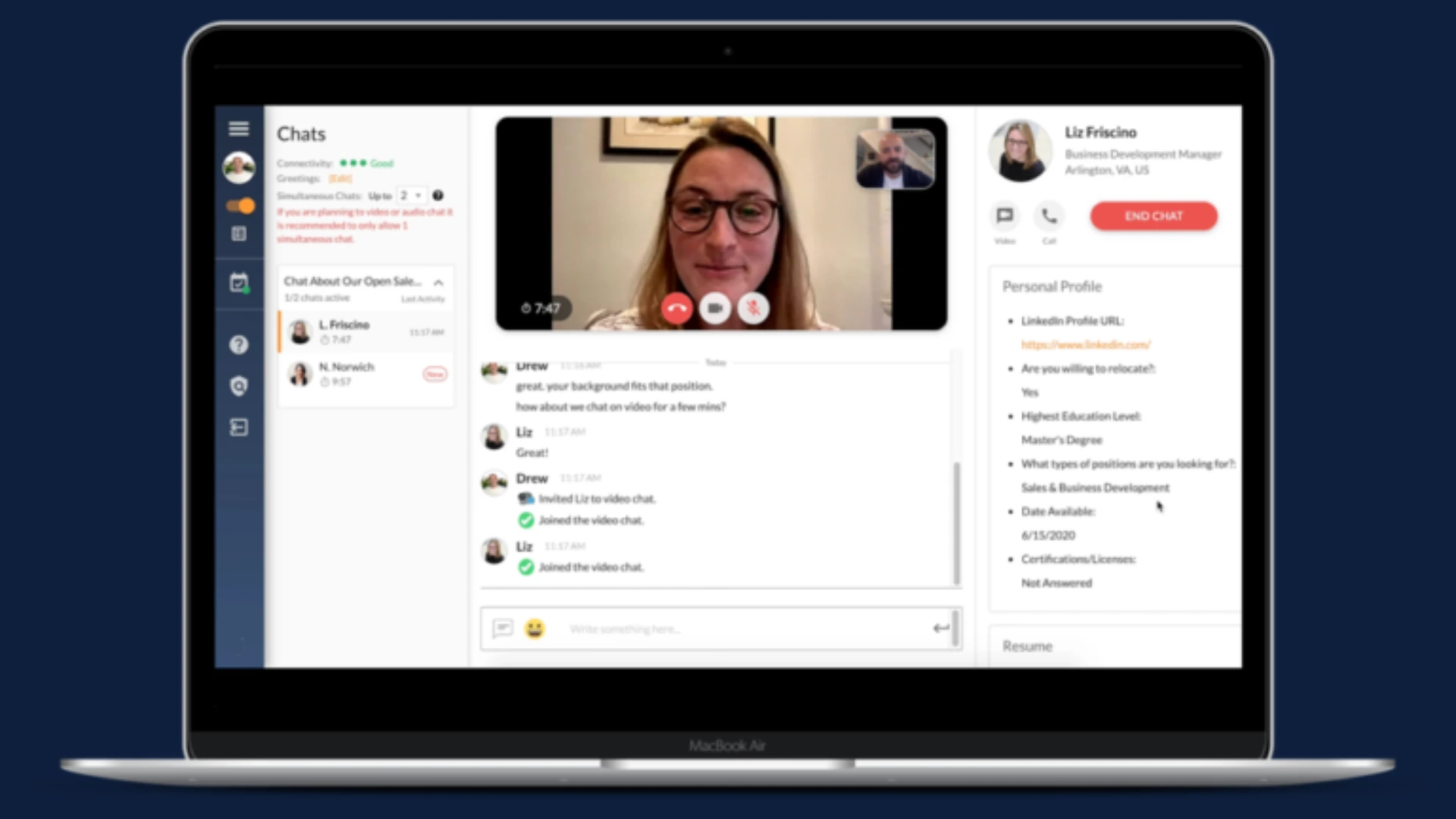
CareerEco is commonly used by universities running targeted virtual career fairs focused on specific industries, disciplines, or student populations. The platform is built around scheduled interviews and employer-led recruiting workflows, making it a practical option for institutions hosting structured, invitation-based events. However, user feedback suggests the candidate experience can feel fragmented, particularly when students must complete multiple steps to register for events and then return separately to book interview time slots.
Why Universities Use It
Universities use CareerEco when their career fairs are designed around pre-scheduled interviews rather than open exploration. The platform supports employer-driven scheduling and works well for smaller, focused events where participants are already aligned by field or interest. This structure helps employers meet candidates who are prepared and relevant, while career teams benefit from a predictable, interview-centered format.
CareerEco Features for Career Fairs at a Glance
CareerEco includes core tools used for structured virtual recruiting events, including:
- Employer-hosted interview schedules and time slots
- Student registration for events and interviews
- Resume uploads and document sharing
- Employer profiles and event listings
- Basic reporting and data exports
These features support interview-based virtual career fairs rather than open networking formats.
Where It Works Best
- Discipline-specific or industry-focused career fairs
- Smaller, targeted university recruiting events
- Interview-driven formats with pre-qualified candidates
- Institutions working closely with employers on scheduling
Pricing
CareerEco pricing is typically provided through custom quotes based on event type, scale, and institutional needs.
6. Radancy — Designed for Enterprise Recruiting Workflows
Platform Type: Transactional
Radancy is a cloud-based talent acquisition platform that expanded its virtual hiring and event capabilities after acquiring Brazen’s event technology in 2023. It supports career fairs, campus recruiting, and diversity hiring within a broader AI-powered recruiting ecosystem. As a talent acquisition system first, the virtual career fair experience tends to be more recruiter-driven than exploratory. Students typically browse employer listings and schedule meetings rather than moving through a shared space designed for organic discovery.
Why Universities Use It
Universities and employer partners use Radancy when virtual career fairs are part of a larger recruiting and hiring strategy. The platform focuses on automating early-stage recruiting tasks such as candidate pre-qualification, routing, and interview scheduling, helping employers move efficiently from event engagement to next steps. Its emphasis on data and analytics also appeals to institutions seeking visibility into candidate pipelines and recruiting outcomes across multiple events and channels.
Radancy Features for Career Fairs at a Glance
Radancy supports virtual career fairs as part of its broader recruiting platform. As a result, many of its features focus on hiring workflow automation rather than career-fair-specific interaction design. These include:
- Automated candidate pre-qualification and routing
- Interview scheduling and structured event workflows
- Live and automated chat during hiring events
- Data and analytics to track engagement and outcomes
- Integration with broader talent acquisition and hiring systems
These features are designed to streamline recruiter workflows and support large-scale hiring initiatives.
Where It Works Best
- Campus recruiting programs aligned with enterprise hiring pipelines
- Universities working with employers already using Radancy for broader recruiting workflows
- Career fairs feeding directly into structured hiring processes
- Multi-event recruiting programs requiring centralized analytics
Pricing
Radancy does not publish pricing publicly. Costs are typically provided through custom quotes based on organization size, hiring volume, and platform modules. It is generally positioned as a mid-tier to enterprise-level solution rather than a lightweight virtual career fair tool.
What Universities Should Consider When Choosing a Virtual Career Fair Platform
After reviewing different platform approaches, the next step is understanding which factors matter most for your institution. The strongest outcomes usually come from choosing a platform that aligns with how students engage, how employers recruit, and how the event is meant to function overall, rather than defaulting to the most familiar option.
1. Student Experience (Not Just Attendance)
High attendance alone does not guarantee impact. Universities should look closely at whether conversations feel natural or overly structured, and whether students can explore employers without pressure. Platforms like Remo, which allow students to move freely between employer tables, listen in on conversations, and join organically, tend to mirror the way students engage at in-person fairs. This can encourage broader exploration beyond the most recognizable employers.
2. Employer Experience and ROI
From an employer’s perspective, the value of a virtual career fair depends on how easily they can meet relevant candidates. Time efficiency matters both during and after the event. In more open formats, employers often spend less time managing queues and more time having meaningful conversations, while still being able to follow up with interested candidates after the event.
3. Event Goals and Format
Virtual career fairs can serve different purposes, from rapid hiring to early-stage exploration. Universities should consider whether their events are one-day experiences or part of ongoing engagement. Platforms that support flexible layouts and multi-day formats, make it easier to adapt programming without redesigning the experience for each event.
4. Accessibility and Inclusion
Accessibility goes beyond compliance. Platforms that work across devices, support global participation, and avoid steep learning curves help ensure students and employers can focus on engagement rather than logistics. Tools that combine intuitive navigation with flexible spaces, can lower barriers for first-time participants while still supporting large-scale events.
The Future of Virtual Career Fairs Is More Intentional, Not More Complex
Virtual career fairs are moving beyond one-day events and becoming ongoing connection ecosystems for students and employers. The most effective platforms create space for conversation, discovery, and follow-up, rather than relying on rigid workflows or overloaded feature sets. Universities that prioritize interaction, accessibility, and continuity will see stronger engagement and more consistent outcomes, regardless of whether events are virtual, in-person, or hybrid.
If your goal is to recreate the energy and exploration of an in-person career fair online, you can book a demo with Remo to see how open, flexible spaces support more meaningful career conversations.
Frequently Asked Questions about the Best Virtual Career Fair Platforms
1. What features should the best virtual career fair platforms have?
Strong virtual career fair platforms include video and chat, employer booths or spaces, interview scheduling, and basic analytics. Useful additions include resume sharing, follow-up tools, and layouts that make it easy for students to explore employers without friction.
2. How do recruiters and candidates actually interact on these platforms?
Interaction typically happens through one-on-one chats, scheduled interviews, group sessions, or drop-in employer tables. Some platforms focus on structured workflows, while others support more open, informal conversations depending on the event format.
3. Which platforms offer the most realistic or immersive experience?
Platforms with spatial layouts, open networking areas, and interactive booths tend to feel closest to in-person career fairs. These designs allow students to move freely and engage naturally, which can be especially helpful for exploration-focused events.
Zainab Asad
Zainab Asad is a Content Writer at Remo, contributing to the platform's mission of fostering authentic virtual connections. With a keen eye for detail and a passion for effective communication, she crafts engaging content that empowers event professionals to create memorable virtual experiences.