Best Virtual Career Fair Platforms

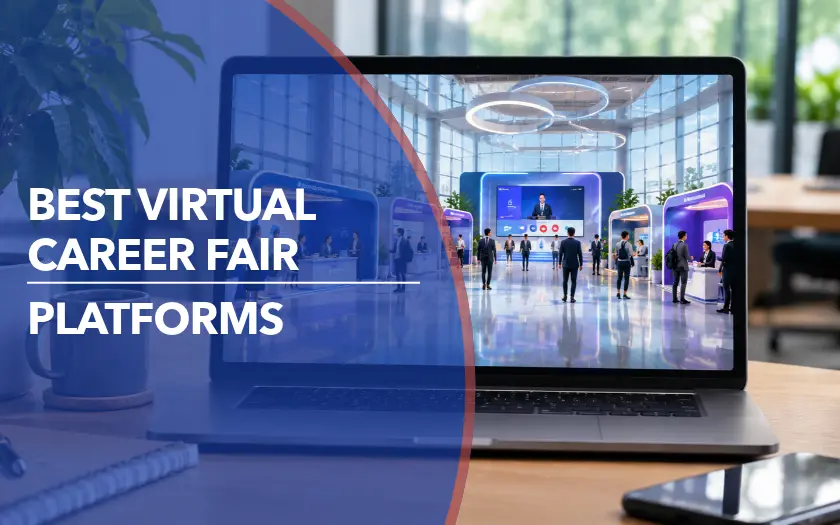
The best virtual career fair platforms in 2026 are Remo for interactive networking, vFairs for large-scale immersive events, Premier Virtual for recurring hiring fairs, Radancy for enterprise recruiting, CareerEco for specialized recruitment, and EasyVirtualFair for multilingual job fairs.
Not every platform is suited to every type of career fair. Some prioritize spontaneous conversations and employer discovery, while others focus on structured interviews, candidate management, or large-scale recruitment.
This guide compares six top virtual career fair platforms for employers, professional associations, workforce organizations, and other organizers hosting their own virtual career or job fairs. We'll cover each platforms’ features, pricing, strengths, and limitations to help you choose the right fit.
Hosting a university career fair? Check out our separate guide to the best virtual career fair platforms for universities.
{{table-of-contents}}
Quick Answer: Best Virtual Career Fair Platforms
Want a quick overview? Jump to the virtual career fair platform comparison.
What Is a Virtual Career Fair Platform and What Should You Look For?
A virtual career fair platform is software that helps organizers host online recruiting events where candidates can discover employers, explore job opportunities, and connect with recruiters. These platforms support event management, employer interactions, and recruitment activities.
How Are Virtual Career Fair Platforms Different From Video Conferencing Tools?
Video conferencing tools like Zoom and Google Meet support online meetings, presentations, and breakout discussions. Virtual career fair platforms go further by offering dedicated employer spaces, job discovery, recruiter-candidate interactions, and recruitment management tools. Instead of managing these activities through separate tools, organizers can bring more of the career fair experience into one platform.
What Are the Two Types of Virtual Career Fair Platforms?
Virtual career fair platforms generally fall into two categories:
- Event-first platforms: Built primarily for hosting virtual events, with features such as employer booths, live networking, presentations, and interactive event spaces that can be used for career fairs.
- Recruitment-first platforms: Built primarily for hiring and candidate management, with tools for screening, interview scheduling, and applicant tracking, alongside virtual event capabilities that support career fairs and other recruiting events.
Neither approach is inherently better. The right choice depends on whether your priority is creating an engaging event experience, managing the recruitment process, or combining both.
When comparing virtual career fair software, consider the following factors:
Candidate Experience
Ask for a free trial or attend an event hosted on the platform to experience it as a candidate would. Test how easy it is to register, navigate employer booths, find job opportunities, and connect with recruiters. Check whether the platform works on mobile devices, requires downloads, and offers accessible ways to participate.
Recruiter and Employer Tools
Ask providers to demonstrate a typical recruiter workflow, including showcasing job openings, reviewing resumes, interviewing candidates, and saving information for follow-up. This helps you assess whether the platform supports actual recruitment activities or mainly facilitates conversations.
Engagement and Networking
Test how easily candidates can approach recruiters, join conversations, and move between employer booths. Check whether the platform's networking features support spontaneous interactions or require pre-booked appointments. Also consider whether it supports employer presentations, group discussions, and workshops to encourage participation.
Recruitment Management
Check how the platform handles resumes, applications, recruiter notes, and candidate follow-ups. Ask whether it integrates directly with your applicant tracking system (ATS) or recruitment CRM, or requires third-party tools. Request a sample data export to confirm you can access the candidate information your recruitment team needs after the event.
Event Management
Request a walkthrough of the organizer dashboard to see how easily you can customize the event, manage employers, and track registrations. Ask for sample event analytics reports covering attendance, booth activity, and candidate engagement. Also confirm whether technical support is available during live events.
Pricing
Compare virtual event platform pricing models rather than just starting prices. Check whether the platform offers one-time event pricing or requires a subscription, and whether it charges per employer booth, attendee, registration, or event duration. Ask about additional fees for customization, integrations, technical support, and exceeding attendee limits.
Scalability
Confirm how many candidates, recruiters, and employer booths the platform can support simultaneously. Pay attention to concurrent attendee limits, which may differ from total registration capacity. For large career fairs, ask for examples of events with similar attendance or request a load test to assess performance.
How We Evaluated These Virtual Career Fair Platforms
We compared six virtual career fair platforms using information from official product websites, help documentation, published pricing, and customer reviews where available. Our evaluation covered seven key areas:
- Candidate Experience: Ease of registration, event navigation, employer discovery, mobile access, and accessibility.
- Recruiter and Employer Tools: Employer booths, job listings, resume management, candidate communication, and interview capabilities.
- Engagement and Networking: Live video conversations, spontaneous networking, group sessions, and candidate matchmaking.
- Recruitment Management: Candidate tracking, application management, ATS integrations, and post-event follow-up.
- Event Management: Event setup, branding, customization, analytics, reporting, and customer support.
- Pricing: Subscription versus one-time event costs, pricing transparency, and additional fees.
- Scalability: Concurrent attendee capacity, employer booth limits, and support for large recruiting events.
We included both event-first platforms with recruiting capabilities and recruitment-first platforms with virtual event features. Our focus was on platforms that support the broader career fair experience, not just basic video conferencing.
.webp)
Comparison of the Best Virtual Career Fair Platforms
The six platforms below take different approaches to virtual recruiting. Compare their organizer tools, candidate and recruiter experiences, event capacity, and pricing to find the best fit for your career fair.
6 Best Virtual Career Fair Platforms in 2026
1. Remo
Remo is a virtual event platform for hosting interactive virtual career fairs and job fairs. Its Conversation Mode recreates the floor of an in-person career fair, where candidates can explore employer booths, see who's available, and join live audio/video conversations without scheduling meetings. Recruiters can also conduct private interviews at dedicated tables.
For employer presentations, career workshops, and panels, organizers can switch to Presentation Mode, where everyone watches the same stage. Both modes run within the same event, allowing organizers to combine spontaneous networking with structured recruitment activities.
Key Features
Remo combines customizable virtual spaces, live recruiter conversations, and interactive networking tools to create a career fair experience that feels closer to an in-person event.
- Branded employer booths: Organizers can create dedicated booths for each employer, complete with company logos, branding, and interactive content banners showcasing job openings, videos, and recruitment resources. Each booth also supports live audio/video conversations, allowing recruiters to answer questions and connect directly with candidates.
- Free booth exploration: Candidates can move freely across the virtual floor, see who's at each employer table, and join live conversations without scheduling every interaction in advance.
- Built-in resume viewer and favorites: Recruiters can view candidate resumes directly within Remo and favorite promising candidates' resumes for easy access later, making it easier to keep track of potential hires and follow up after the career fair.
- Employer presentations and career workshops: Organizers can use Presentation Mode to host company information sessions, career workshops, and panel discussions with live Q&A and polls, then switch to Conversation Mode for networking.
- Job applications and resume collection: Employers can share job openings through clickable banners and link candidates to their career pages or compatible embedded application forms, allowing them to apply for positions and submit resumes.
Pricing
Remo's Starter plan starts at $299/month, billed quarterly or annually, with capacity starting at 200 attendees per event and scaling up to 1,000 attendees. It includes unlimited events and registrations.
For a single event, the One-Time Events plan starts at $699 for 100 attendees, with options to scale event capacity, layouts, and rooms based on your needs.
For larger organizations, Enterprise pricing is custom. Remo also offers a 14-day free trial.
Pros
- Seamless transition from networking to interviews: Recruiters can move promising candidates from casual booth conversations to private one-on-one or group interviews within the same event, without switching platforms.
- Helpful customer support: Remo offers responsive customer support to assist organizers with event setup, technical issues, and troubleshooting.
- Encourages spontaneous networking and discovery: Candidates can join recruiter conversations without pre-booking meetings and explore employers they might have overlooked in a traditional company directory, helping them discover new job opportunities and make unexpected connections.
Cons
- No native ATS integrations: Remo doesn't offer direct integrations with applicant tracking systems (ATS). Organizers need to connect their recruiting tools through Zapier, Pabbly Connect, or custom API integrations.
- No built-in interview scheduling: Remo doesn't have a native meeting scheduler, so recruiters need to use external scheduling tools to arrange interviews with candidates in advance.
G2 Rating
4.5/5 from 323 reviews on G2.
Best for: Career fairs where networking, candidate-recruiter conversations, employer discovery, and an interactive attendee experience are priorities.
2. vFairs: Best for Large, Branded Virtual Career Fairs
vFairs is a virtual event platform for hosting large, highly branded virtual career fairs. Organizers can create custom 3D venues with a lobby, auditorium, and exhibition hall featuring dedicated employer booths. Candidates can explore the venue, chat with recruiters, upload resumes, apply for jobs, and schedule interviews.
Key Features
- 3D virtual environments: Organizers can create branded virtual lobbies, exhibition halls, auditoriums, and networking spaces using customizable 3D templates and avatars.
- Interactive employer booths: Employers can showcase job openings, company videos, downloadable resources, and other recruitment materials within their branded booths.
- Job boards and applications: Candidates can browse vacancies, upload resumes, apply for jobs, and receive AI-powered job recommendations based on their skills and interests.
- Candidate search and shortlisting: Recruiters can search and filter candidate profiles, review applications, and tag promising candidates for follow-up.
- Interview scheduling and booth communication: Candidates can book one-on-one appointments with recruiters or connect with employer representatives through live booth chat. Recruiters can also conduct interviews using breakout rooms.
Pricing
vFairs offers custom pricing for single events and annual licenses, based on event size, features, and requirements. Pricing is not publicly listed, but according to customer reviews on G2, vFairs can be relatively expensive, making it less accessible for smaller organizations or those with limited budgets.
Pros
- Suitable for large recruitment events: Support for unlimited employer booths and registrations allows organizers to accommodate extensive employer lineups and candidate pools without fixed booth-count restrictions.
- Dedicated event support: vFairs provides project managers who assist with planning, customization, technical setup, and live event execution.
- Supports the broader hiring process: Recruiters can manage candidate screening, applications, interviews, and follow-ups within a connected recruitment workflow.
Cons
- Requires significant setup and planning: Custom 3D environments, employer booths, and recruitment workflows take time to configure. vFairs recommends allowing at least four weeks to prepare a virtual job fair.
- Potentially expensive for smaller organizations: Custom pricing and the costs associated with a more extensive event setup may be difficult to justify for smaller or occasional career fairs.
G2 Rating
4.7/5 from approximately 1,787 reviews on G2.
Best for: Large organizations and workforce groups hosting branded, multi-employer virtual career fairs that require extensive recruitment tools and dedicated event support.
3. Premier Virtual
Premier Virtual is a recruitment-focused platform for hosting recurring virtual and hybrid career fairs. Organizers can clone previous events, including employer details, to save setup time. Candidates enter a branded lobby, browse employer booths and job openings, and start private text chats with recruiters, who can then arrange video interviews. The platform allows unlimited employer and candidate registrations, although it doesn't publicly specify its concurrent attendee capacity.
Key Features
- Customizable employer booths: Employers can create branded booths with company information, job openings, videos, and links to recruitment resources.
- Live chats and video interviews: Recruiters can invite promising candidates to one-on-one or group video interviews with built-in interview scheduling.
- Resume screening and candidate tracking: Recruiters can review resumes, access recorded video interview responses, and track candidate interactions.
- Recurring event management: Organizers can clone previous career fairs, reuse participating employer information, and access reports across multiple events.
- Hybrid event tracking: Event and booth QR codes allow organizers to track in-person visits alongside virtual attendance, giving them a more complete picture of candidate engagement.
Pricing
Premier Virtual offers custom pricing for single-event, annual, and multi-year licenses. Its annual license includes unlimited events without restrictions on employer booths or candidate registrations. Pricing is not publicly listed, so organizers need to request a quote. However, G2 shows a perceived price of four out of five dollar signs, which suggests reviewers see it as a higher-cost option
Pros
- Recruitment beyond event day: Premier Virtual offers 24/7 virtual hiring rooms, allowing recruiters to connect with candidates between scheduled career fairs.
- Tracks hiring outcomes beyond attendance: The Hiring Metric Tool follows up with employers after events to track whether candidates were interviewed, hired, or are still being considered, helping organizers measure recruitment results.
- Hands-on customer support: Premier Virtual provides client success managers who assist with training, event preparation, and post-event reporting, which can be particularly useful for workforce organizations managing multiple employers.
Cons
- Text-first recruiter conversations: Candidates typically initiate contact through private text chat, with recruiters then inviting them into video interviews. This creates a more structured experience than platforms where candidates can immediately join live video conversations at employer booths.
- Separate registration for each event: Candidates must register for each career fair individually, even if they've attended another event on the platform.
G2 Rating
4.7/5 from 44 reviews on G2. The review count is relatively small compared with several other platforms in this list, so the rating should be interpreted with that in mind.
Best for: Workforce development organizations, staffing agencies, and employers hosting recurring virtual or hybrid career fairs that need interview management and hiring outcome tracking.
4. Radancy (Brazen)
Radancy is an enterprise talent acquisition platform that supports virtual and in-person career fairs through its Hiring Events solution. Radancy acquired Brazen in 2023, bringing its recruiting event technology into the broader Radancy Talent Acquisition Cloud.
Organizers can create branded virtual career fairs with role-specific employer booths and pre-screen candidates during registration. Candidates can then connect with recruiters through text, audio, or video interviews, while hiring teams review resumes, rate candidates, and arrange follow-up conversations. Radancy does not publicly specify its maximum concurrent attendee capacity or the number of employer booths supported per event.
Key Features
- Candidate pre-screening: Custom registration forms and knockout questions allow recruiters to assess candidate qualifications before an event.
- Branded employer booths: Organizers can create virtual lobbies and role-specific booths with company information, recruitment resources, and live presentations.
- Live chats and interviews: Recruiters can communicate through text, audio, and video, schedule interviews, and host group sessions or webinars.
- Candidate management and follow-ups: Recruiters can review resumes, rate candidates, save chat histories, and share candidate information with hiring managers for follow-up.
- Talent acquisition integrations: Radancy supports native and custom ATS integrations for transferring candidate information. Its broader Talent Acquisition Cloud lists integrations with Workday, SAP SuccessFactors, SmartRecruiters, iCIMS, and Greenhouse.
Pricing
Radancy offers custom pricing for its Hiring Events solution. It is marketed as part of the Radancy Talent Acquisition Cloud, but public information does not clarify whether hiring-event software can be purchased separately or requires other platform modules. Organizations need to contact sales to confirm pricing and package options.
Pros
- More focused recruiter conversations: Pre-event screening helps recruiters identify relevant candidates before the career fair, reducing time spent assessing basic qualifications during live interactions.
- Efficient for high-volume recruiting: Recruiters can manage up to four candidate chats simultaneously, making it easier to speak with more applicants during busy hiring events.
- Dedicated event support: Radancy provides onboarding assistance, event guidance, and 24/7 support, which can help enterprise teams manage complex recruiting events.
Cons
- Less emphasis on spontaneous networking: Radancy focuses on candidate screening, booth-based conversations, and scheduled interviews, making it better suited to structured hiring than open-ended networking.
- Unclear standalone pricing: Organizations planning occasional career fairs must request a quote to determine the cost of Hiring Events and whether additional Radancy products are required.
G2 Rating
4.7/5 from 204 reviews on G2, covering Radancy's broader talent acquisition software rather than Hiring Events specifically.
Best for: Enterprises running virtual career fairs as part of a larger talent acquisition strategy, particularly those requiring candidate pre-screening, structured interviews, and ATS integrations.
5. CareerEco
CareerEco is a virtual recruiting platform for hosting specialized career fairs and hiring events. It serves employers, professional associations, government agencies, and workforce organizations recruiting specific candidate groups, including healthcare professionals, veterans, and government job seekers.
The platform handles event setup, registration, and technical support. Candidates browse a directory of employer profiles and a separate job board, then enter employer rooms for group chats, private conversations, or interviews. CareerEco also supports virtual, hybrid, and in-person recruiting events.
Key Features
- Employer event rooms: Each employer gets a branded profile and dedicated room for group chats and private recruiter conversations.
- Resume search and candidate management: Recruiters can search candidate profiles, review resumes, create candidate lists, and export information for follow-up.
- Interview scheduling and virtual queues: Employers can schedule interviews and use virtual waitlists to manage one-on-one conversations.
- Presentations and broadcasts: Recruiters can host video or audio group presentations for employer information sessions.
- Event reporting: Employers can download chat room participant reports and conversation transcripts to track candidate interactions and support post-event follow-ups.
Pricing
CareerEco offers per-event pricing, with volume discounts for organizations hosting multiple fairs. Standard organizer pricing is not publicly listed, so buyers must request a custom quote.
Pros
- Hands-on event management: CareerEco handles setup, registration, training, and technical support, reducing the administrative work for organizers.
- Tailored recruitment events: Custom registration fields and candidate filters help organizers and recruiters focus on specific industries, qualifications, or candidate communities.
- Proactive candidate outreach: Recruiters can review registered candidate profiles and send targeted messages before the event, helping them connect with relevant candidates ahead of time.
Cons
- Text-focused group conversations: Candidates primarily interact through text in employer rooms, with private video conversations available separately. This limits spontaneous face-to-face networking.
- Employer room capacity limits: Individual employer rooms typically support up to 100 participants, although limits vary by event.
G2 Rating
4.9/5 from 19 reviews on G2. This is a relatively small review sample compared with other platforms in this roundup.
Best for: Professional associations, workforce organizations, and employers hosting specialized virtual career fairs that need hands-on event management and targeted recruiting.
6. EasyVirtualFair
EasyVirtualFair is a virtual career fair platform built specifically for online recruitment events. Organizers can create branded virtual venues where candidates browse employer booths, explore job openings, and connect with recruiters through text chats and video interviews.
The platform runs directly in a browser and supports multilingual event interfaces and chat translation, making it suitable for career fairs serving international or multilingual communities. Annual plans include unlimited employer booths and registrations, although EasyVirtualFair doesn't publicly specify its maximum concurrent attendee capacity.
Key Features
- Branded employer booths: Organizers can create customized virtual lobbies and employer booths. Employers can manage their own booths, add job listings, and upload company videos and recruitment materials.
- Live chats and video interviews: Recruiters can connect with candidates through text, audio, and video, with support for interview scheduling, waiting queues, and group conversations.
- Multilingual support and chat translation: The platform supports multiple interface languages, including English, Spanish, French, Portuguese, Arabic, and Russian. A chat translation feature also lets participants translate text conversations between supported languages.
- Live and on-demand presentations: EasyVirtualFair's webinar theater lets organizers schedule employer presentations, workshops, and panel discussions using compatible broadcasting tools such as Zoom or Microsoft Teams. Recordings can also be made available on demand.
- Recruitment analytics and reporting: Organizers can track registrations, booth visits, chats, and other event activity, with options to export candidate and engagement data.
Pricing
EasyVirtualFair offers single-event pricing starting at $1,500 USD, with annual licenses also available. Final pricing depends on event requirements, features, and support needs.
Pros
- Accessible to multilingual audiences: Multiple interface languages and chat translation help candidates and recruiters communicate across language barriers without relying entirely on external translation tools.
- Less administrative work for organizers: Employers can set up and manage their own booths, reducing the time organizers spend coordinating company profiles, job listings, and recruitment materials.
- Dedicated event support: EasyVirtualFair provides assistance with onboarding, employer training, event preparation, and technical support during live events.
Cons
- Less spontaneous face-to-face networking: Candidates navigate employer booths and connect through chat or video interviews rather than freely joining live video conversations at shared tables.
- Higher starting cost for one-time events: At $1,500 per event, EasyVirtualFair starts above Remo's $699 one-time event plan, although attendee capacity and included features differ between packages.
G2 Rating
4.7/5 from 23 reviews on G2. The relatively small review sample makes the rating less representative than those of platforms with substantially more reviews.
Best for: Workforce development organizations, associations, and other organizers hosting browser-based, multilingual virtual career fairs.
How to Choose the Right Virtual Career Fair Platform
The best virtual career fair platform depends on your event's goals, audience, and recruitment needs. Here's which platform to consider based on your priorities.
Virtual Career Fair Platforms vs. Generic Video Conferencing Tools: What’s the Difference?
Zoom, Google Meet, and similar video conferencing tools can support virtual conversations, presentations, breakout rooms, and some registration or attendance tracking. The difference is that dedicated virtual career fair platforms are designed around the complete recruiting event rather than the meeting itself.
The key difference is purpose: video conferencing tools help people meet online, while dedicated career fair software is built to manage the broader journey from registration and employer discovery to candidate conversations, interviews, and follow-up.
Choosing the Right Virtual Career Fair Platform
The best virtual career fair platform depends on your recruiting goals. Remo is ideal for spontaneous networking and employer discovery, while vFairs offers highly branded 3D venues. Premier Virtual suits recurring hiring events, Radancy supports enterprise recruitment workflows, CareerEco specializes in managed recruiting events, and EasyVirtualFair supports multilingual career fairs.
Consider how candidates will discover employers, interact with recruiters, and move through the hiring process when making your choice.
Want candidates to do more than browse job listings? With Remo, they can explore employer booths, join live recruiter conversations, and discover opportunities they might otherwise miss. Book a free demo to see Remo in action.
Frequently Asked Questions About Virtual Career Fair Platforms
1. What is the best virtual career fair platform?
The best virtual career fair platform depends on your hiring goals. Remo is best for helping candidates discover more employers and build meaningful connections with recruiters. vFairs is ideal for highly branded 3D career fairs, while Premier Virtual suits recurring hiring events. Radancy is a strong choice for enterprise recruitment, CareerEco for specialized recruiting events, and EasyVirtualFair for multilingual career fairs.
2. How much do virtual career fair platforms cost?
Pricing varies by platform, event size, and required features. Some virtual career fair platforms offer monthly or annual subscriptions, while others charge per event or provide custom quotes. Compare the total cost, including attendee limits, employer booths, integrations, and support, before choosing a platform.
3. What features should a virtual career fair platform have?
Look for features that support the complete recruiting experience, including candidate registration, employer booths or profiles, job discovery, recruiter communication, networking, video conversations, interview scheduling, candidate management, analytics, branding, and integrations. The most important features depend on your event format and hiring goals.
4. How do I choose the right virtual career fair platform?
Start with your event objective, audience, and recruiting workflow. Consider how many candidates and employers you expect, how candidates should discover and interact with employers, whether you need interviews or scheduling, what candidate data you need to manage, and which integrations or analytics are important. Then compare platforms based on how closely their capabilities match those requirements.
Zainab Asad
Zainab Asad is a Content Writer at Remo, contributing to the platform's mission of fostering authentic virtual connections. With a keen eye for detail and a passion for effective communication, she crafts engaging content that empowers event professionals to create memorable virtual experiences.