Experiential Events: A Practical 2026 Guide for Modern Event Organizers

Events used to be straightforward. You booked a venue, filled the agenda, lined up speakers, and measured success by how many people showed up. For a long time, that was enough. Today, it isn’t. Attention is harder to hold, and audiences arrive with higher expectations for participation. This shift has become even more visible as organizers experiment with new formats and tools, especially across virtual event platforms, where virtual engagement can’t rely on physical presence alone.
When events lean too heavily on packed event agendas and passive formats, engagement drops quickly, no matter how strong the content is. That’s pushing organizers to rethink what an event is actually designed to do. Increasingly, the most effective events aren’t defined by what’s on the schedule, but by how attendees experience it.
That’s where experiential events come in. Instead of focusing only on attendance or information delivery, experiential events are designed around emotion, interaction, and participation.
In this article, we’ll break down what experiential events really are, how they differ from traditional event formats, and how organizers can start applying this approach today.
{{table-of-contents}}
What Are Experiential Events?

At its simplest, an experiential event is designed around immersion, interaction, and participation. Rather than focusing only on what’s being presented, these events pay close attention to how attendees experience every part of the journey.
In an experiential event, audiences aren’t passive listeners. They’re actively involved, moving through spaces, engaging with content, interacting with others, and responding emotionally to what’s happening around them. The goal isn’t just to share information, but to create moments that feel memorable and meaningful.
This experience-driven approach often includes multi-sensory elements, two-way interaction, and opportunities for attendees to influence how the event unfolds. Whether it’s through hands-on activities, collaborative sessions, or immersive event environments, participation is built into the design, not added as an afterthought.
Experiential Events vs Traditional Events vs Brand Activations
To understand experiential events, it helps to see how they differ from traditional events and brand activations. While all three bring people together, they’re designed around very different goals.
Traditional Events: Traditional events are typically built around delivery. They’re speaker-led, agenda-first, and designed for passive attendance. Content flows one way, from stage to audience, and engagement is often optional or limited to listening, note-taking, and the occasional Q&A. Success is usually measured by attendance and information shared.
Experiential Events: Experiential events take a fundamentally different approach. Instead of centering the schedule, they center the attendee. Rather than prioritizing information delivery alone, they focus on interaction, participation, and emotional impact. The experience adapts to how people move, engage, and respond, instead of asking everyone to follow the same fixed path. They can be B2B or B2C, in-person or virtual or hybrid. What defines an experiential event isn’t the format or venue, but the focus: designing the entire journey around how people feel, engage, and connect.
Brand Activations: Brand activations sit alongside this distinction, but operate at a different level. While experiential events describe how an event is designed as a whole, brand activations are tactical moments within or alongside that experience. They’re specific, intentional experiences created to bring a brand, product, or message to life through interaction and immersion.
In short: traditional events inform, experiential events involve, and brand activations are focused moments that bring brands to life within an experiential framework.
Core Characteristics of Experiential Events
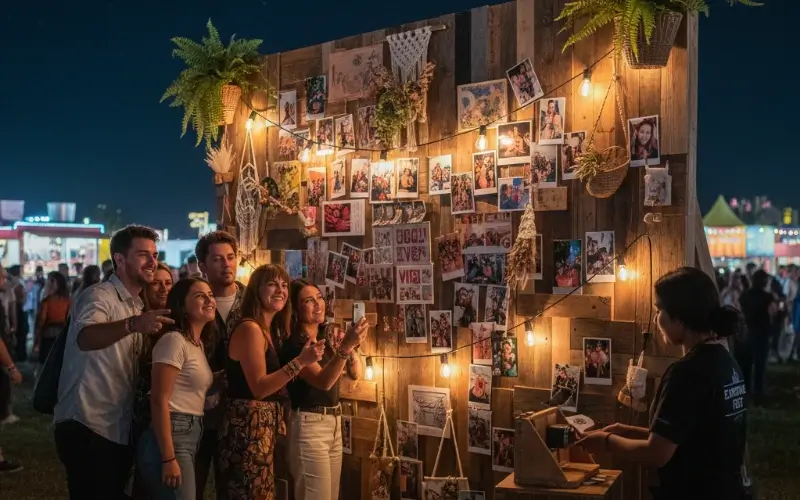
Experiential events are talked about everywhere, but not all of them actually feel experiential. That’s usually because many event organizers assume the formula is simple: add more activities, more technology, or more interaction, and engagement will follow. In practice, it doesn’t quite work that way.
What makes an event experiential isn’t the presence of specific activities, but the patterns behind how those activities are designed and experienced. What sets them apart is how they’re designed to feel. While the execution can vary widely, the most effective experiential events tend to share a few core characteristics.
Immersion
Experiential events place attendees inside the experience rather than on the sidelines. Instead of watching things happen, people feel surrounded by the environment, the activity, and the energy of the event. Immersion is created through intentional design, such as purpose-built spaces, themed environments, and guided journeys that shape how attendees move, interact, and experience each moment. Layout, pacing, and sensory elements all work together to pull people into the experience. In virtual and hybrid formats, augmented reality event experiences and VR event technologies, help recreate spatial awareness and a feeling of “being there” beyond physical venues.
Interactivity
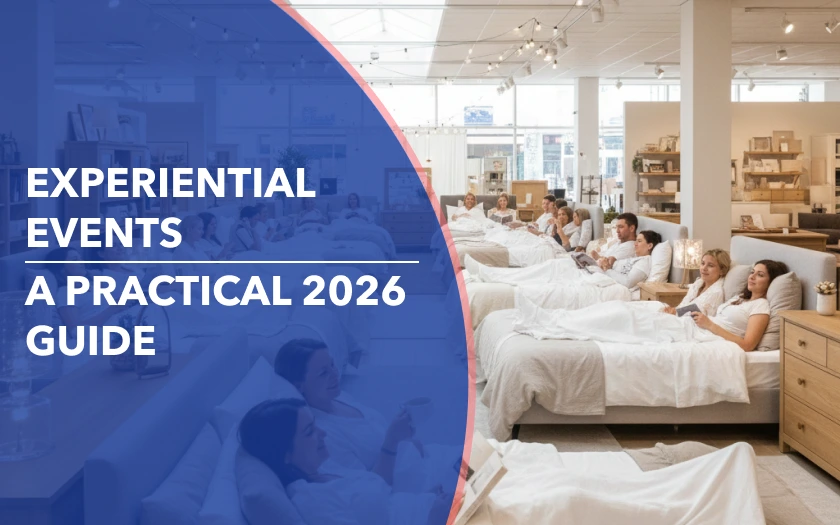
In strong experiential events, participation replaces passive consumption by default. Attendees are expected to engage, whether that means contributing, collaborating, or taking action that directly shapes the experience. A real-world example is IKEA’s UK sleepover event, where selected participants spent the night inside an IKEA showroom. Instead of observing products, attendees actively chose their own mattresses and bedding, took part in sleep workshops with experts, and engaged in hands-on activities like wellness treatments. In experiential events like this, interaction isn’t limited to a single activity or session. It’s built into how the event functions from start to finish.
.webp)
Personalization
Experiential events allow attendees to shape their own experience rather than follow a single, fixed agenda. This can include choosing sessions, selecting discussion topics, or moving between spaces based on individual interests. As attendees make these choices, the experience adapts to their preferences and behavior. Two people can attend the same event and walk away with completely different experiences. Across both in-person and digital formats, personalization is often enhanced through AI-powered recommendations that suggest sessions, connections, or activities based on engagement patterns. This sense of agency makes experiential events feel less scripted and more personal.
Storytelling
Rather than feeling like a collection of disconnected sessions, experiential events follow a narrative. Each moment builds on the last, creating a sense of flow and progression instead of a rigid schedule. Storytelling shows up through themes, guided journeys, and experiences that unfold over time. Whether physical or virtual, events often use design cues, transitions, and interactive moments to reinforce the story. In immersive digital environments, AR and VR technologies can further support storytelling by helping attendees move through spaces and experiences that feel cohesive and intentional.
Memorability
When all of this works together, something interesting happens. Attendees don’t just remember what they learned but they remember how the event made them feel. That emotional recall is often driven by standout moments, sensory experiences, or shared interactions that linger long after the event ends. And that emotional recall is what drives social sharing, discussion, and long-term impact.
Together, these characteristics transform events from something people simply attend into experiences they actually feel part of.
Types of Events That Can Be Designed Experientially
Experiential events aren’t a single format. They’re an approach that can be applied across different kinds of events. What changes is the goal of the event and how the experience is designed to support it.
Below are the most common event formats that are frequently designed using experiential principles.
1. Experiential Conferences & Summits
What this type focuses on
Conferences and summits where the primary goal isn’t content delivery, but shared exploration, discussion, and co-creation among attendees.
How experiential design shows up
While traditional conferences may include workshops or breakouts, experiential conferences use participation as the engine of the event. Attendee input influences discussion paths, session flow, and outcomes, making interaction central to how the event progresses rather than a standalone feature.
Best for
Thought leadership, education, industry learning, large-scale networking.
2. Product Launches & Experiential Showcases
What this type focuses on
Introducing a product, service, or solution through direct experience rather than explanation.
How experiential design shows up
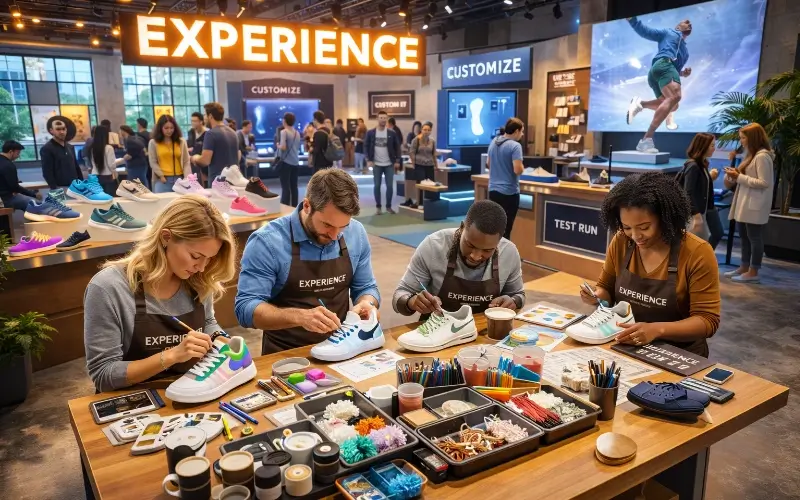
Attendees are invited to explore, test, or interact with the product through hands-on demos, immersive storytelling, or guided experiences. The emphasis is on letting people experience value firsthand.
Best for
Product launches, solution education, market introductions.
3. Workshops & Learning-Based Experiential Events
What this type focuses on
This is for skill-building, applied learning, and hands-on exploration.
How experiential design shows up
Participants actively practice, experiment, and collaborate instead of listening to presentations. Learning happens through doing, with attendees contributing to outcomes rather than consuming content.
Best for
Training, upskilling, enablement, applied education.
4. Community & Networking-Driven Events
What this type focuses on
Building relationships through shared experiences, not just introductions or business exchanges.
How experiential design shows up
Instead of relying on open mingling or scheduled networking breaks, these events are designed around structured, shared experiences that naturally create connection. Attendees might collaborate on group activities, rotate through facilitated small-group conversations, or participate in experiences that give them a common reference point to connect around. Networking happens as a result of doing something together, not as a separate agenda item.
Best for
Community building, partnerships, peer learning, long-term engagement.
5. Sponsored & Partner-Led Experiential Events
What this type focuses on
Events designed around partnerships, sponsorships, or ecosystems where multiple brands participate within a shared experience.
How experiential design shows up
Rather than limiting brands to logos or booths, these events create space for interactive brand-led experiences. Sponsors and partners design activations that attendees can explore, engage with, or participate in as part of the broader event journey. The event itself is experiential, and brand activations appear as integrated moments within it. This format allows brands to bring their products, values, or stories to life without owning the entire event.
Best for
Sponsorship-driven events, trade shows, expos, multi-brand experiences, ecosystem events.
Why Experiential Events Matter for Event Organizers
Experiential events aren’t about being flashy or trendy. For organizers, they solve some very real problems that traditional formats struggle with, especially around engagement, connection, and long-term impact.
- Higher engagement and attention retention: When attendees are actively involved, attention takes care of itself. Experiential events don’t rely on people staying focused out of politeness, instead, they give them something to do. Participation keeps energy levels up and makes sessions feel shorter.
- Stronger networking and community building: Instead of isolating networking into short breaks or formal sessions, experiential events bake connection into the experience. When people interact through shared activities, conversations happen more naturally, and those connections tend to last beyond the event.
- Increased attendee satisfaction and return intent: People remember how an event made them feel. Experiential events create moments that stick, which leads to higher satisfaction, more word-of-mouth, and stronger return intent. It’s the difference between “that was nice” and “that was worth my time.”
- Better alignment with modern, digital-native audiences: Today’s audiences expect interaction, personalization, and choice, especially in virtual and hybrid event environments. Experiential events meet these expectations by default, rather than relying on passive formats that feel outdated to digitally fluent attendees.
Final Thought: Can Experiential Events Be Virtual or Hybrid?
Experiential events are designed to actively involve people rather than simply inform them. This focus on participation is what makes them effective. And because participation is shaped by design rather than location, experiential events don’t depend on a physical venue.
There’s a common assumption that experiential events only work in person, but that’s not really the case. Interaction doesn’t come from location, it comes from participation. When events are intentionally designed for engagement, experiential moments can happen just as effectively in virtual and hybrid formats. In fact, some experiential events work better online when organizers lean into digital strengths. Small-group discussions, collaborative sessions, interactive virtual spaces, and real-time participation can create a sense of involvement that feels just as human, connected, and memorable as being in the same room.
That’s ultimately what experiential events are about. Not where people are, but whether they feel part of what’s happening. Whether attendees are across the table or across time zones, the goal is the same: design experiences that invite participation, spark connection, and leave a lasting impression.
If you’re looking to host an online or hybrid experiential event, Remo is built for exactly this kind of experience, from interactive spaces to small-group conversations that feel natural and engaging. Book a demo with Remo and let’s talk about what an experiential event could look like for you.
Frequently Asked Questions About Experiential Events
1. Are experiential events only for B2C brands?
No. Experiential events are widely used in B2B settings as well, including conferences, summits, workshops, and community-driven events.
2. How do organizers measure the success of experiential events?
Success is often measured through engagement, participation, attendee satisfaction, return intent, and overall experience impact rather than attendance alone.
3. Do experiential events require a larger budget?
Not necessarily. Experiential design focuses on intention and interaction, not scale or complexity. Many effective experiential events are simple but well-designed.
Aniqa Iqbal
Aniqa is a content writer at Remo, where she merges her love for storytelling from movies and TV shows with her passion for creating compelling content. With a knack for blending pop culture references and relatable narratives, Aniqa crafts content that informs and resonates deeply with readers. She aims to strike a chord with her audience, fostering genuine connections through words that inspire, engage, and entertain. When she's not writing, Aniqa can be found binge-watching her favorite shows, always on the lookout for the next story to tell.