What is a Virtual Career Fair? A Complete Guide for 2026

A virtual career fair is an online recruiting event where employers and job seekers connect inside a virtual career fair platform to network, exchange resumes, attend sessions, and conduct initial interviews through chat and video tools. It brings the structure of a traditional career fair into a digital environment, making participation possible from anywhere.
Hiring no longer happens only in crowded halls with printed resumes and long lines. Recruitment has steadily shifted online, and virtual career fairs are now a standard part of the hiring ecosystem. Universities, companies, and workforce organizations use them to expand reach, lower costs, and create more flexible opportunities for connection.
In this guide, we’ll explore exactly what is a virtual career fair, how it works in practice, the different formats available, and what you need to know to host one successfully.
{{table-of-contents}}
How Do Virtual Career Fairs Work?

A virtual career fair works much like an in-person one, just without the physical venue. Instead of a convention center, the entire experience takes place inside a virtual career fair platform.
It begins with a digital landing page that attendees enter at the event’s start time. From there, they can explore the event space and choose where to go next.
Employers host branded virtual booths that act as their recruiting hubs. These booths are designed to tell a story about the company and make information easy to access, often featuring:
- Intro or culture videos
- Downloadable PDFs such as benefits packages or role guides
- Open job listings and application links
Interaction happens through multiple formats, depending on the moment and intent. Most platforms support:
- Live Chat, for quick questions and one-to-one text conversations
- Webinars, for keynote sessions or employer presentations
- Video networking, where live conversations happen face-to-face
What truly elevates the experience is navigation. Platforms like Remo allow attendees to move freely across a virtual floor plan, joining conversations organically instead of waiting in static queues. This ability to explore, overhear, and jump between discussions brings back the much loved spontaneity of physical career fairs.
The 4 Main Types of Virtual Career Fairs
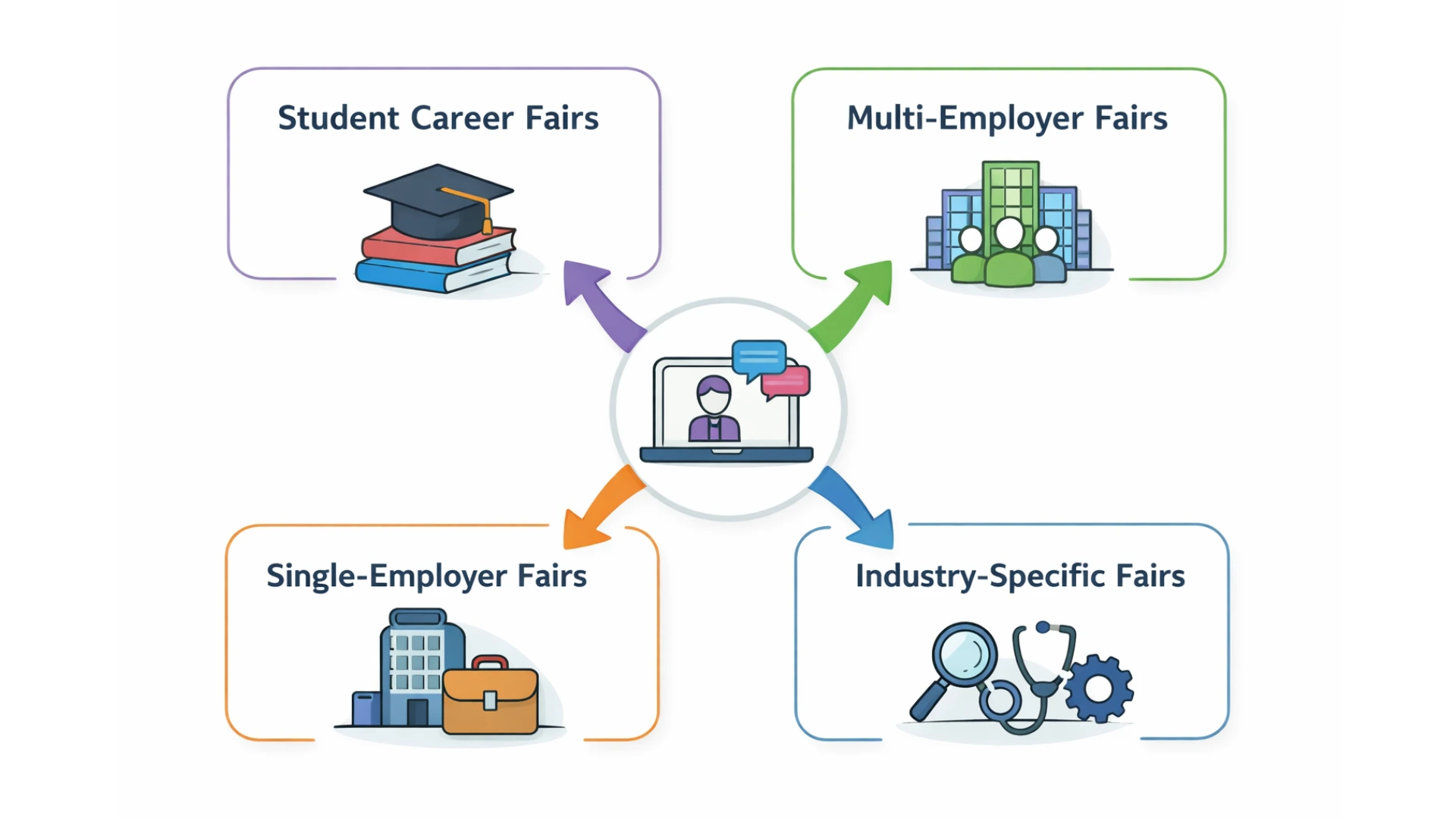
Not every virtual career fair serves the same purpose. The audience you’re trying to reach, the roles you’re hiring for, and the scale of the event all influence how the experience should be designed. Most virtual career fairs fall into one of the following four categories.
1. Virtual Career Fairs for Students (College Career Fairs)
These events are built for students and alumni seeking internships, graduate programs, and other entry-level roles. Typically hosted by university career centers, they focus heavily on early-career hiring and campus recruitment. Since they attract large numbers of students within a limited time frame, the structure must support quick introductions, easy resume sharing, and smooth transitions between employers. This is why organizers often evaluate virtual career fair platforms for universities to ensure the experience can handle high-volume networking without feeling overwhelming.
.webp)
2. Multi-Employer or State Career Fairs
Multi-employer fairs are usually open to the public within a specific region and are often organized by workforce boards or government agencies. The focus here is scale and accessibility. A single event might include healthcare providers, manufacturers, and tech companies all under one virtual roof, making it easier for job seekers to explore multiple industries without friction.
3. Single-Employer Virtual Career Fairs
A single-employer virtual career fair is organized and hosted by one company, with all sessions led exclusively by its recruitment team. Throughout the event, multiple recruiters represent different departments or functions, but the focus remains entirely on that organization’s job opportunities, workplace culture, and hiring process.
This format is typically used for large-scale recruitment drives, graduate programs, internship hiring, or to strengthen employer branding among a targeted talent pool. Because the event centers on one organization, it allows for deeper engagement, clearer messaging, and more structured candidate evaluation compared to broader multi-employer fairs.
4. Association and Industry-Specific Career Fairs
These fairs serve niche professional communities such as nursing associations or women-in-tech networks. With a more specialized audience, the emphasis shifts to quality connections and meaningful discussion. Many of these events blend recruiting with mentorship, education, and professional growth.
Together, these formats show how flexible virtual career fairs have become, capable of supporting everything from large-scale public hiring to highly focused professional networking.
Benefits of Organizing a Virtual Career Fair
Moving career fairs online highlights the benefits of virtual events by reducing costs, expanding reach, and making recruiting more flexible for recruiters, job seekers, and event organizers alike.
- Employers: Reduce cost per hire by eliminating travel, venue, and accommodation expenses. Gain access to a broader, even global, talent pool while automatically capturing resumes and engagement data for follow-up.
- Candidates: Experience a more relaxed way to connect with employers compared to traditional face-to-face fairs. Join from anywhere, save on travel costs, and explore opportunities at your own pace.
- Hosts: Scale events up or down without logistical complexity. Built-in analytics make it easier to track attendance, engagement, and overall performance.
How to Host a Virtual Career Fair
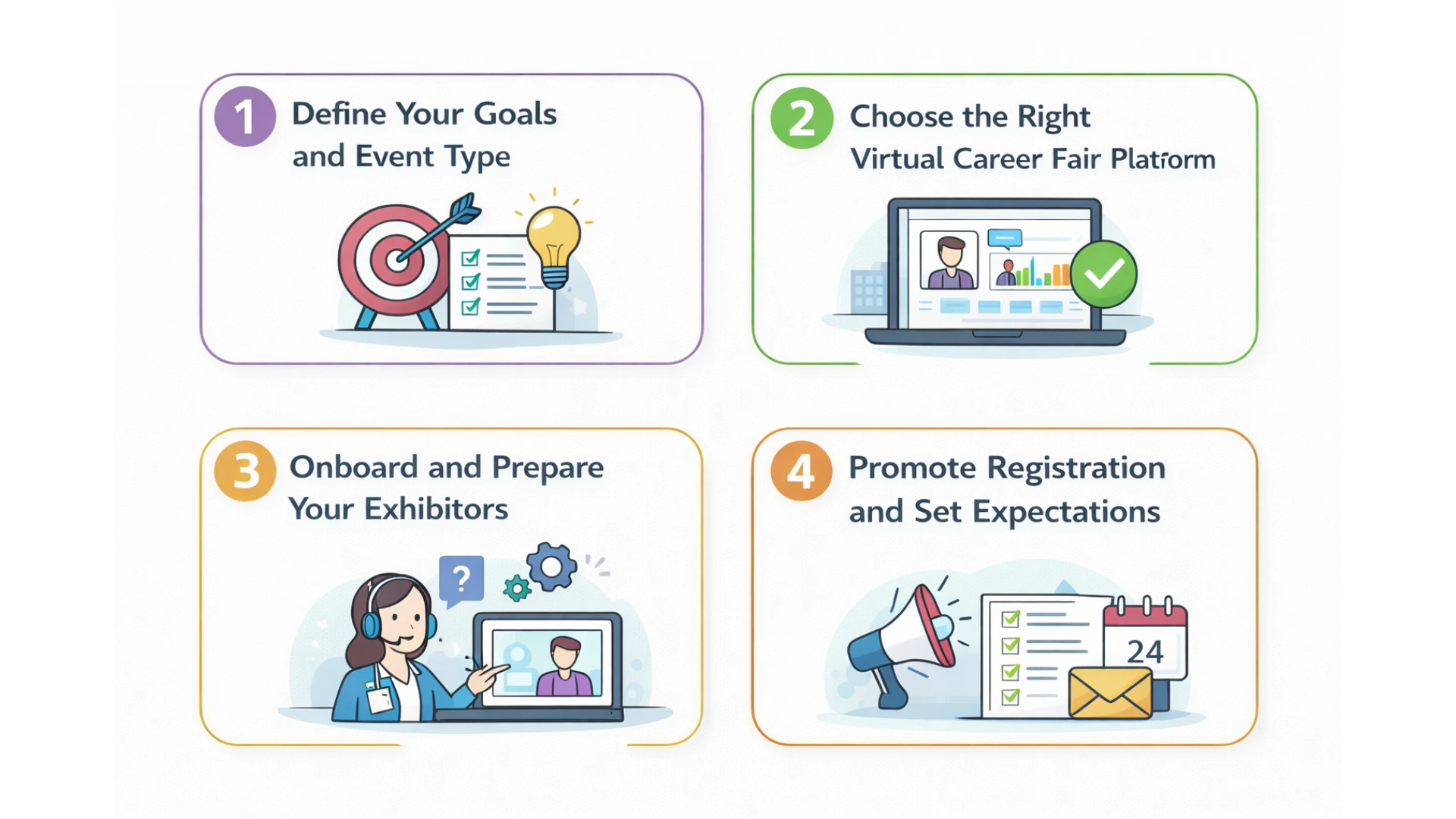
Once you understand the format and benefits of virtual career fairs, the next step is planning the experience itself. The sections below summarize the key areas to focus on when organizing a virtual career fair. For a more detailed breakdown, you can explore our in-depth guide on how to host a virtual career fair.
1. Define Your Goals and Event Type
Before choosing technology or sending invitations, get clear on what success looks like. Are you hosting a student-focused fair, a multi-employer public event, or a single-employer hiring push? The goal, whether it’s high-volume applications or deeper conversations, should guide everything from the event layout to the session format.
2. Choose the Right Virtual Career Fair Platform
Not all virtual event platforms are built for real interaction. While some rely heavily on static text chat or long queues, the most effective virtual career fairs allow for spontaneous movement and natural conversation. When evaluating the best virtual career fair platforms, organizers often look for solutions like Remo that allow attendees to navigate freely, join discussions organically, and recreate the energy of an in-person career fair online.
3. Onboard and Prepare Your Exhibitors
Even the best virtual career fair platforms can fall flat if employers don’t know how to use them effectively. Take time to onboard exhibitors in advance, showing them how to set up their booths, manage conversations, and share materials. Confident recruiters create a better experience for every attendee.
4. Promote Registration and Set Expectations
Finally, focus on visibility and clarity. Build a clear landing page, communicate what attendees can expect, and send timely email reminders as the event approaches. When people know where to go and how to participate, engagement rises naturally.
When these elements come together, the result is a virtual career fair that feels intentional, easy to navigate, and genuinely engaging for everyone involved.
Final Thoughts on Virtual Career Fairs in 2026
A virtual career fair is no longer a temporary alternative, it’s a flexible hiring tool that saves time, lowers costs, and expands access to talent. From student recruitment to high-volume hiring, virtual career fairs make it easier to connect employers and candidates without the limitations of physical events, while still supporting real conversations and measurable outcomes.
So what’s next for you? Are you planning a student career fair or an industry job fair designed for meaningful engagement? If you want to see how a virtual career fair can feel more immersive, explore how Remo’s interactive floor plan brings spontaneity back into recruiting. Book a demo to experience it in action.
Frequently Asked Questions about Virtual Career Fairs
1. What is a virtual career fair, and how is it different from an in-person career fair?
A virtual career fair is an online recruiting event hosted on a virtual career fair platform where employers and candidates connect remotely. Unlike in-person fairs, it removes travel and space limitations while offering more flexible, on-demand interaction.
2. How does a virtual career fair work from a candidate’s perspective?
Candidates register, enter a virtual event space, and explore employer booths, sessions, and conversations at their own pace. They can chat with recruiters, join group discussions, and move freely between opportunities.
3. What happens inside a virtual career fair?
Attendees can visit employer booths, attend webinars, join group sessions, and take part in one-on-one chats or video calls, all within a single virtual environment.
Zainab Asad
Zainab Asad is a Content Writer at Remo, contributing to the platform's mission of fostering authentic virtual connections. With a keen eye for detail and a passion for effective communication, she crafts engaging content that empowers event professionals to create memorable virtual experiences.