State of AI and XR for Events - 2026 Q1 Field Report: The Great Deliberation Is Here

If the last two years were defined by AI hype and XR experimentation, 2026 feels different. The conversation has shifted from “What’s possible?” to “What actually belongs inside a live event?”
And the adoption data reflects that change in mindset. It reveals a striking gap: while nearly 70% of marketing teams have rapidly integrated AI into their workflows, only 43% of event organizers believe the industry will see full adoption by year-end. At first glance, that looks like hesitation. It isn’t. It’s deliberation.
Our latest State of AI and XR in Events 2026 Q1 Field Report, breaks down the key reasons event professionals are taking this more measured approach when it comes to XR and AI for events, and why that restraint may become their greatest competitive edge.
{{table-of-contents}}
Why Creative AI is No Longer a Competitive Edge
.webp)
If you feel like your event marketing is starting to look and sound like everyone else’s, you aren’t imagining it. For the last year, the industry has been in a Creative Plateau. We’ve all used AI in events to churn out social captions and email invites, but because the barrier to entry is so low with tasks like those, the wins have become the new industry baseline.
The data from our State of AI and XR in Events 2026 Q1 Field Report shows a massive pivot: Interest in using AI for marketing tasks has actually dropped by 10%. Why? Because organizers have realized that saving 10 minutes on a subject line doesn't actually help you run a better event.
The Real Opportunity:
The true frontier for 2026 isn't AI as a writer; its AI as an Operator. AI for event planning and operations is evolving beyond marketing support and into the core infrastructure of budgeting, logistics, and execution.
Interest in using AI for event operations has surged by 52%:
- Real-time logistics: Managing the behind-the-scenes chaos of booth assignments and session scheduling.
- High-stress execution: Automating check-ins and event matchmaking where human error is most expensive.
- Instant support: Resolving thousands of attendee tickets instantly to keep the experience seamless.
The High-Stakes Catch:
Moving AI from the creative front to the operational back-end is a high-reward move, but it’s not without risk. When automation moves into live event workflows, the stakes change, and so does the margin for error.
So How Do You De-Risk Operational AI? You do not flip the switch and hope it behaves. We explore why operational AI carries higher exposure, and how leading teams are protecting their events against it, inside the full State of AI and XR in Events 2026 Q1 Field Report.
Why Your AI Budget Might Be Working Against You

In the race to stay ahead, many event teams are operating under a dangerous assumption: that success is a numbers game. We’ve been conditioned to believe that More Money + More Tools = More Effectiveness. However, the 2026 data reveals that may no longer be the case.
The teams getting the strongest results from AI aren’t the biggest spenders. In fact, organizers who report the highest levels of effectiveness tend to use fewer tools and spend less than those chasing broader stacks. More investment doesn’t automatically translate to better outcomes.
Why? Portfolio Bloat — the hidden friction created by stacking disconnected tools that demand more coordination than they deliver in value. Instead of accelerating performance, with more tools, teams spend their time integrating, troubleshooting, and reconciling workflows across systems that were never designed to work together.
In short, AI effectiveness does not rise in a straight line. It peaks when teams reach a deliberate balance, a “Goldilocks Zone” of intentional, streamlined investment. Enough investment to transform workflows. Not so much complexity that it fractures them.
Are You in the AI Goldilocks Zone? We’ve identified a specific "Sweet Spot" budget range in the State of AI and XR in Events 2026 Q1 Field Report that defines the most successful event teams in the industry.
.webp)
XR’s Adoption Slowdown Is Strategic, Not Stalled
Headlines may spotlight bulky headsets and lingering metaverse fatigue, but adoption patterns inside the events industry tell a more deliberate story.
XR isn’t being rejected. It’s being filtered.
Our data reveals a clear tension: while 22% of organizers believe XR is ready for prime time, 61% remain in a “wait and see” phase with no dedicated budget. At first glance, that looks like hesitation. It isn’t. It’s risk management.
In live environments, unpredictability is expensive. XR doesn’t sit quietly in the background; it interacts directly with attendees. That makes the margin for error smaller, and the cost of failure more visible. So organizers aren’t abandoning immersive technology. They’re demanding clarity before commitment.
What is that 22% "Ready" group doing differently than others? Inside the State of AI and XR in Events 2026 Q1 Field Report, we break down what separates the 22% who believe XR is ready from the majority still holding back, and what’s shifting that confidence.
Organizers Aren’t Chasing Hardware; They’re Chasing Access
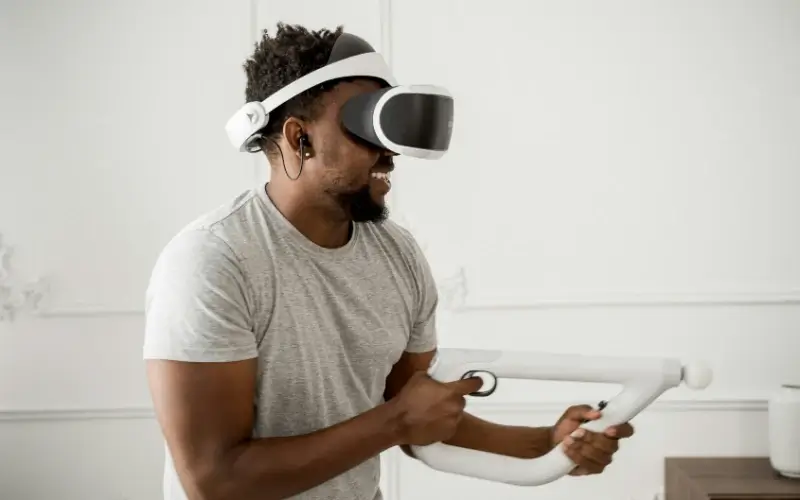
Organizers have made something clear in 2026: access matters more than spectacle. For years, XR strategies centered on hardware and immersion. Today, the priority is participation.
Event organizers have realized that if an immersive experience requires a guest to wait in a 20-minute line to put on a shared headset, the immersion isn't worth the logistical headache.
We are entering the era of "App-less XR," where the best experience is the one that lives on the device already in your attendee’s pocket.
Web-AR is the Clear Frontrunner:
When asked which XR formats they are most excited to explore, organizers sent a loud message:
- The winner: Web-based XR (WebAR) is the undisputed leader, with 55% of organizers prioritizing it above all else.
- The hardware gap: WebAR is nearly 2x more popular than VR headsets (25%) or AR glasses (30%). Traditional VR event setups still have their place for highly immersive demos, but they require greater infrastructure and attendee commitment.
- The knowledge barrier: Interestingly, 38% of organizers who are currently sitting on the sidelines say it’s not because they dislike XR but because they simply haven't seen enough practical examples to know where to start.
However, preference for WebAR isn’t just about cost and technology preference alone. It’s about minimizing friction in moments that matter.
The Friction Barrier:
In the fast-paced environment of a live event, friction is a conversion killer. If an attendee has to find a specific app in the App Store, download it over spotty convention center Wi-Fi, and create an account just to see a "3D product demo," they simply won't do it. You've lost them before the experience even begins.
Organizers are pivoting to WebAR because it is deployable via a simple QR code or web link. It turns every smartphone in the room into an instant access point. Whether it’s for "Utility" (AR route guidance and enriched content overlays) or "Connection" (immersive presentations that create a sense of unity), the goal is to remove every possible barrier between the attendee and the content.
Access is easy. What’s the move? While 55% of organizers prefer Web-based access, the real struggle is knowing what to actually build. In the State of AI and XR in Events 2026 Q1 Report, we highlight the WebAR activations that are proving both scalable and commercially viable.
The Universal Pattern: The Deliberation over the Disruption
That deliberation makes sense in an industry where technology doesn’t run quietly in the background. Event tech operates in real time, in front of live audiences. A glitch isn’t a minor inconvenience; it’s a public disruption. When something fails, it fails visibly.
So organizers aren’t slowing down because they’re uncertain. They’re moving with intention because the margin for error is smaller. That pressure is especially visible in the rapid adoption of AI and XR technologies.
While AI and XR feel like two entirely different worlds, one living in data and the other in visuals, the 2026 data shows they share a singular, critical risk: The Disruption of the Event-Goer Experience.
In the early days of the tech boom, we were told to "move fast and break things." In the events industry, if you break the check-in process with misplaced AI or confuse a VIP guest with a high-friction XR app, you haven’t just "broken a thing", you’ve broken the event. This realization is what’s driving the great deliberation of 2026.
The most successful organizers aren't the ones racing to be the first to use a new tool; they are the ones moving with strategic caution. The universal advice for the coming year is simple: Start small and work with trusted partners.
Whether it’s an AI chatbot for attendee support or a WebAR map for navigation, the tech should be the silent partner that makes the human experience smoother, not more complicated. Many organizers are turning to the best XR and AI event agencies or AI-powered event management platforms to help bridge the gap between experimentation and execution.
AI and XR for Events 2026: From Add-Ons to Infrastructure
The novelty phase is over.
AI and XR are no longer slide-deck embellishments designed to impress stakeholders. They are becoming the operational backbone of modern events. These technologies are taking on the high-stress, high-error tasks of event day so human teams can focus on what machines cannot replicate: strategy, creativity, and real connection.
The shift unfolding in 2026 is not about whether to adopt. It is about how to integrate with discipline, clarity, and intention without eroding the human experience at the center of every successful event.
This article has only scratched the surface, covering roughly 40% of the trends and data points we identified in our research. If you’re serious about moving from experimentation to strategic implementation, download the full State of AI and XR in Events 2026 Q1 Report and see where your strategy stands against the industry’s most effective teams.
In 2026, the advantage won’t go to the fastest adopters. It will go to the most deliberate ones.
FAQs about XR and AI for Events
1. How is AI being used in live events in 2026?
AI is shifting from content creation to operations. Organizers are using it for attendee support, matchmaking, check-in automation, sponsorship outreach, and post-event analysis.
2. Is AI fully adopted in the events industry?
Not yet. Many organizers are adopting AI carefully to ensure it integrates smoothly without disrupting the attendee experience.
3. Why is XR adoption slower than AI in events?
XR involves higher perceived risk and cost. Organizers are waiting for practical, low-friction use cases before fully committing.
4. Should event teams start small with AI and XR?
Yes. Pilot programs reduce risk and allow teams to test impact before scaling.
Aniqa Iqbal
Aniqa is a content writer at Remo, where she merges her love for storytelling from movies and TV shows with her passion for creating compelling content. With a knack for blending pop culture references and relatable narratives, Aniqa crafts content that informs and resonates deeply with readers. She aims to strike a chord with her audience, fostering genuine connections through words that inspire, engage, and entertain. When she's not writing, Aniqa can be found binge-watching her favorite shows, always on the lookout for the next story to tell.