The Only SEO Guide for Event Marketing You’ll Need in 2025
Most event organizers think SEO is slow, optional, or something they will “deal with later.” It makes sense. When you are managing speakers, sponsors, floor plans, and last-minute surprises, keywords usually fall to the bottom of the list. But once organizers see how SEO quietly brings in attendees, sponsors, and exhibitors, it turns into one of those “why didn’t we do this sooner?” moments.
In this SEO guide for event marketing, you will learn the full process step by step. From setting up strong foundations to optimizing event pages, building authority, and preparing your content for AI-powered results. You’ll see exactly how to make search work for you, and keep working for you while you focus on everything else.
Search is evolving fast. It is no longer just about ranking on Google. People now discover events through a mix of traditional search engines, AI assistants, answer engines, and chatbots. For example, someone might search on Google, ask Siri, scroll TikTok search, or even type “best virtual events to attend this month” into ChatGPT. AI models read and summarize event content at scale, which means your landing pages and session info need to be clear, structured, and trustworthy enough to be included in those answers.
Everything ahead is practical, not theoretical. Every recommendation is built for event organizers using virtual event platforms like Remo. By the end, you will know how to increase visibility, grow registrations, and attract more qualified sponsor leads with an SEO strategy that fits naturally into your workflow.
{{table-of-contents}}
What Is SEO, AEO, and GEO? (Quick Definitions)
Before we go any further, here’s a simple breakdown of a few terms you’ll see throughout this seo guide for event marketing.
- SEO (Search Engine Optimization): This is how you help your event show up in traditional search engines like Google. It covers the structure of your pages, your keywords, your content, and the signals that help search engines understand what your event is about.
- AEO (Answer Engine Optimization): Answer engines give direct responses, not just links. Siri, Alexa, Google Assistant, ChatGPT, and Perplexity fall into this group. AEO is about making your event easy for these tools to read, interpret, and mention when someone asks a question.
- GEO (Generative Engine Optimization): Generative engines create summaries or recommendations. When AI tools generate answers like “best virtual marketing events this year,” GEO helps them choose your event as part of that list.
In summary, optimizing for all three is now essential if you want your event to be discovered.
Why SEO Matters for Event Marketing
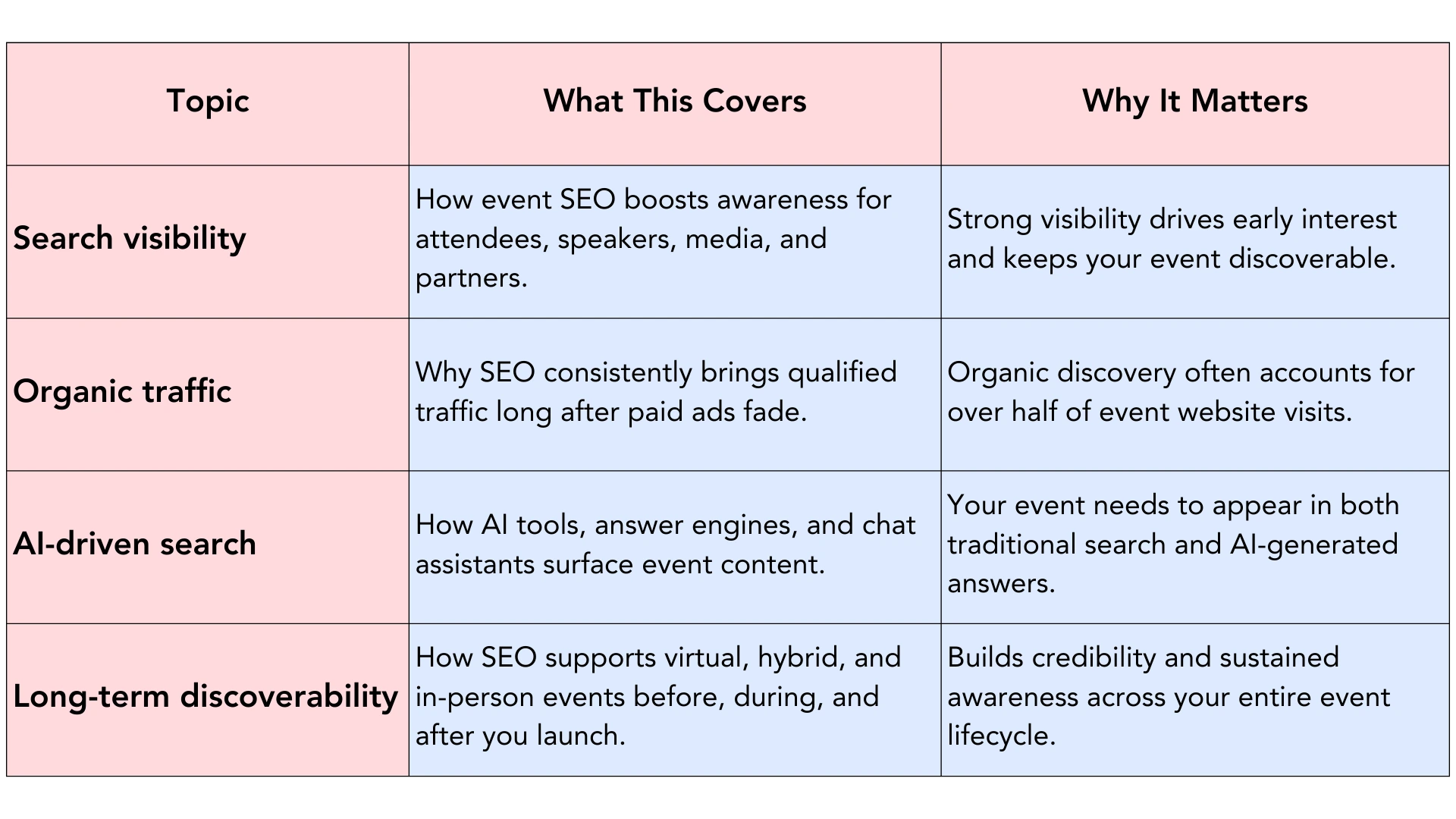
If you’ve ever launched an event and watched traffic trickle in slowly, you’re not alone. Most organizers hit that moment of “I wish more people could just find us.” That’s where SEO comes in. It helps your event show up when people are actively searching for things like conferences, masterclasses, festivals, and virtual meetups, instead of relying only on ads or social posts to drive traffic.
The power of SEO is simple, it helps your event show up at the exact moment people are looking for something to attend. Paid ads are great, but they turn off the minute your budget does. SEO on the other hand keeps working in the background. Once your pages are optimized, they continue showing up in search results day after day.
SEO does more than bring traffic. It builds trust. When someone sees your event appearing across different searches, it feels established and credible. That can nudge an attendee to register, encourage a speaker to accept an invitation, or make a media team more likely to reach out. Sponsors notice visibility too, although SEO isn’t the reason sponsors say yes, it simply adds to your event’s overall reputation.
The way people search is changing, and this is where things get interesting. SEO used to be all about Google. Now, discovery happens everywhere: Siri, TikTok search, ChatGPT, Perplexity. Someone might type “best virtual events this quarter” or “marketing conferences on a virtual event platform” straight into a chatbot. These tools read event content differently than traditional search engines, and they often highlight the most structured, clear, and trustworthy information.
For organizers, this opens a new door. If your event pages, speaker bios, event agenda, and FAQs are well-optimized, AI tools are more likely to surface your event in their answers. This is especially valuable for virtual and hybrid events, where online discovery is everything.
Most SEO guides stop at “get more attendees.” That’s part of it, but the real story is visibility. SEO helps your event show up, stand out, and stay discoverable across traditional search and AI-driven search experiences. For organizers using a platform like Remo, that visibility becomes a core part of how your event grows.
Audience, Goals & Search Intent
Now that we’ve explored why SEO matters, and how discovery now happens across multiple channels, the next step is understanding who you’re trying to reach. SEO only works when you know the people behind the search. Once you understand their motivations and the language they use, everything else becomes easier: your keywords, your content, your event pages, all of it.
Understanding Your Audiences
Most events attract several groups, each with different reasons for searching:
- Attendees look for solutions, inspiration, or opportunities to learn. They search for things like “marketing workshops online” or “virtual leadership summit 2026.”
- Speakers look for the right fit. They search for events in their niche or places actively accepting proposals.
- Media teams keep an eye out for what’s happening across industries and seasons.
- Sponsors check for alignment, visibility, and credibility.
These groups may use different platforms to discover events: Google, TikTok, Siri, ChatGPT, but they all rely on clear, structured information to understand what your event offers.
Setting Clear SEO Goals
Once you know who you're trying to reach, defining your goals becomes much simpler. Your goals might include:
- Increasing overall visibility for early awareness
- Growing organic registrations
- Attracting stronger speakers or partners
- Improving discoverability for virtual or hybrid event pages
- Building long-term visibility for annual or recurring events
You don’t need ten goals, just the ones that support your event’s growth and what matters most to you.
Understanding Search Intent
Search intent is the “why” behind a query. When you understand intent, you can create event pages that match what people expect to find.
For event SEO, search intent usually falls into a few categories:
- Informational: People want to learn
(“travel tips for attendees at a hybrid conference,” “college career fair tips for students”)
- Comparative: People explore options
(“top tech conferences 2026,” “technology expos 2025”)
- Action-ready: People know what they want
(“register for design summit,” “[event name] tickets”)
- Navigational: People search for a specific event or platform
(“Remo login,” “[event name] agenda”)
This is where SEO shifts from chasing traffic to creating alignment. When your event pages match the intent behind someone’s search, you remove friction and help them find exactly what they need. Once you understand who your audiences are and what they’re looking for, the next step, which is choosing the right keywords, becomes far more strategic and much less overwhelming.
Keyword Research for Event SEO
Now that you understand your audiences and what they’re searching for, the next step is figuring out the language they actually use. Keyword research is how you discover the terms people enter when they’re trying to find events like yours.
The best part? Event keywords are often easier to pinpoint because events come with built-in specifics like dates, locations, themes, and formats. The key is learning how to combine these details in a way that aligns with real search behavior.
What Makes Event Keywords Unique
Event keywords are rarely vague. They’re specific by nature, and that specificity helps your event stand out. Strong performing keywords usually blend:
- Location: “Chicago,” “Dubai,” “Vancouver”
- Format: “virtual,” “hybrid,” “in-person,” “online workshop”
- Audience: “HR leaders,” “creators,” “engineers”
- Time frame: “2026,” “Q3,” “summer,” “fall conference”
- Theme or focus: “AI marketing,” “leadership,” “sustainability”
Something like “virtual HR summit 2026” may feel overly narrow, but these long-tail combinations often convert best because they match high-intent searches.
Cluster Keywords Across the Event Lifecycle
Event searches happen at different stages, not just when people are ready to register. A strong keyword strategy includes clusters for each phase:
Before the event
- “submit speaker proposal”
- “call for speakers 2026”
- “exhibit at tech expo”
- “event sponsorship opportunities for [industry]”
During the event
- “[event name] agenda”
- “[event name] schedule”
- “how to join event on Remo”
After the event
- “[event name] recap”
- “session recordings from [event]”
- “key takeaways from [topic] conference”
This lifecycle approach helps you build a well-rounded content structure instead of relying only on registration pages.
Use AI-Supported Tools to Speed Up Research
Keyword research doesn’t have to be slow or complicated. Modern tools, both AI-powered and completely free, make it much easier to understand how people search and the exact language they use.
Here are helpful tools to guide your research:
- ChatGPT (AI): Great for brainstorming long-tail variations, audience-specific phrasing, and conversational queries.
- SurferSEO / Clearscope (AI-enhanced): Analyzes semantic keywords, ranking difficulty, and content gaps.
- Ahrefs / SEMrush AI: Uncovers keyword volume, competition, and SERP trends, even for niche event terms.
- Google Trends (free): Shows seasonal interest and rising search topics for your event category.
- Google Keyword Planner (free): Helpful for search volume estimates and related keyword ideas.
- WordStream Free Keyword Tool (free): A simple, beginner-friendly tool for quick keyword suggestions and competition insights.
- AlsoAsked / AnswerThePublic (freemium): Reveals real questions people ask around your event theme.
- KeywordTool.io (free version): Great for generating variations across platforms like YouTube, TikTok, and Google.
Together, these tools help you understand not only what your audiences search for, but how they phrase their questions, which matters even more as search becomes increasingly conversational across traditional engines and AI assistants.
Analyze Competitors and Identify SERP Gaps
A quick look at competing events can reveal immediate opportunities. Before you dive in, it helps to know what “SERP” means.
SERP (Search Engine Results Page) is simply the page you see after you type a query into Google. It includes the top-ranking links, but also things like featured snippets, videos, “People Also Ask” boxes, event listings, and other elements Google shows when it thinks they’re helpful.
With that in mind, here’s what to look for when reviewing competitor events:
- What keywords are their pages clearly optimized for?
- Which types of pages are ranking, landing pages, blogs, sponsor pages, FAQs?
- Which SERP features appear for those keywords?
- Most importantly: what’s missing that your event could rank for?
Gaps often appear around long-tail, intent-driven terms like “virtual networking event for creators” or time-specific searches like “2026 sustainability conference.”
Map Keywords to the Right Pages
Mapping ensures your keywords support your full event ecosystem. A simple framework:
- Attendee terms → event landing page + agenda
- Speaker terms → speaker submission page + speaker lineup
- Sponsor terms → sponsor/exhibitor page + prospectus
- Media terms → press page + recap content
- Post-event terms → recap blog + recordings page
This prevents pages from competing with each other and keeps your structure clear for both search engines and AI models.
Pitfalls to Avoid
A few common mistakes can hold back your event SEO:
- Forgetting year-based modifiers (2025, 2026, Q4, summer)
- Skipping location terms for hybrid or in-person events
- Targeting overly broad keywords
- Ignoring seasonal search patterns
- Leaving out format modifiers like “virtual” or “hybrid”
Specific keywords help your event match specific intent, which is exactly what modern search engines and AI assistants favor. Once you know your keywords, the next step is putting them to work. On-page SEO is how search engines and AI tools understand what your event is about, and why it should be recommended.
.webp)
Content Strategy That Drives SEO Results
With your keywords selected, the next step is building a content strategy that keeps your event discoverable long before launch and long after it wraps. Content is what widens your visibility — it helps you rank for more keywords, answer more questions, and stay present across search engines and AI-driven tools.
Think of content as the ongoing story around your event. It builds trust, shows your expertise, and keeps you top-of-mind throughout the event lifecycle.
Build Content Around Three Core Pillars
These three pillars create a balanced, sustainable content foundation. Each one supports different search intents and audience stages.
1. Educational Content (Early-stage discovery)
This content helps people before they even know your event exists. It answers early questions around topics related to your event, capturing organic traffic from people searching for guidance.
Examples:
- AI in marketing: “How AI is reshaping digital campaigns”
- Sustainability: “How companies are reducing their carbon footprint in 2025”
- Design: “The biggest UX trends influencing product design this year”
These searches already exist, and they build authority around your event’s topic.
2. Promotional Content (Mid- to late-stage evaluation)
Once someone is aware of your event, they start comparing. Promotional content helps them understand why your event is worth attending.
Examples:
- “Top reasons to attend [Event Name] 2026”
- “Inside the agenda for [Event Name]”
- “Meet the speakers joining us this year”
3. Thought Leadership (Industry positioning)
Thought leadership gives your event a point of view. It positions you and your speakers as contributors to the future of your industry.
Examples:
- “The future of hybrid events in 2026 and beyond
- “AI and the next wave of attendee engagement”
- “Trends redefining the [industry] event landscape”
Use a Balance of Evergreen and Time-Sensitive Content
Your event benefits from both long-term visibility and milestone-driven interest.
Evergreen Content (long-term SEO drivers)
This content stays relevant throughout the year and builds sustained authority.
Examples:
- General blog posts around your event’s theme
- Educational articles
- Industry trend content
- FAQs
- Post-event summaries and takeaways
Time-Sensitive Content (drives action closer to event date)
This content aligns with event milestones and registration windows.
Examples:
- Speaker spotlights
- Sponsor announcements
- Venue or virtual platform details
- Agenda previews
- Behind-the-scenes posts
- Early-bird and last-chance promotions
Together, these content types create a healthy, long-life SEO ecosystem.
Create a Content Calendar Aligned to Event Milestones
Content performs best when it maps to your event timeline. A structured calendar keeps you consistent and ensures you’re publishing the right type of content at the right time. For example:
On-Page SEO for Event Marketing
Once your content strategy is in place, the next step is optimizing the pages on your event website. On-page SEO helps search engines and AI assistants understand what your event is about and why it should appear in results.
Think of on-page SEO as giving each page a clear purpose. When your landing page, speaker pages, agenda, and sponsor information are structured well, people find and trust your event more easily.
Optimize Your Event Landing Page First
Your event landing page is often the first thing both search engines and attendees see. The goal here is clarity. A strong event landing page includes:
- A clear title tag
Include the event name, format, and year if relevant.
- An accurate meta description
Summarize the event and highlight one or two benefits in under 160 characters.
- A clean H1–H3 structure
One H1 for the main headline; use H2/H3 for sections.
- Use your primary event keywords and variations naturally
Work in your themes, location, date, and audience in a clear, structured way.
- Answer the key attendee questions immediately
What is this event? Who is it for? When is it? What will I learn? How do I join?
- Add clear calls-to-action throughout the page
CTAs help attendees and search engines understand the next step.
Above are ways to optimize your landing page for SEO. If you’re looking for guidance on what content to include, check out our detailed article on creating a high-converting event landing page.
Add Event Schema to Stand Out in Search
Schema markup helps Google understand your event’s details precisely. When implemented correctly, your event can appear with rich details in search, including:
- Date and time
- Venue or virtual location
- Registration link
- Event description
Each page should have its own schema. Use the types that fit your content (Event, Organization, FAQ, or Breadcrumb). Add the markup to your page’s header, then test it with Google’s Rich Results Test before publishing.
Optimize Every Stakeholder Page
Events have multiple page types, and each one is a search opportunity.
Speaker & Agenda Pages
People often search for speakers and session topics. Include:
- Keyword-aligned bios
- Session titles based on real search intent
- A scannable agenda
Sponsor or Exhibitor Pages
These pages attract organic traffic from searches tied to brands, industries, or booths. Include:
- Sponsor descriptions
- Industry categories
- Links to sponsor sites
- CTAs for new sponsors
Venue or Virtual Platform Details
Whether in-person or virtual, these pages often rank. Include:
- How the platform works (e.g., networking on Remo)
- Accessibility details
- Local travel guidance
Optimize for Snippets and AI Answers
Search engines and AI assistants prioritize clarity. To boost your chances of being included in Featured Snippets or AI-generated responses:
- Use clear headers
- Add concise summaries
- Include FAQ blocks
- Write simple definitions
- Use bullet points, numbers, and short paragraphs
Check Your Technical SEO Basics
Even the best content won’t perform if your site loads slowly. Use Google PageSpeed Insights to identify issues like heavy images, unused scripts, or mobile layout problems.
Fast-loading pages support:
- Higher rankings
- Lower bounce rates
- Better attendee experience
Off-Page SEO & Link Building
Once your event pages and content strategy are in place, the next step is building credibility beyond your own website. That’s where off-page SEO comes in, the reputation-building side of search that signals to Google and AI tools that your event is trusted, relevant, and worth recommending.
Why Off-Page SEO Matters for Events
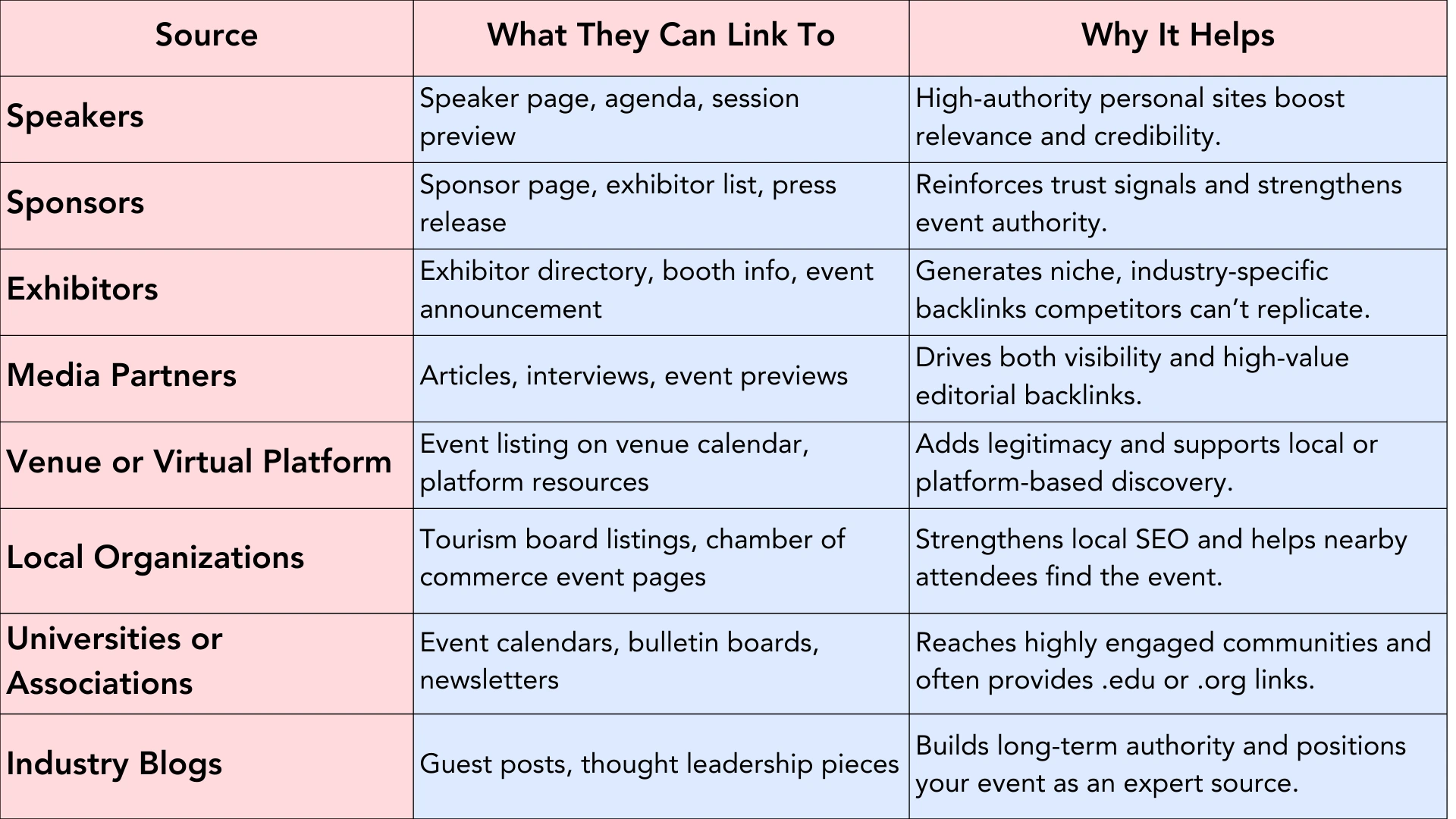
Backlinks and mentions act as endorsements. When respected websites link to your event, search engines interpret it as a sign of quality. For events, these endorsements often come from speakers, sponsors, partners, venues, directories, and industry publications, all of whom already have a reason to talk about your event.
This gives event organizers a unique advantage: you have more built-in backlink opportunities than most industries, you just need to use them.
Event-Specific Backlink Tactics That Work
Here are the strongest off-page SEO tactics tailored to event marketing:
1. Get Your Event Network to Link to You (Speakers, Sponsors, Exhibitors, Partners)
Everyone involved in your event – speakers, sponsors, exhibitors, vendors, and partners – have their own platforms and audiences. Ask them to:
- Add your event to their “Events” or “News” page
- Share a post announcing their participation
- Link to your agenda, speaker page, or sponsor page
- Include your event in newsletters or community updates
These backlinks work incredibly well because they’re coming from organizations already connected to your event ecosystem.
2. Submit Your Event to Key Directories
Event directories consistently rank well, and getting listed can drive both visibility and backlinks.
Popular platforms include:
- Events.com Discover
- Eventbrite
- 10Times
- Meetup
- Facebook Events
- Eventful
- Local tourism boards
- Industry-specific directories
Many of these sites allow free submissions and naturally include backlinks to your event page.
3. Generate Press Coverage and Guest Content
Media and niche publications love event-related stories, especially if you have strong speakers, unique themes, innovative formats, or have local community impact. To increase chances of securing a backlink, you can pitch unique content like exclusive speaker interviews, event previews, or guest blogs on industry trends. One well-placed article can deliver long-lasting SEO value.
4. Use Google Business Profile to Enhance Local SEO
Local SEO matters for both in-person and hybrid events. While you cannot create a permanent Google Business Profile for a short-term event, you can still promote it through an existing, verified Business Profile for your business or organization. To do this:
- Log in to your Business Profile.
- Select “Posts.”
- Choose “Event.”
- Add details like title, description, start and end date/time.
- Upload a compelling photo or video.
- Include a button linking to your ticket or registration page.
This boosts local visibility in Google Maps and increases discovery for nearby attendees.
5. Encourage Attendees to Share & Link
Social amplification doesn’t always create direct SEO backlinks, but the ripple effect can drive brand mentions and awareness. Attendees often share:
- registration confirmations
- speaker quotes
- session screenshots
- recap posts
These social signals help with off-page visibility and can lead to organic backlinks from blogs or community sites.
The Event Link Opportunity Checklist
Technical SEO & Site Health
Once your event pages are optimized and your off-page credibility is growing, the next step is making sure your website performs well behind the scenes. Technical SEO is the quiet engine that keeps everything running. It ensures that your event website loads quickly, is easy for search engines to crawl, and offers a smooth experience for attendees, sponsors, media, and anyone discovering your event.
Make Your Pages Mobile-First
Most people discover events on their phones, whether through Google, social links, or AI-driven recommendations. This makes mobile-first optimization non-negotiable.
Key things to check:
- Text and buttons should be easy to read and large enough to tap
- Pages should not require zooming or horizontal scrolling
- Navigation should be simple and scannable
- Images and videos should scale properly
Google uses mobile-first indexing, which means your mobile version is the version it evaluates first. If your event page loads slowly or feels clunky on a phone, your rankings will suffer.
Keep Your Site Fast and Stable
Page speed plays a major role in both rankings and attendee experience. Your event pages should load quickly, feel responsive, and stay visually stable as content appears.
Focus on:
- Fast loading of your main content
- Responsive taps and clicks
- Preventing layout “jumping” while pages load
A good first step is running your site through Google PageSpeed Insights. It’s free and highlights simple fixes like compressing images, reducing heavy scripts, or resolving layout shifts.
Help Search Engines Crawl Your Site
Search engines need to understand how your event website is structured. Clean crawlability ensures the right pages are indexed, ranked, and surfaced. Important elements include:
- XML sitemaps: A file that lists all important pages
- Robots.txt: Indicates which pages search engines can access
- Consistent navigation: Keeps search paths clear
- Internal links: Help Google understand relationships between pages
This is especially helpful for events with dozens of sessions, speakers, or sponsor profiles.
Add Structured Data for Better Visibility
Schema is a standardized format that helps search engines and AI systems understand the key details of your event page.
Structured data helps search engines “read” your event like a database. It’s one of the best ways to appear in rich results and AI-generated summaries. Useful schema types for events include:
- Event Schema: Date, time, registration link, virtual location
- FAQ Schema: Common questions about your event
- Organization Schema: Information about your brand
- Breadcrumb Schema: Improves navigation clarity
This added structure helps Google, Siri, and AI models surface your event in more detailed, trustworthy ways.
Monitor with Google Search Console & Analytics
SEO is never one-and-done. Tools like Google Search Console (GSC) and Google Analytics help you stay on top of:
- Indexing issuesMobile usability errors
- Page speed performance
- Keyword impressions and clicks
- Traffic sources
- Registration funnel behavior
Checking these tools weekly, or even biweekly, helps ensure attendees can easily find your event, access key pages, and register without friction.
Measuring SEO Success & Iterating
Once your event website is optimized, the next step is understanding whether your SEO efforts are actually working. Measurement is where everything comes together. It tells you what’s resonating, what needs improvement, and where to focus your energy as your event gets closer.
Think of this as your dashboard for visibility. When you track the right metrics, you can make smarter decisions and avoid investing time in tactics that don’t move the needle.
Track Metrics That Matter for Events
Not all SEO metrics are equal. For event organizers, the most meaningful signals are the ones tied to visibility, engagement, and conversion. Here’s what to pay attention to:
1. Organic Traffic
This tells you how many people discover your event through search. Watch for:
- Steady increases month-over-month
- Growth in traffic to your event landing page, agenda, and speaker pages
- Seasonal patterns or spikes around industry trends
- Which keywords drive the most and least traffic
2. Keyword Rankings
Rankings aren’t everything, but they show whether your content is moving in the right direction. Track:
- Your priority keywords
- Long-tail event-specific phrases
- Speaker/session keywords (these often rank unexpectedly well)
Tools like Google Search Console, Ahrefs, or SEMrush can help you monitor this without overcomplicating it.
3. Click-Through Rate (CTR)
CTR measures the percentage of people who click your event page when it appears in search results, not registrations.
A higher CTR means your title and meta description match what people are looking for.
4. Engagement Metrics
Once people land on your site, these metrics show whether your content is actually useful. Look at:
- Time on page
- Bounce rate
- Scroll depth
- Registration button clicks
These help you understand where visitors lose interest, and where your content needs improvement.
5. Conversions (Registrations & Signups)
For events, the most important metric is registrations. Track:
- Organic registrations
- Engagement with “Register” CTAs
- Drop-off points in the signup flow
This tells you whether your SEO is not just bringing visitors, but bringing the right ones that convert.
6. AI-Driven Visibility
Search is increasingly influenced by AI assistants and answer engines. Monitor:
- Whether your event appears in AI-generated summaries
- Inclusion in “best events” or “top conferences” outputs
- Mentions across conversational search tools
Tools like Perplexity, Bing Chat, and ChatGPT (browse mode) show how AI systems interpret and surface your event.
Tools to Measure Metrics
Popular tools to measure SEO and AEO-related metrics include:
- Google Search Console: This helps you understand your organic visibility, including metrics like keyword impressions,clicks,indexing issues, structured data errors, and page performance. Google Search Console shows how Google interprets your event content and where improvements may be needed.
- Google Analytics: This tool reveals what visitors do once they arrive. It measures behaviour flows, top landing pages,event page conversions, mobile vs. desktop performance, and page engagement. It helps you understand which content resonates and where visitors may need more clarity.
- SEO-specific tools(like Ahrefs, SEMRush): These tools help you track and measure organic search performance. It records metrics like organic traffic, page ranking, backlinks earned, page authority, and more.
Once you understand how your event is performing, the next step is turning those insights into meaningful improvements.
Adjust Your Strategy Based on What You Learn
Measurement is not just about checking numbers, it’s about improving. Here’s how to make adjustments:
- If organic traffic is growing but registrations aren’t, refine your CTAs or landing page messaging.
- If rankings improve but CTR is low, update your titles and meta descriptions to better match the search intent.
- If certain pages get strong engagement, build more content around those topics.
- If mobile metrics lag, revisit page speed and layout.
- If AI tools aren’t surfacing your event, strengthen structured data and create clearer, more concise answers in your content.
Small adjustments can create steady gains, especially as your event gets closer. Once you know what’s working and what needs improvement, you’re ready for the more advanced side of SEO. This is where AI-driven strategies, answer engines, and generative search tools come into play.
AI-Driven SEO for Event Marketing
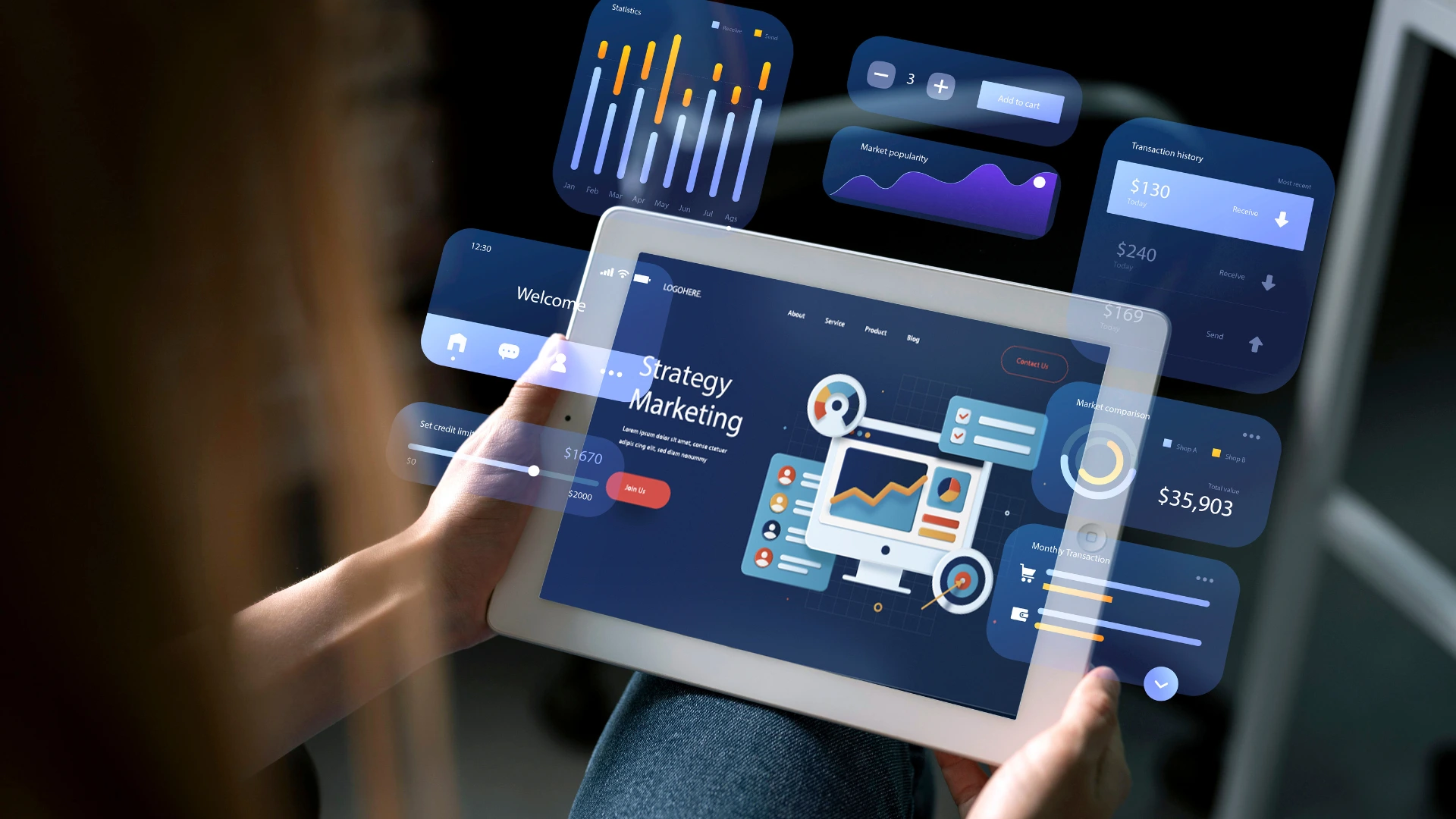
AI is reshaping how content teams research, plan, and produce SEO content. For event organizers, it helps speed up the work that typically takes the most time, keyword research, competitor analysis, and early drafts. AI enhances your process, while your experience and brand voice guide the final product.
Use AI to Strengthen Your SEO Workflows
AI tools help analyze information quickly and highlight opportunities that may not be obvious at first glance.
They support:
- Keyword discovery and clustering
Tools such as ChatGPT, MarketMuse, or Clearscope can suggest long-tail keywords, group related terms, and help shape stronger content clusters. - Gap analysis
Platforms like SurferSEO or MarketMuse compare your content with pages that already rank well, showing you what competitors include, and where they fall short. - Meta ideas
AI-generated variations for titles and meta descriptions give you more angles to test while staying aligned with search intent.
These tools speed up analysis, but your strategy and expertise determine what becomes part of your final content.
Draft Faster With AI (Without Losing Quality)
AI is helpful for drafting content types that event organizers create frequently, including:
- Agenda descriptions
- Speaker bios
- FAQs
- Venue summaries
- Session overviews
- Exhibitor or sponsor spotlights
First drafts create momentum, but human editing ensures accuracy, tone consistency, and authenticity.
A simple workflow helps maintain quality:
AI draft → human editing → subject matter validation
This keeps production efficient without compromising clarity or trust.
Use Predictive SEO to Spot Trends Early
AI-powered tools can identify themes and keywords gaining traction before they peak. For recurring or annual events, publishing early gives you a competitive advantage.
Examples include emerging searches around:
- New technology topics
- Regional trends
- Developing industry categories
Tools like Google Trends, Ahrefs (with AI enhancements), and MarketMuse can surface rising interest areas. Creating content early helps you capture organic visibility before competitors recognize the trend.
While AI can streamline your workflow behind the scenes, it also influences how people discover events. The next section focuses on improving your visibility in AI-powered search results.
Ranking in AI Models (AEO / GEO): Improving Visibility in AI Search
As search behavior evolves, AI-powered tools such as Google’s AI Overviews, Bing Copilot, Perplexity, and ChatGPT browsing features increasingly deliver synthesized answers instead of traditional lists of links. These systems pull from structured data, event details, speaker pages, FAQs, and trusted sources to generate responses.
For event organizers, this creates a new path to discovery. If your content is clear, structured, and credible, it becomes easier for AI systems to understand and reference it in their summaries.
The New SEO Frontier: Answer Engines and Generative Search
AI search tools evaluate content differently from traditional search engines. Instead of emphasizing long-form depth alone, they prioritize:
- Structured information
- Accuracy
- Clarity
- Trust signals
Your goal is to make your event content easy for these systems to interpret by ensuring it is well-organized and reliable.
How to Improve Your Chances of Being Included in AI Results
To support AI-driven visibility:
- Provide concise, structured information
Use short sections, clear headings, and bullet points. This helps AI systems identify the key details.
- Use Event and FAQ schema
Event schema communicates essential information like date, time, and location.
FAQ schema supports natural-language questions your attendees may have.
- Strengthen trust signals
Include elements that demonstrate credibility, such as:
- Clear organizer or author details
- Accurate and up-to-date information
- Press mentions or reputable references
- High-quality speaker pages
- Use crawler-friendly directives
Standard robots directives and optional llms.txt files help clarify which pages AI crawlers can access. Transparency supports better comprehension.
Build Authoritativeness for AI Models
Authority in AI search is shaped by consistency. You can strengthen your event’s authority by:
- Being referenced by reputable sources
- Encouraging partners, speakers, and sponsors to link to your event
- Appearing in directories and industry publications
- Publishing expert-led content
- Maintaining consistent messaging across channels
When AI tools encounter repeated references to your event across trustworthy sites, they are more likely to treat your content as reliable.
Track and Measure Your AI Visibility
To understand how your event appears in AI search, monitor:
- Google AI Overviews
- ChatGPT browsing summaries
- Perplexity cited sources
- Bing Copilot responses
- Voice assistant queries
Tools emerging in this space include:
- ZipTie (AI visibility monitoring)
- Authoritas AEO tracking tools
- Third-party SGE monitoring dashboards
Monthly monitoring is enough to understand how AI systems interpret your content.
Event-Specific Tactics for AI Visibility
Events naturally generate structured information, which is ideal for AI extraction. Helpful formats include:
Speaker Q&A pages
Clear questions and answers make session details easy for AI systems to process.
Exhibitor or sponsor directories
Consistent formatting helps categorize organizations and offerings.
Time-sensitive FAQ hubs
Useful for questions about dates, formats, pricing, or what registration includes.
“How to join the virtual event” pages
These are commonly referenced because they address highly specific attendee needs.
These assets often appear in AI-driven summaries, even when your main landing page does not.
Optimize Content for AI Interpretation (Visual + Voice Search)
AI systems interpret text, structure, and visuals together. Improving how you present media and information supports better comprehension.
For visuals:
- Use descriptive file names
- Add meaningful alt text
- Include captions where helpful
- Apply structured metadata when appropriate
For voice search:
Write in clear, straightforward language. Content tends to surface more when it is:
- Well-structured
- Easy to read aloud
- Supported by FAQs
This increases the chances of being included in voice responses and AI summaries.
Maintain Quality, Trust, and Transparency
Quality signals matter more as AI-generated content becomes common. Search engines and AI tools prioritize pages that reflect:
- Real-world experience
- Clear and accurate information
- Consistent formatting
- A trustworthy editorial voice
Avoid thin content or keyword overuse. High-quality, experience-based content performs better across both traditional and AI-driven search. If you want deeper insight into how AI is shaping event discovery, the State of XR & AI in Events Report offers a clear look at the trends influencing search today.
With your SEO and AI visibility foundations in place, the next step is avoiding the common mistakes that hold many event organizers back.
Common Mistakes & How to Avoid Them
Even experienced organizers slip into a few predictable SEO traps. Here are the most common ones, and how to avoid them.
- Relying only on broad keywords: Broad terms like “marketing conference” are too competitive. Long-tail, event-specific keywords perform better.
- Skipping year or location modifiers: Searches for “2026,” “spring,” “London,” or “virtual” often convert highest, don’t ignore them.
- Not optimizing stakeholder pages: Speaker profiles, agenda pages, and sponsor directories often rank faster than the landing page.
- Ignoring technical performance: Slow pages, large images, and mobile issues hurt your rankings and registration flow.
- Publishing only promotional content: A balanced strategy includes educational, promotional, and thought-leadership content.
- Treating SEO as a one-time task: SEO is most effective when updated throughout the event lifecycle, not just at launch.
- No structured data: Missing Event or FAQ schema reduces your chances of appearing in rich results and AI answers.
- Not monitoring AI visibility: AI-generated search tools are now a major discovery channel, ignoring them limits your reach.
These mistakes are easy to fix once you know where to look.
SEO Checklist & Timeline for Event Marketers
Below is a complete, lifecycle-based SEO workflow you can follow from first planning to post-event momentum. Use it as your “SEO at a glance” roadmap.
Event SEO Timeline & Checklist
Quick Add-On: AI Visibility Checklist
- Check whether Google’s AI Overview mentions your event or any of your content.
- Check if your event appears in ChatGPT, Perplexity, or other browse-mode AI answers.
- Check that your Event, FAQ, and Organization schema are implemented correctly.
- Check that your content uses FAQ blocks, clear headings, and natural-language summaries.
- Check whether your event is being mentioned on high-authority websites (even without a link).
Ready to Grow Your Event? Here’s How to Put Your SEO Strategy Into Action
As this SEO guide for event marketing shows, strong SEO is built through small, consistent improvements, clearer pages, smarter keywords, faster load times, and content that aligns with what people are actually searching for. When these elements come together, your event becomes easier to find, easier to trust, and easier to choose.
If you're considering your next steps, one of the most effective ways to deepen your strategy is to explore the tools that can support your SEO and event experience end-to-end. Booking a demo with Remo is a great way to see how the right platform can help you streamline your workflows, enhance attendee engagement, and build more visible, forward-thinking events.
Frequently Asked Questions about SEO Guide for Event Marketing
1. What is SEO for event marketing, and why is it important?
SEO for event marketing is the process of optimizing your event website and content so people can find it through search engines and AI-powered tools. It helps increase visibility, build trust, and attract the right attendees, speakers, and media to your event.
2. How do I conduct keyword research specifically for my event?
Start by identifying keywords tied to your event’s format, audience, location, and date (e.g., “virtual leadership summit 2026”). Use tools like Google Keyword Planner, Ahrefs, WordStream, or ChatGPT to find long-tail keywords that match attendee, speaker, and sponsor search intent.
3. What are the most critical on-page SEO factors for event websites?
Strong titles and headers, clear meta descriptions, fast-loading pages, optimized images, internal linking, a well-structured agenda, and FAQ pages all play a major role in helping your event rank.
4. How do I implement event schema markup and structured data for better search results?
You can add Event Schema by placing a JSON-LD script in your page’s header. It highlights key details like your event’s date, time, description, and registration link. Tools like Google’s Structured Data Markup Helper or Schema Markup Validator can help you generate and test the code before publishing.
5. What content should be included on my event landing page to optimize for SEO?
Include a clear event headline, date, location or virtual platform details, speaker highlights, agenda previews, FAQs, keyword-rich descriptions, and compelling CTAs. This helps search engines, and readers, quickly understand what your event offers.
Zainab Asad
Zainab Asad is a Content Writer at Remo, contributing to the platform's mission of fostering authentic virtual connections. With a keen eye for detail and a passion for effective communication, she crafts engaging content that empowers event professionals to create memorable virtual experiences.