What is Event Sponsorship? The Beginner’s Guide to Modern Partnerships

Event sponsorship is a strategic marketing partnership where a brand provides financial capital or in-kind resources in exchange for specific, high-value ROI and access to a targeted audience.
If you have ever stood in an empty venue a week before doors open, calculating the gap between the event you planned and the event you can actually afford, you know the pressure of the "organizer’s trade-off." Trimming the production budget, settling for a smaller stage, or compromising on your best ideas for whatever ticket sales can cover. It is a grueling cycle.
But what if we stopped looking at sponsorship as a favor to ask and started seeing it as a catalyst?
At its core, event sponsorship is a value exchange that allows an organizer to secure the resources needed for a premium production, while giving a brand direct, unfiltered access to a specific community. When paired with the right event infrastructure, such as a virtual event platform that supports sponsor booths, networking spaces, and branded experiences, these partnerships can become even more powerful.
In this guide, we’ll break down why this model is outperforming traditional marketing channels, how to navigate the partnership lifecycle, and how to identify the specific categories that will serve as the foundation for your next event.
{{table-of-contents}}
Why Event Sponsorship Matters

Unlike a donation, which is a one-way contribution, event sponsorship is a value exchange. It is a professional contract where the organizer receives the resources to scale their production, and the sponsor receives a direct pipeline to a captive, high-intent audience through branding, lead generation, and speaking platforms.
Event sponsorship, when done right, creates a symbiotic loop where the organizer’s vision and the sponsor’s objectives feed into each other to create something neither could pull off alone.
While ticket sales might keep the lights on, sponsorship is what allows an event to actually glow. It’s the difference between a standard industry gathering and a landmark cultural moment. For the brand, it’s a rare chance to break through the digital noise and shake hands with a captive, engaged audience. For the organizer, it’s the key to unlocking a level of production value that would otherwise stay on the "someday" list.
The Organizer’s Edge
For an organizer, the most obvious win is increased event budget. Extra capital means you aren't cutting corners; you’re hiring the world-class keynote event speaker, booking the premier venue, and investing in the kind of seamless tech stack that keeps an event running like clockwork.
But the benefits go far deeper than the bank account:
- Added Credibility Through Brand Alignment: When a heavy-hitter brand attaches its name to yours, it’s a massive vote of confidence. That brand alignment acts as a trust signal to your attendees, telling them that your event is the place to be.
- Marketing Amplification: Your marketing budget only stretches so far. When a sponsor activates their own newsletters, social feeds, and partner networks to promote your event, you’re tapping into an ecosystem of pre-qualified leads that you didn't have to pay to acquire.
- Enhanced Attendee Experience: Attendees remember the VR event demo lounge, the high-end charging pods, or the curated event giveaways provided by a sponsor. These brand activation ideas turn a passive day of listening into an immersive experience, and position you as the organizer who delivered far more than the ticket promised.
The Sponsor’s Win
For the brand, sponsorship isn't just about reach but about resonance too. It’s a chance to stop speaking on a screen and start talking to a person.
- Hyper-Targeted Access: Instead of casting a wide net with expensive ad spend, brands get a direct line to a room full of people who have already voted for the industry with their time and ticket money.
- Positioning and Trust: By supporting a community-valued event, a brand stops being a vendor and starts being a patron. This association builds a level of organic trust that a "Sponsored Post" on LinkedIn simply can't replicate.
- High-Fidelity Lead Gen: Events facilitate the kind of nuanced conversations that lead to real deals. Through demos and networking, sponsors can qualify leads on the spot, turning a handshake into a partnership.
- Thought Leadership: Being "in the room" is one thing; being "on the stage" is another. Speaking slots and panels allow sponsors to demonstrate their expertise, positioning them as authorities rather than just advertisers.
- Measurable Impact: With modern event tech and platform, sponsors can track every interaction, lead capture, and engagement metric, providing a clear, data-driven ROI.
.webp)
Event Sponsorship vs. Traditional Advertising

When a brand evaluates your sponsorship proposal, they aren’t just looking at your event; they’re weighing it against the entire digital advertising machine. They are comparing your "Gold Tier" event sponsorship package to the ROI of traditional advertising options such as digital ads, paid social campaigns, or display advertising. To win the pitch, you have to understand why the old playbook is falling short.
The core struggle of traditional advertising is friction. Marketers spend significant time and budget on algorithms just to reach the right audience, only to have their message skipped, blocked, or ignored. It’s an uphill battle for attention in a saturated digital landscape.
Events flip this dynamic entirely.
Instead of hunting for an audience, events bring the audience together. You aren't just selling impressions; you are providing a curated environment where the target demographic has already opted-in by showing up. That creates a level of contextual relevance that a digital banner simply can’t match.
Because of this context, modern sponsorship strategies focus less on simple impressions and more on meaningful engagement. Sponsors are hosting discussions, running product demonstrations, participating in panels, and building relationships with attendees. To make the most of these opportunities, organizers need a clear roadmap for managing sponsorships from start to finish.
The Event Sponsorship Lifecycle
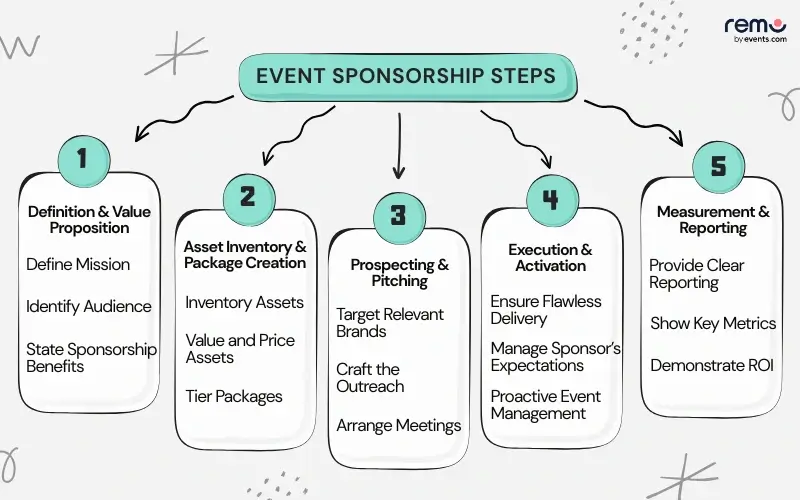
Successful sponsorship is the result of a deliberate, repeatable lifecycle. It typically follows a structured process that helps organizers attract the right sponsors, deliver purposeful value, and build long-term partnerships.
Define Goals, Audience, and Your Value Proposition
Start by clearly defining your event’s mission and, more importantly, deeply understanding your audience. Sponsors are investing in access to a specific demographic. Your value proposition should clearly articulate how sponsoring your event helps a brand achieve its marketing objectives.
Identify Sponsorship Assets and Create Sponsorship Packages
Next, identify the assets your event can offer. This is your inventory, everything from keynote introductions and digital app takeovers to physical branded lounges. Before grouping these into packages, assign a clear value to each asset based on factors like audience reach, visibility, and level of engagement. Once priced, package these assets into strategic pricing tiers that offer escalating levels of visibility. The goal is to create a menu of event sponsorship opportunities that cater to different budgets while maintaining a premium feel.
Prospect and Pitch Potential Event Sponsors
With your offering defined, the next step is identifying sponsors that align with your audience and event theme. Outreach typically involves writing sponsorship request letters, sending sponsorship proposals, arranging meetings, and clearly communicating the value your event can deliver compared to other marketing options. If you want a step-by-step approach to outreach and pitching, read our full guide on how to get event sponsorship.
Execute and Manage Event Sponsorship Activations
Once sponsors are secured, execution becomes everything. Every logo placement, sponsored session, and digital mention must be delivered seamlessly. Managing a sponsor’s expectations during the live window is what separates professional organizers from the rest.
Measure Event Sponsorship Performance and Report Results
After the event, provide clear and transparent reporting. This may include attendee engagement data, lead capture results, social reach, or session participation. Providing transparent performance reports helps demonstrate value and increases the likelihood of renewing sponsorship for future events.
Overview of the Different Types of Event Sponsorship
Event sponsorship can take several forms depending on your event's specific needs. It can be about cash flow, supplying tech infrastructure, or a massive PR push. Here we have outlined the five most common types of event sponsorship.
- Financial Sponsorship: This is direct funding in exchange for promotional benefits such as branding, speaking opportunities, or attendee engagement.
- In-Kind Sponsorship: Instead of writing a check, sponsors provide essential goods or services, such as catering, venue space, or hotel blocks, offsetting your overhead while showcasing their product.
- Media Sponsorship: Sponsors promote the event through their marketing channels. This can include editorial coverage, advertisements, newsletter mentions, or social media promotion in exchange for visibility and partnership recognition.
- Promotional Sponsorship: These sponsors leverage their massive social following or email lists to drive registrations, essentially acting as high-octane marketing engines for your brand.
- Technology Sponsorship: Whether it’s the event app, the high-speed mesh Wi-Fi, or the AI-driven networking platform, this sponsorship type provides the tech stack that makes a modern event possible.
Understanding these categories is the first step. In practice, most events combine multiple sponsorship types to create a balanced portfolio that aligns with their goals, audience expectations, and overall event experience.
Event Sponsorship, Strategy, and Successful Events
Event sponsorship is a value-driven partnership where brands invest in events to gain meaningful access to a specific audience. But mastering it goes beyond simply securing funding. It’s about recognizing the power of a shared stage. When you move away from the billboard mentality and toward genuine collaboration, you create an environment where everyone wins. Organizers gain the resources to innovate, sponsors gain opportunities to engage and lead, and attendees get an experience they actually remember.
Platforms like Remo help bring this model to life by giving sponsors dedicated virtual spaces to interact with attendees, host demos, and build meaningful connections. Book a demo to see how sponsors can move beyond logo placements and become active participants in the event experience.
Frequently Asked Questions about Event Sponsorship
1. How do sponsors measure the success of an event sponsorship?
Sponsors typically measure success through metrics such as brand exposure, lead generation, attendee engagement, social media reach, and post-event sales or partnerships.
2. Why do companies sponsor events?
Companies sponsor events to reach targeted audiences, build brand awareness, generate leads, and position themselves as leaders within their industry. Events also allow brands to engage directly with potential customers.
3. What are the main types of event sponsorship?
Common types include financial sponsorship, in-kind sponsorship, media sponsorship, promotional sponsorship, and technology sponsorship. Each type offers different benefits depending on the event format and sponsor goals.
Aniqa Iqbal
Aniqa is a content writer at Remo, where she merges her love for storytelling from movies and TV shows with her passion for creating compelling content. With a knack for blending pop culture references and relatable narratives, Aniqa crafts content that informs and resonates deeply with readers. She aims to strike a chord with her audience, fostering genuine connections through words that inspire, engage, and entertain. When she's not writing, Aniqa can be found binge-watching her favorite shows, always on the lookout for the next story to tell.