3 Common Mistakes Universities Make Running Virtual Job Fairs

Virtual job fairs are no longer a fallback plan. What started as a frantic, reactive scramble to keep university recruiting alive has quietly matured into a permanent pillar of modern employer engagement. Today, higher education institutions are using virtual formats to expand access, support hybrid recruiting strategies, and create more flexible opportunities for students and employers alike. But with maturity comes accountability.
The days of simply throwing a basic virtual job fair platform at your students and calling it a "fair" are over. Attendees and employers expect seamless, high-value experiences, and as universities compete for shrinking attention spans and tighter recruiting budgets, a passive approach just won’t cut it. If your virtual job fairs aren't hitting the mark, it usually comes down to a few critical missteps. Let’s explore three common mistakes universities make when running virtual job fairs, and the practical, high-impact strategies needed to fix them.
{{table-of-contents}}
Why Virtual Job Fairs Still Matter
Virtual career fairs aren't a passing trend. They make it easier for all kinds of students to find jobs, opening up doors that traditional, on-campus career fairs often miss. When built intentionally, a virtual career fair delivers hyper-specific advantages for university ecosystems:
- Working students, commuters, and those with caregiving responsibilities can jump into a high-value interview between classes or shifts, removing the barrier of a rigid, 4-hour physical attendance window.
- Mid-sized regional employers or distant tech firms who lack the travel budget to visit every campus physically can still actively recruit your institution's talent.
- Digital environments like Remo allow career centers to help students pre-filter employers by open roles, visa sponsorships, or specific majors, meaning both sides walk into a conversation with baseline alignment rather than relying on guesswork.
- Smaller agencies or highly specialized firms who can't justify renting a physical booth can easily show up digitally, giving students a broader, more diverse look at their industry options.
While these events remain highly valuable, the initial, effortless surge of digital participation has leveled off. Student attendance and employer engagement are no longer guaranteed just because an event is online. However, this dip doesn't mean virtual fairs are losing relevance. It simply means the market has matured. For university career centers, the bar is much higher now. Success isn’t just about moving recruitment onto a screen. It requires intentionally designing a high-value, high-engagement digital experience.
When virtual job fairs fall short, it is rarely a platform issue. It is a strategy issue. Let’s break down three critical mistakes that kill virtual career fair ROI, and how your institution can pivot for better outcomes.
Mistake #1 – Choosing Video Conferencing Tools Instead of Platforms Built for Virtual Career Fairs
When planning a virtual career fair, it’s easy to fall into the trap of treating it like a basic checklist: Can we launch a video call? Can employers share their screens? Can students register? It’s tempting to think standard video software is enough just because it handles the basics. But confusing a simple video call with a purpose-built virtual career fair platform is a recipe for a ghost town, and exactly why higher ed needs more than just Zoom for virtual career fairs.
When you rely on rigid, webinar-style tools, you inadvertently force attendees into passive experiences.
For students, the event feels like a grueling, seven-hour lecture series. They log in, turn off their cameras, mute their mics, and disengage. There is no room to naturally wander between employer booths, bump into unexpected opportunities, or have a casual, unscripted chat with a recruiter. Whereas for employers, they are left staring at a wall of black boxes and silent chat feeds. Without tools to actively pull talent into the conversation or easily scan student profiles, recruiters leave frustrated by the lack of quality, meaningful interactions. Over time, this friction destroys attendee satisfaction, tanks your retention rates for future events, and burns out your employer partners.
How to Fix It: Prioritize Purpose-Built Environments
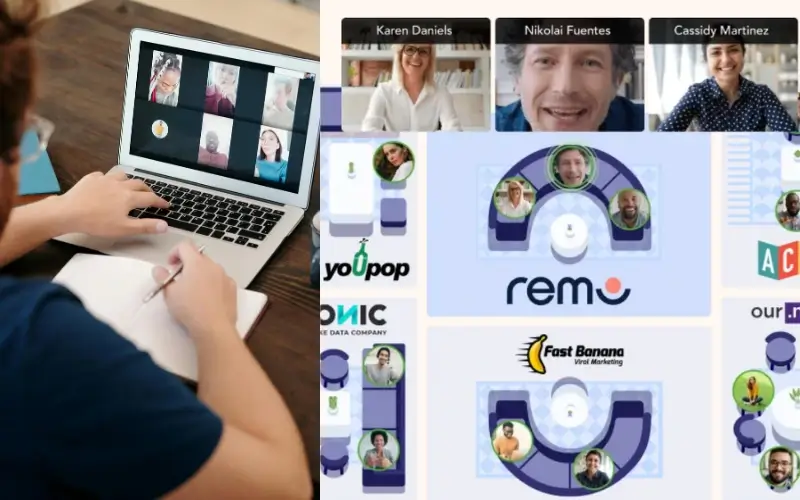
Stop trying to force a complex networking ecosystem into a standard video meeting room. When evaluating your tech stack, look for platforms like Remo that replicate the high energy of an in-person floor through virtual career fair platform features like:
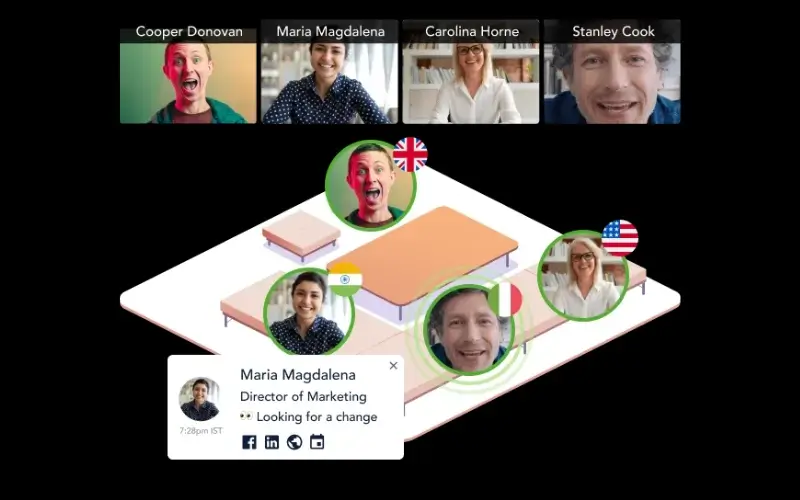
- Visual, Table-Based Networking: Platforms like Remo lets students move away from text directories and hidden links, by mapping the entire event onto a visual digital floor plan. It turns standard, invisible breakout rooms into distinct virtual tables that function as open video conversations. Attendees move around simply by double-clicking on a table to join the conversation. They can see which employers are active, see who is at a booth, and float between conversations naturally, replicating the organic drop-ins of a physical hall.
- Speed-Dating Style Matching & Recommendations: Instead of manual scheduling or clunky calendar links, platforms like Remo feature built-in queuing, matching algorithmic system and networking recommendations. The platform acts as an automated matchmaker, instantly suggesting specific employer booths to students based on their majors and career goals, or pairing them with recruiters for rapid, 5-minute 1:1 discovery chats to keep floor traffic moving constantly.
- Instant Resume Dropping & Tagging: Students can digitally hand over resumes with a single click at a table. Recruiters can instantly add private tags (like "High potential" or "Follow up") directly inside the platform, ensuring no talent gets lost in a messy post-event inbox.
.webp)
Mistake #2 – Failing to Design for Student and Employer Engagement
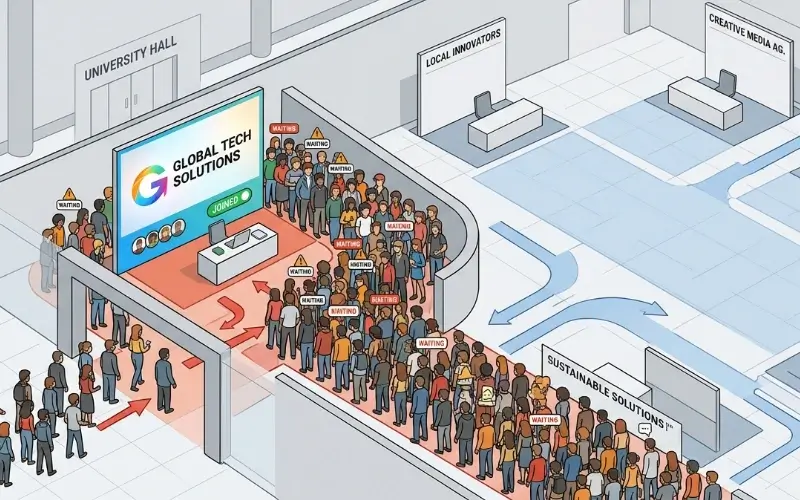
Having the best virtual job fair platform is only half the battle. A successful virtual career fair requires a spatial layout and a structured agenda that actively drive movement. Too often, universities build events that are technically sound but completely devoid of direction, leaving students to navigate a flat, uninspiring list of text links.
Without intentional spatial design and programmed interaction points, the event defaults to a passive broadcast. To break the ice and get both sides talking, career centers must treat the digital venue like a physical convention center.
How to Fix It: Design Intentional Interaction Points
This is where strong student engagement strategies for university career fairs become essential. Instead of running a single, continuous block of time where everyone tries to do everything at once, use your platform's layout and timing to guide the attendee experience:
- Ditch Text Lists for Visual Floor Plans: Stop forcing students to navigate a boring directory of corporate names. Design an immersive floor plan with distinct employer booths, visible logos, and clickable areas. When students can actually see where people are gathering, it creates social proof that the event is alive and encourages them to participate.
- Live, Crowdsourced Q&As: Move away from static slide decks. Plan your agenda to include dedicated blocks where the platform switches to Presentation Mode, bringing recruiters onto a main virtual stage for open-mic Q&As, AMA (Ask Me Anything) formats, or quick fireside chats. This focuses everyone's attention to a central point, breaks the ice, and drives massive audience participation before breaking back out into individual conversations.
- Structured Run of Show & Event Agendas: Don't expect students to block out four unstructured hours to wander a virtual hall. Instead, build an event agenda featuring targeted, time-bound activities, like panels, industry tracks, or lightning talks, running right alongside the main fair experience. Publishing a clear, predictable schedule ahead of time allows busy students to look at the agenda, map out exactly when their target employers are active, and block out specific windows in their day to attend.
- Empower Employers with Targeted Signage: Use real-time content banners and announcements to guide traffic dynamically. For example on Remo, if a great employer has an empty booth, the career center can instantly push out a notification across the floor to redirect unplaced students, balancing the foot traffic across the entire venue.
Mistake #3 – Not Preparing Students and Employers Before the Fair

Even the most meticulously planned virtual career fair will fall flat if your participants arrive completely unprepared. It’s a common pitfall: universities pour months of effort into tech stacks, marketing, and logistics, but treat student and employer readiness as an afterthought.
If you assume your audience will just figure it out on event day, you are setting them up for a frustrating experience. When participants enter a virtual fair unprepared, the lack of confidence leaves students hovering silently in the back of empty rooms. Meanwhile, recruiters under-prepare by leaving digital booths blank and struggling with unfamiliar tools, killing the event's momentum before it even starts.
How to Fix It: Build a Pre-Fair Readiness System
To ensure high-value interactions, your career center needs to actively bridge the prep gap. Think of yourself as an event curator, equipping both sides with a tactical playbook long before the virtual doors open.
- Host Student Orientation Sessions: Run short, 15-minute micro-workshops or distribute a straightforward student preparation guide before the event. Focus strictly on teaching students how to complete their digital profiles, draft a quick chat introduction, prepare for 1:1 video chats, and navigate the platform's layout.
- Conduct Employer Training Walkthroughs: Don’t just email recruiters a login link and hope for the best. Run a brief training session, provide a list of college career fair tips for employers, or share a short video walkthrough showing them how to set up their digital booths, navigate the event agenda, and easily access student resumes during live chats.
- Open an "Early Access" Window: Open the virtual career fair platform to attendees 1 to 3 days before the live event. Platforms like Remo do this to allow students to browse completed employer profiles and upload resumes early, while giving recruiters a head start on reviewing attendee profiles and planning their day.
Best Practices for Running More Effective Virtual Job Fairs

Moving the needle on your virtual career fair doesn't require scrapping your entire strategy. It comes down to executing a few high-impact, intentional shifts to transition from a passive online meeting into a high-ROI talent ecosystem, such as:
- Ditch the "All-In-One" Mega Fair: The massive, campus-wide event is dead. It dilutes the experience for everyone. Instead, focus on niche, hyper-targeted events grouped by industry or career track. A curated employer mix ensures students log in with purpose and recruiters connect with relevant talent.
- Track "Impact" Analytics Over "Registration" Metrics: Registrations are vanity metrics. To understand true event ROI, track the live event analytics such as drop-off rate, connection velocity (1:1 conversations per student), recruiter engagement, and post-event interview velocity.
- Build an Evolution Loop: Treat your fair as an evolving digital product. Deploy quick, 2-question pulse surveys inside the platform before participants log off, debrief with power-user employers, and immediately use those insights to refine your next playbook.
If you want to master the fundamentals before optimizing, check out our comprehensive guide on how a virtual job fair works to build a technical foundation that scales.
Building More Engaging Virtual Job Fairs for Universities
Virtual job fairs are no longer just a digital alternative. They are an essential pillar of how universities scale employer relationships and expand student opportunities. The institutions winning this space aren’t hosting bigger events. They are delivering better experiences through intentional design, thorough preparation, and a commitment to real human connection.
With a purpose-built virtual event platform like Remo, universities can completely eliminate webinar-style fatigue and create a digital campus space that stakeholders actually want to attend.
Ready to transform your next university event? Book a demo with Remo today and see how an engagement-first virtual career fair can double your event ROI and student participation.
FAQs about Virtual Job Fairs for Higher Education
1. Why are virtual job fairs important for universities
Virtual job fairs help universities expand student access, connect with a wider range of employers, support hybrid recruiting strategies, and create flexible networking opportunities without geographical limitations.
2. How should students prepare for a virtual career fair?
Students should follow college career fair tips such as researching employers beforehand, updating their resumes and profiles, preparing questions, practice introductions, and creating a plan for which sessions and employers they want to engage with.
Aniqa Iqbal
Aniqa is a content writer at Remo, where she merges her love for storytelling from movies and TV shows with her passion for creating compelling content. With a knack for blending pop culture references and relatable narratives, Aniqa crafts content that informs and resonates deeply with readers. She aims to strike a chord with her audience, fostering genuine connections through words that inspire, engage, and entertain. When she's not writing, Aniqa can be found binge-watching her favorite shows, always on the lookout for the next story to tell.